Canadian Chinese Construction Association

祝贺理事企业 Dae Sun Glass 大成玻璃钢化玻璃生产线正式启幕
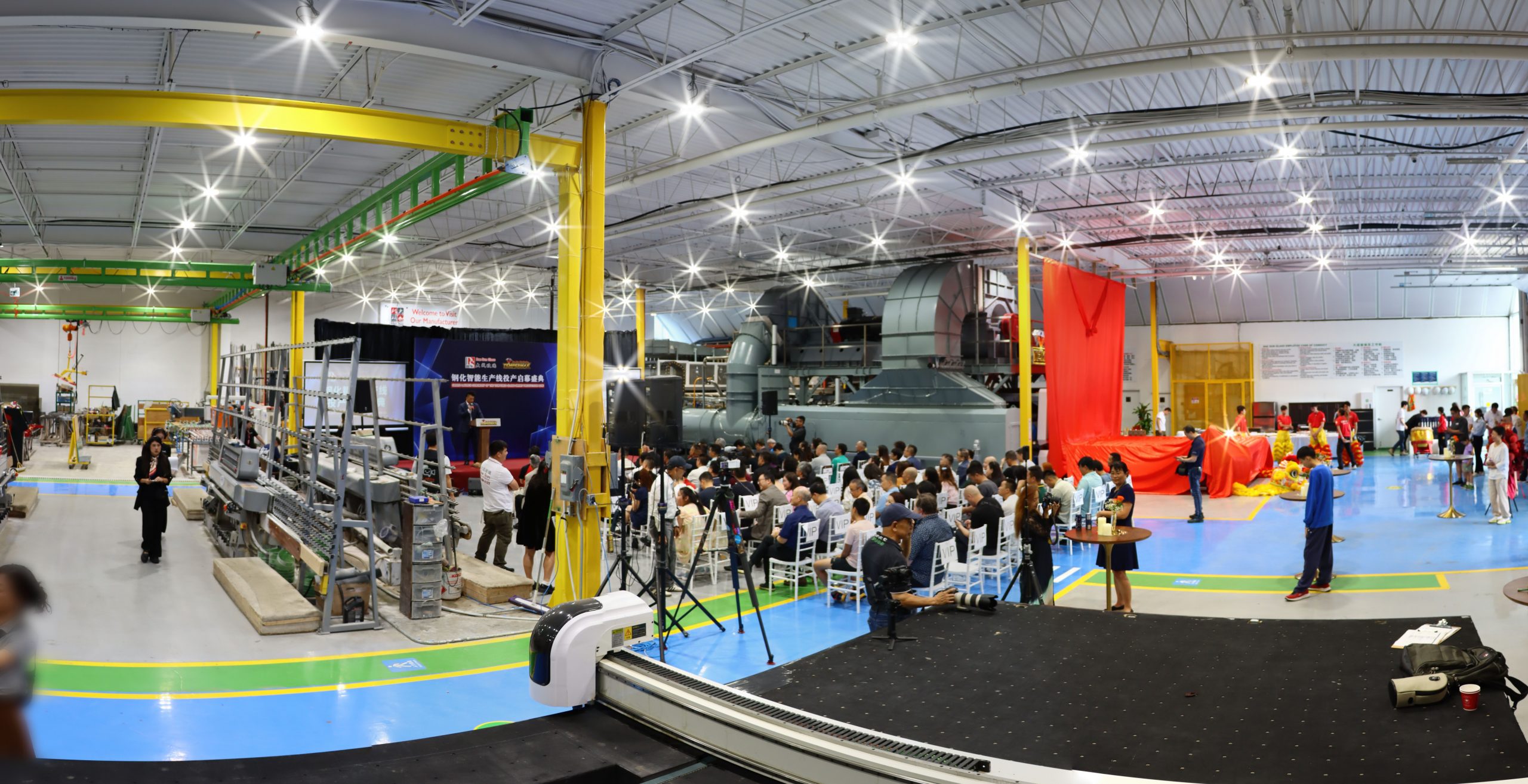
Dae Sun Glass 大成玻璃钢化玻璃生产线启幕典礼现场全景 / Dae Sun Glass tempered glass production line opening ceremony

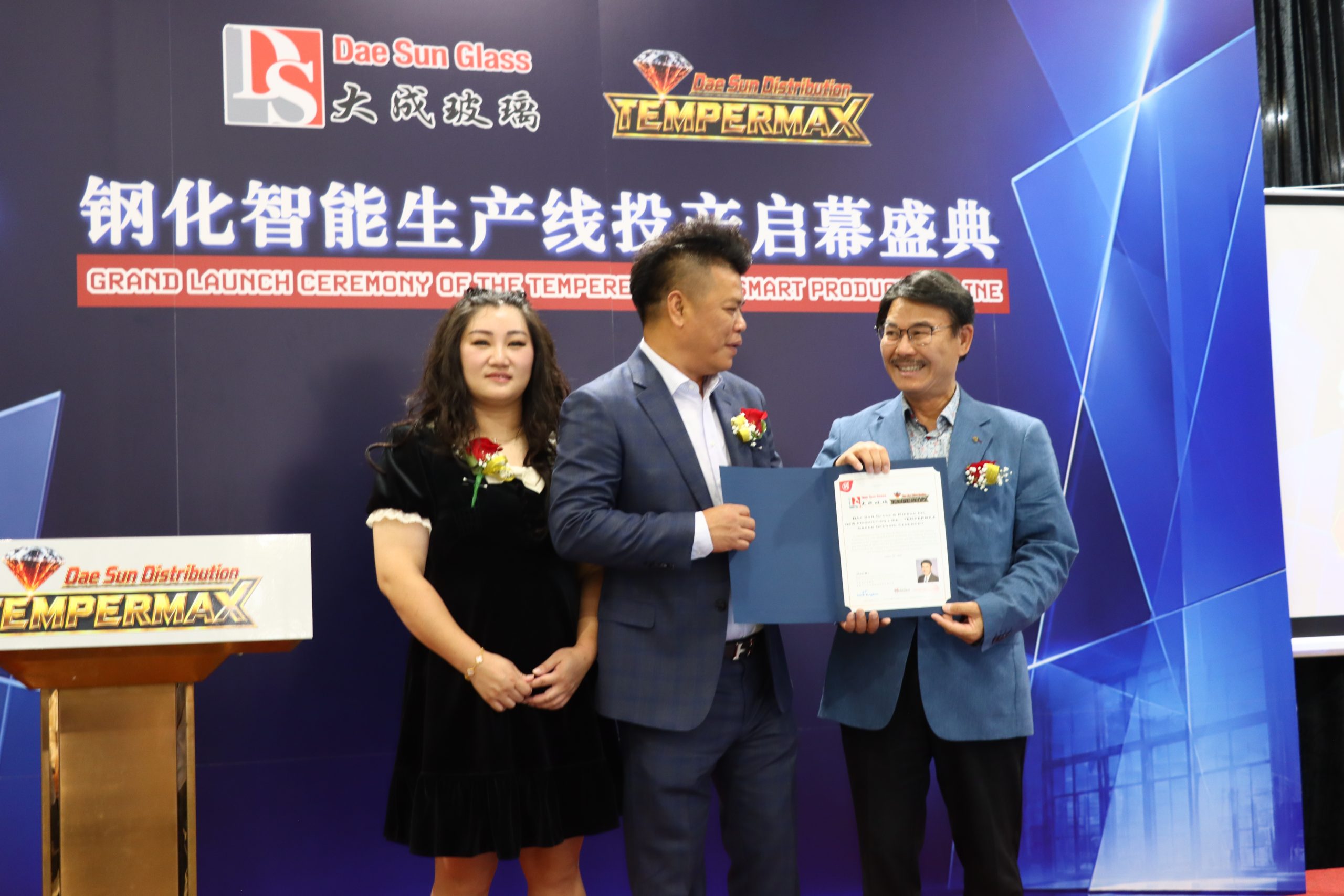
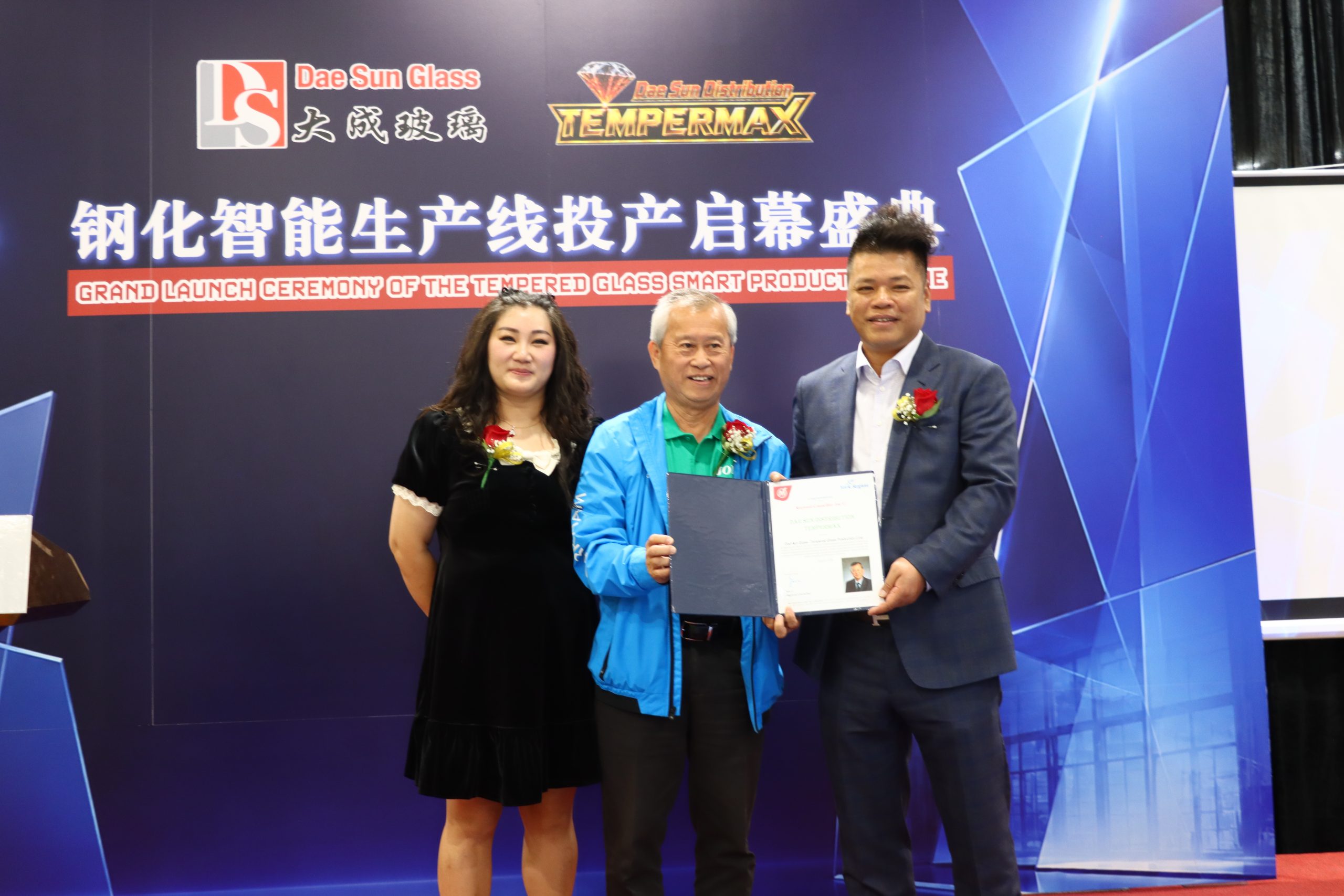
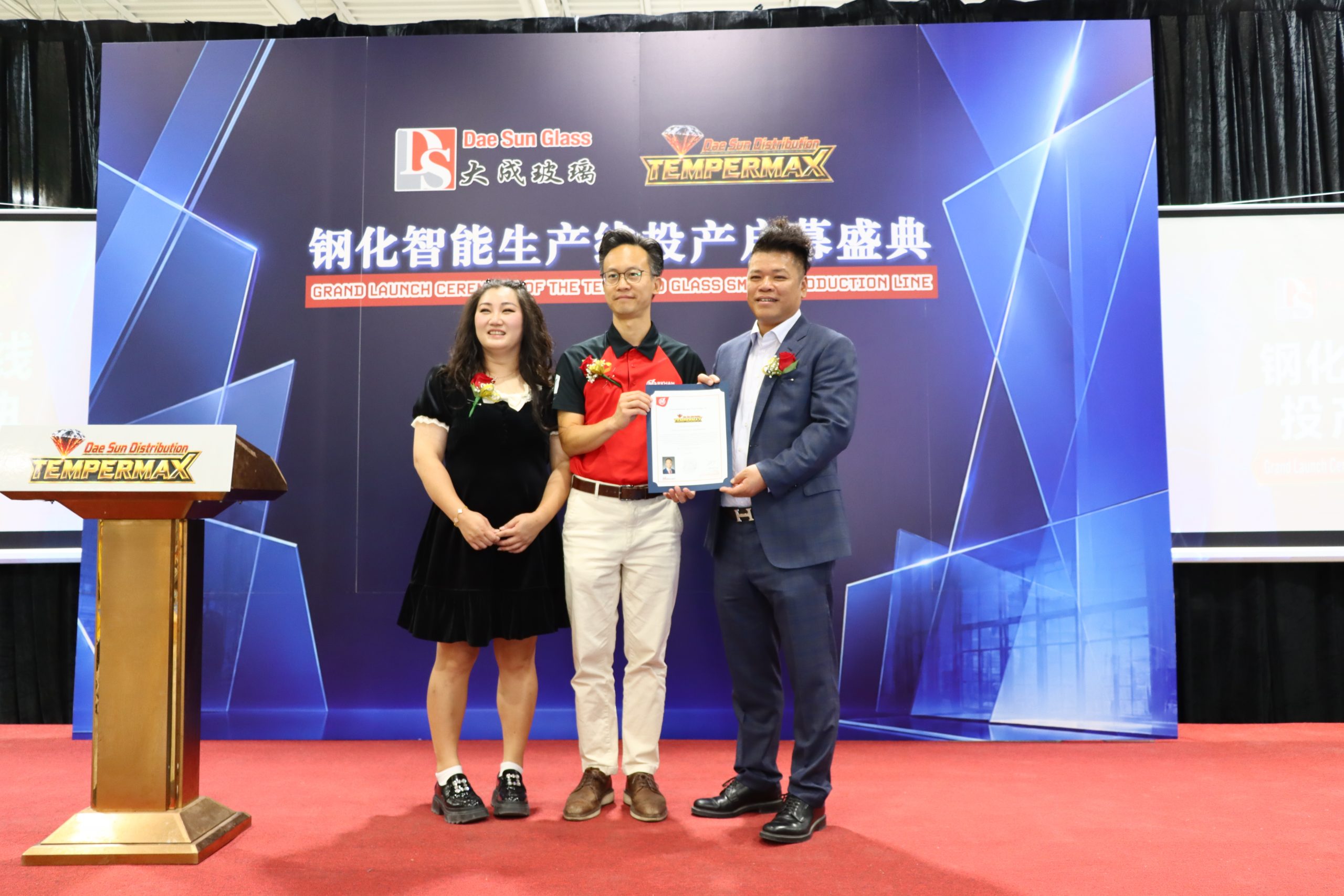
On the morning of Friday, August 21, 2026, Dae Sun Glass, a director company of the Canadian Chinese Construction Association (CCCA), held the official opening ceremony of its new tempered glass production line at its facility at 1–201 Whitehall Dr., Markham.

On behalf of its members, the Canadian Chinese Construction Association (CCCA) extends its warmest congratulations to Dae Sun Glass and its President, Andy Gao. For the company, a new production line represents an upgrade in both capacity and craftsmanship. For the regional construction and building-materials supply chain, it means one more manufacturing capability rooted right here at home.

Nearly one hundred guests gathered at the facility that morning, including the Mayor of Markham, a Member of Parliament, Regional Councillors and a City Councillor, alongside colleagues from the construction, real estate, interior contracting and building-materials sectors.

Inside the plant: a ceremony held on the production floor

Unlike the banquet-hall celebrations more commonly seen, this opening ceremony was held directly on the production floor. Guests entered through rows of processing equipment and neatly stacked finished glass, with the silhouettes of the machinery, the piles of raw material and the order of the workshop forming the backdrop to the entire event.
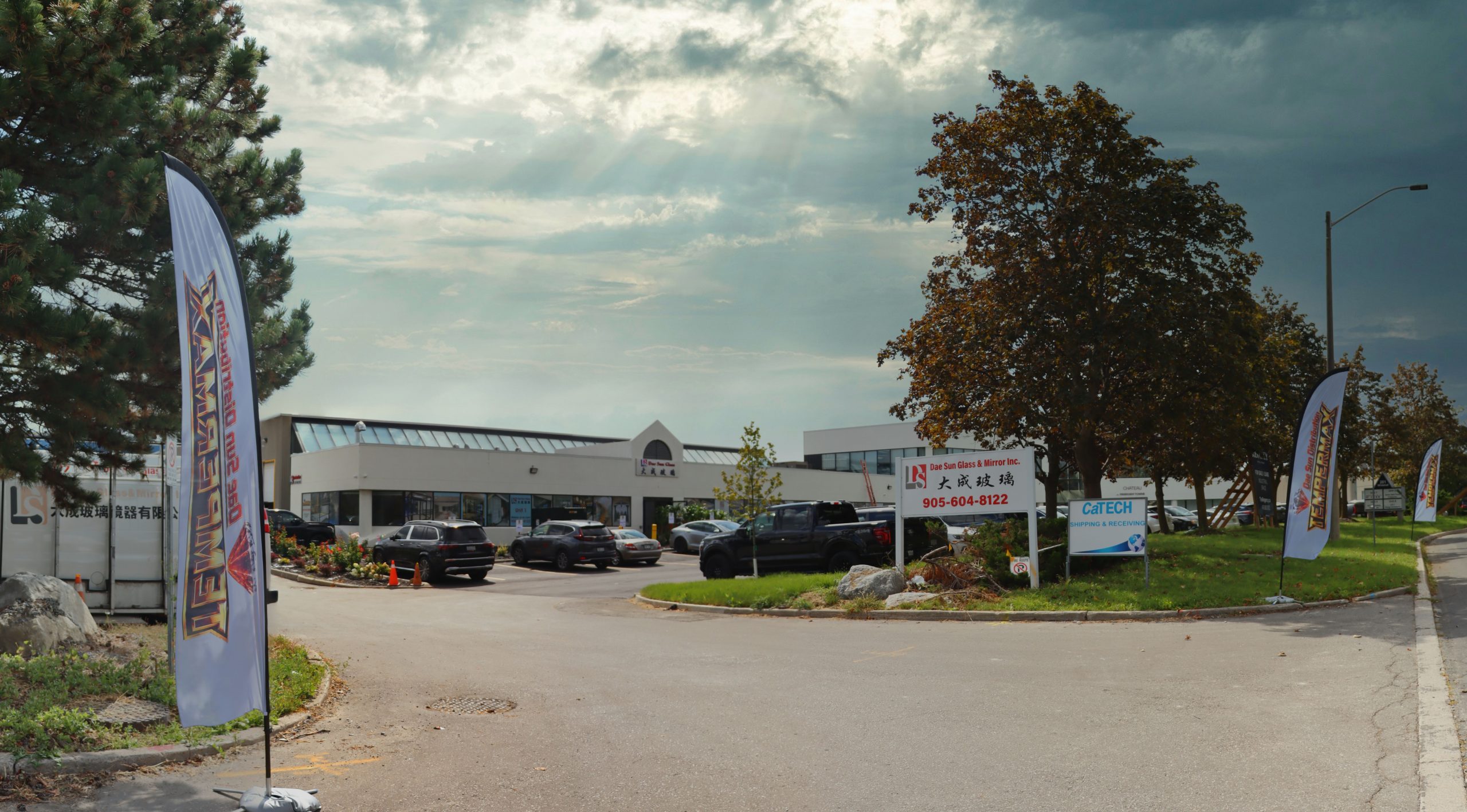
Dae Sun Glass facility exterior in Markham

For the builders and engineers in attendance, the choice of venue was itself a statement: the company was willing to open its most authentic side to its peers. Guests were welcomed at the front reception and made their way past the display area to the ceremony floor. The atmosphere was lively yet professional, with many gathering around the equipment to talk shop shortly after arriving.
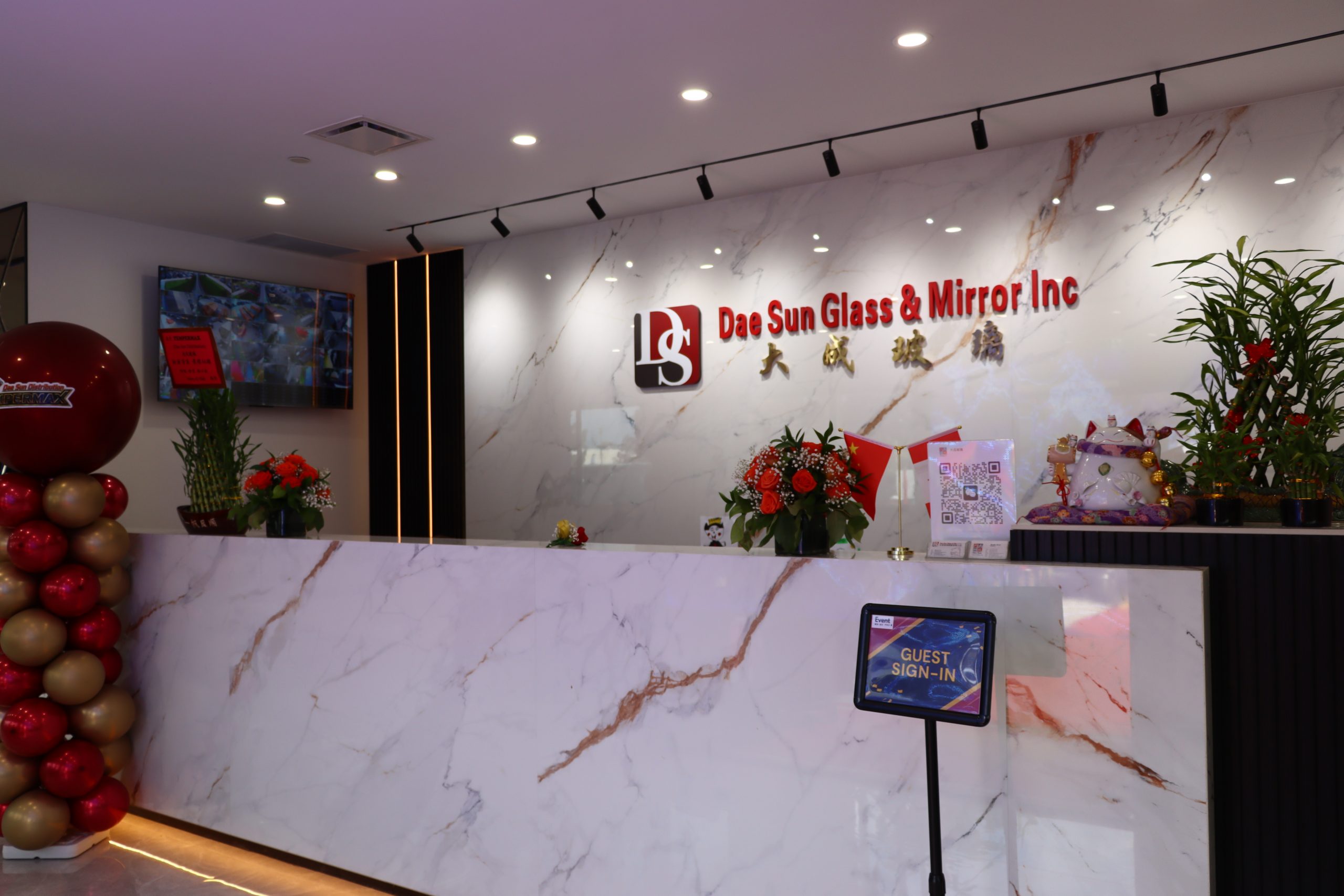
Reception area at the Dae Sun Glass facility

Congratulatory flower baskets sent by partners and well-wishers lined the walls of the plant, their red ribbons and gold lettering lending a festive warmth to a space normally devoted to production.
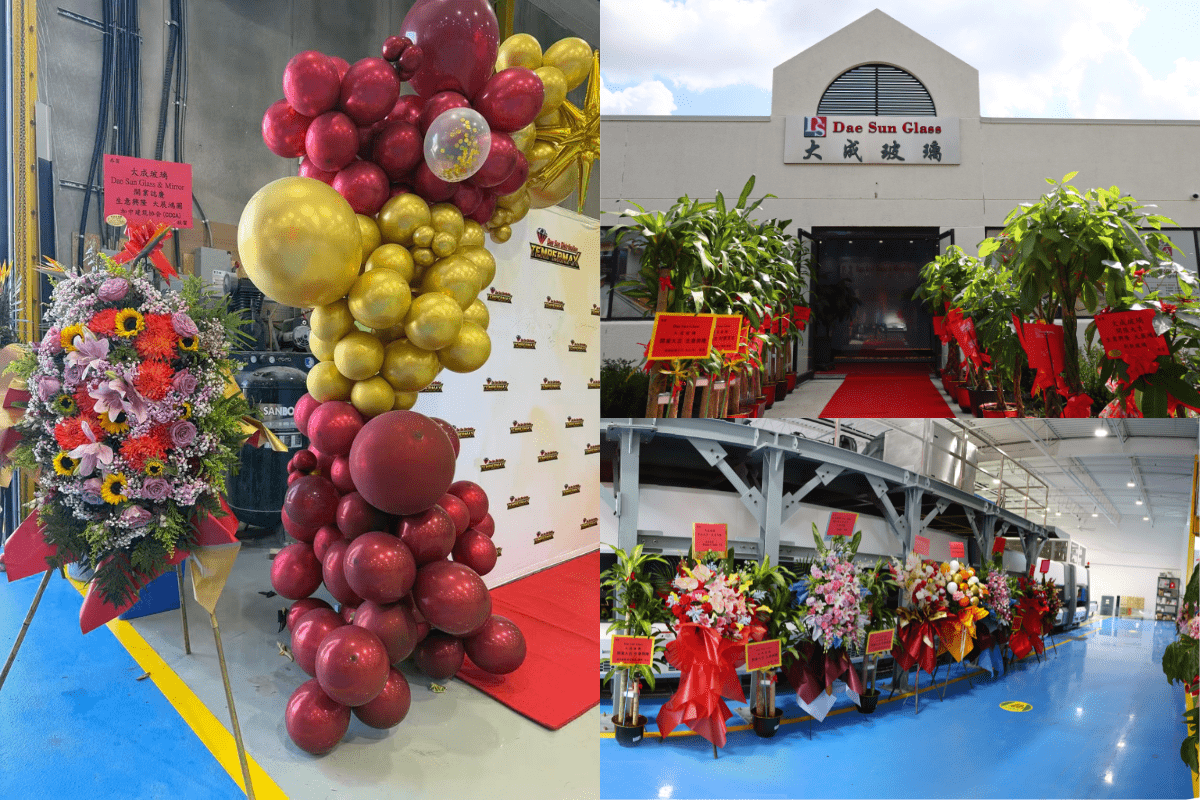
Congratulatory flower baskets at the ceremony

Remarks from President Andy Gao

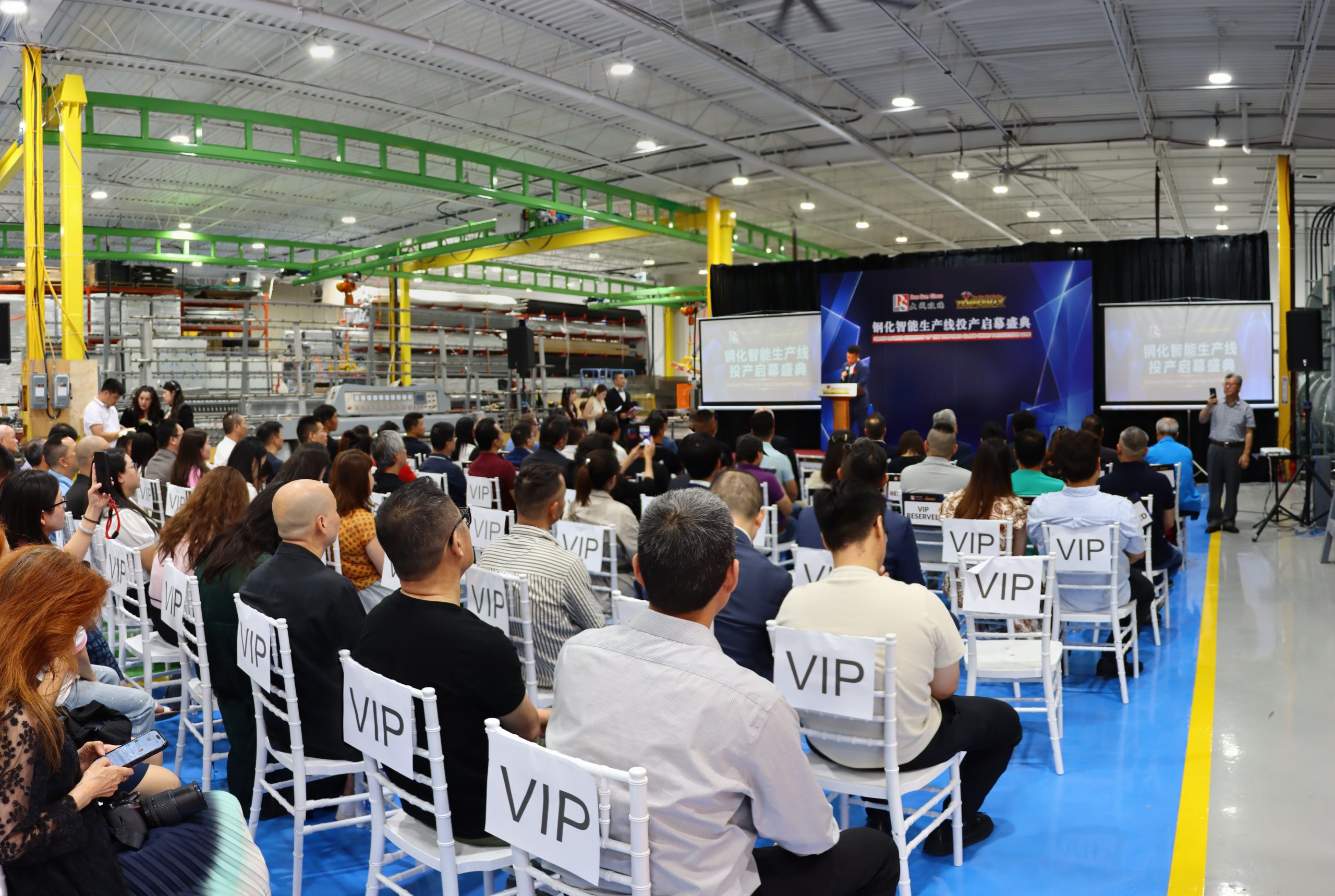
The ceremony opened with remarks from Dae Sun Glass President Andy Gao. He thanked the guests, partners, clients and team members in attendance, looked back on the company’s journey, and outlined the thinking and plans behind this investment in a new tempered glass line.
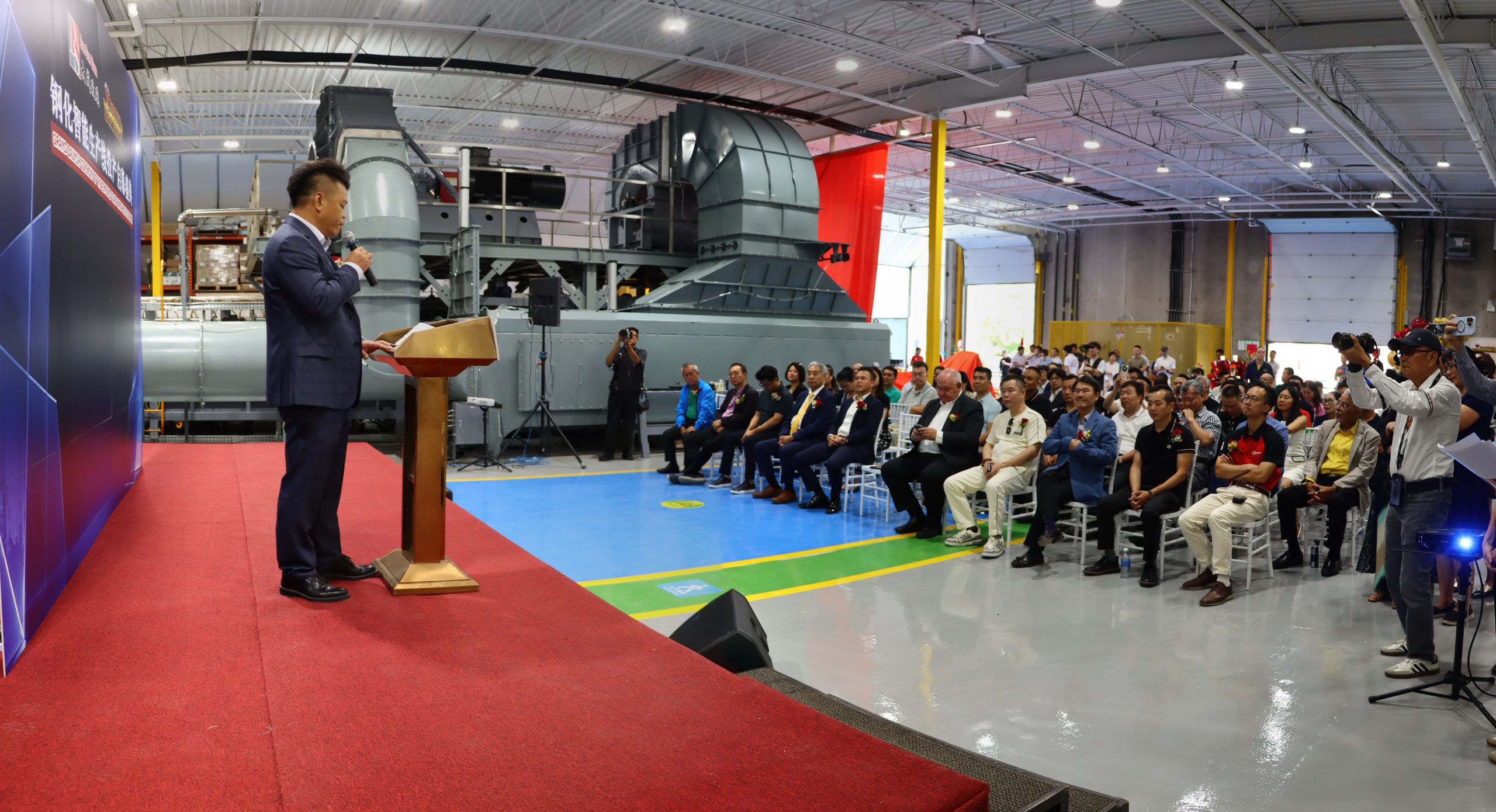
Andy Gao, President of Dae Sun Glass, delivering remarks

From its earliest beginnings to today’s in-house tempering capability, the new line marks a milestone built on years of accumulated effort, and an investment in what comes next. In his remarks, he also spoke to shifting demand in the local architectural glass market and the company’s ongoing pursuit of product quality and delivery performance.

The remarks drew sustained applause. Many guests noted that the trajectory of a single glass company reflects a shared story of perseverance among Chinese-Canadian construction and building-materials businesses.
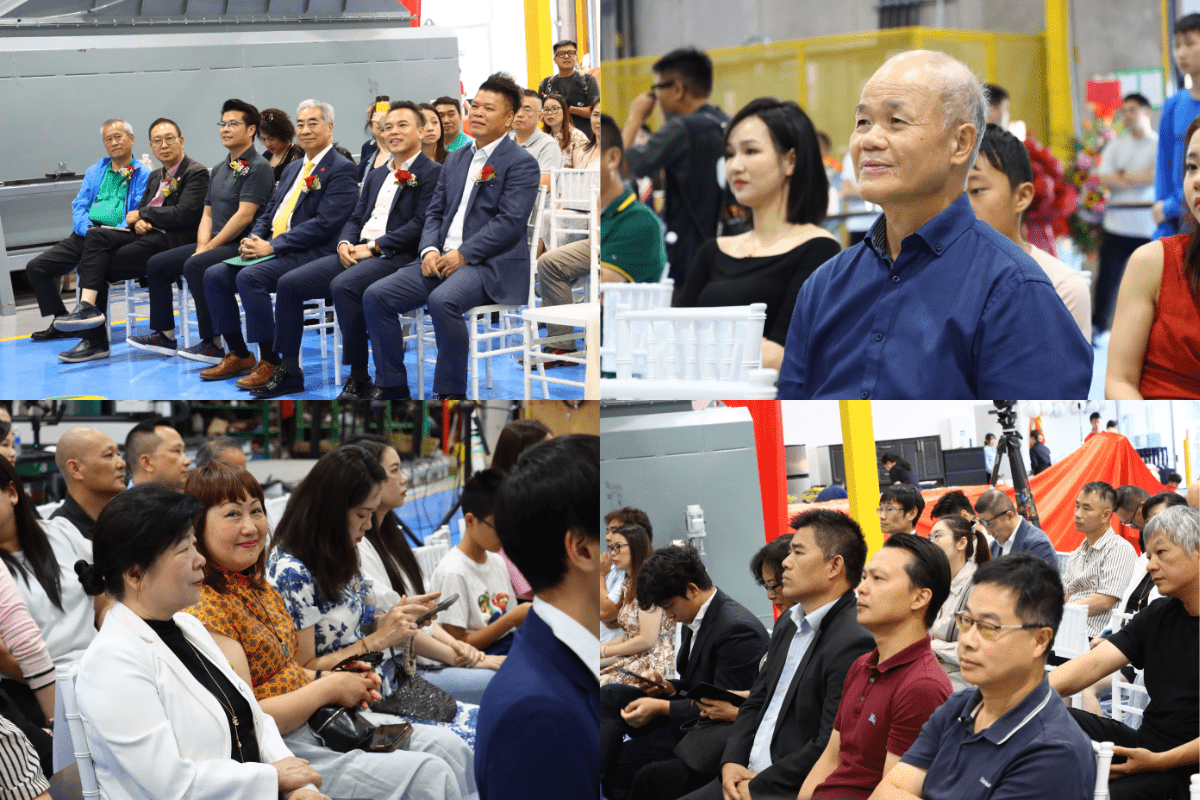
Guests attending the opening remarks

Elected officials join the celebration

Several elected officials then addressed the gathering and presented congratulatory letters to Dae Sun Glass in recognition of the new line coming into operation.
Elected officials delivering remarks at the ceremony

Speaking in turn were Markham Mayor Frank Scarpitti, Member of Parliament for Markham—Unionville Michael Ma, York Region Councillors Alan Ho and Joe Li, and Markham City Councillor Ritch Lau.
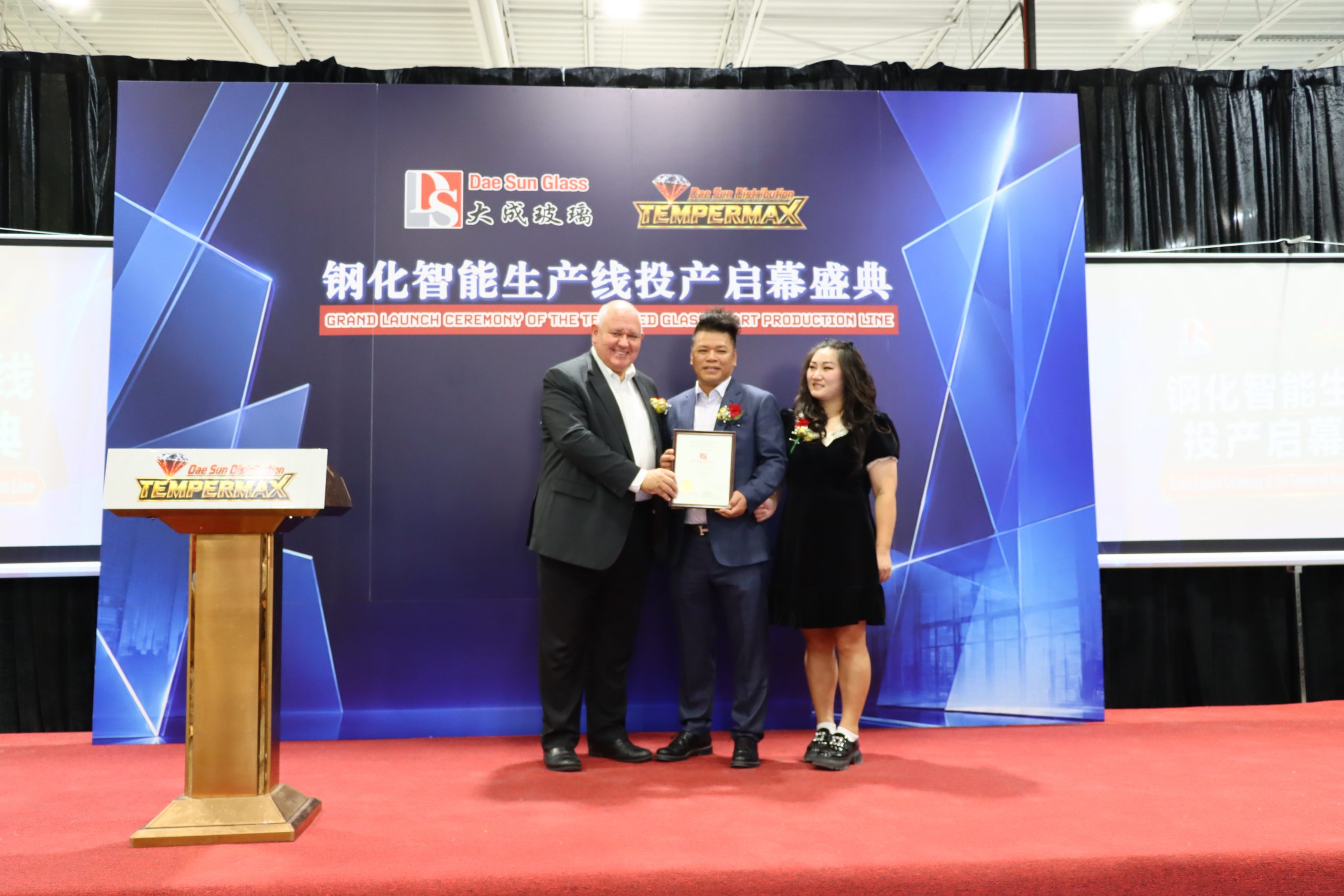
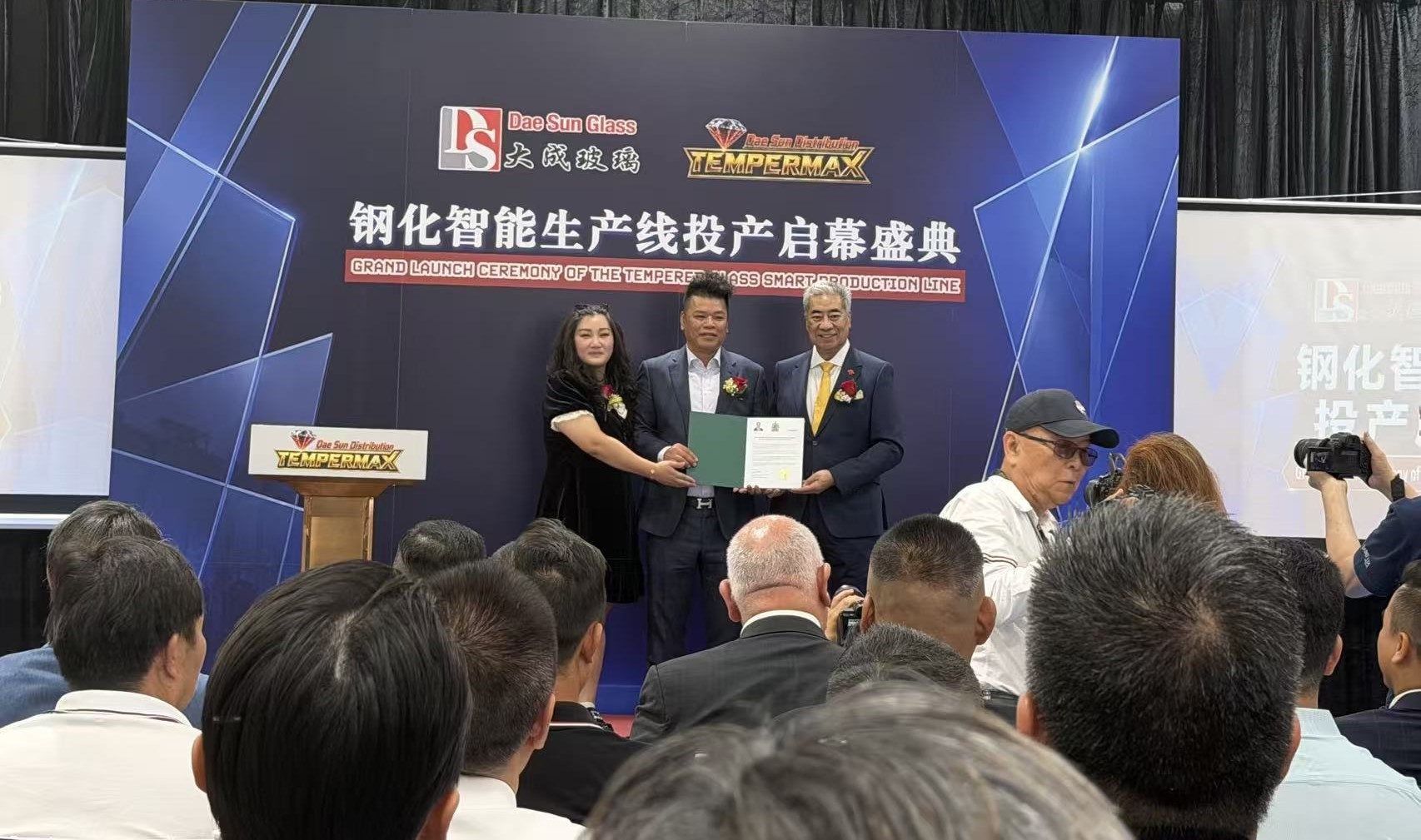
Markham Mayor Frank Scarpitti presenting a congratulatory letter
MP Michael Ma presenting a congratulatory letter
York Region Councillor Alan Ho presenting a congratulatory letter
York Region Councillor Joe Li presenting a congratulatory letter
Markham Councillor Ritch Lau presenting a congratulatory letter

In their remarks, the officials recognized the contribution of local manufacturing and small and medium-sized enterprises to the regional economy, acknowledged the role Chinese-Canadian businesses play in creating jobs, strengthening supply chains and serving the community, and expressed appreciation for the company’s commitment to continued local investment and expanded capacity.

The presence of government representatives on a factory floor, meeting manufacturers face to face, carried its own message: physical manufacturing still holds an important place in the economic map of the city.

CCCA leadership on hand to congratulate

As the industry association to which Dae Sun Glass belongs, the Canadian Chinese Construction Association (CCCA) was well represented at the ceremony. Founding President and Chief Supervisor Raymond Wan led a delegation of more than ten association representatives, including President Alex Huang, Vice President Chi Wing Yan and Secretary General Iris Zhu.

CCCA representatives at the opening ceremony

The delegation offered congratulations to President Andy Gao and the Dae Sun Glass team on site, and engaged in extended conversation with the officials and industry peers present. The Canadian Chinese Construction Association has long worked to build bridges between the Chinese-Canadian construction sector and the wider community and government, and every milestone reached by a member company is one the association is glad to witness alongside them.

Ribbon cutting and unveiling: TEMPERMAX comes into view

With the remarks concluded, the ceremony reached its high point.

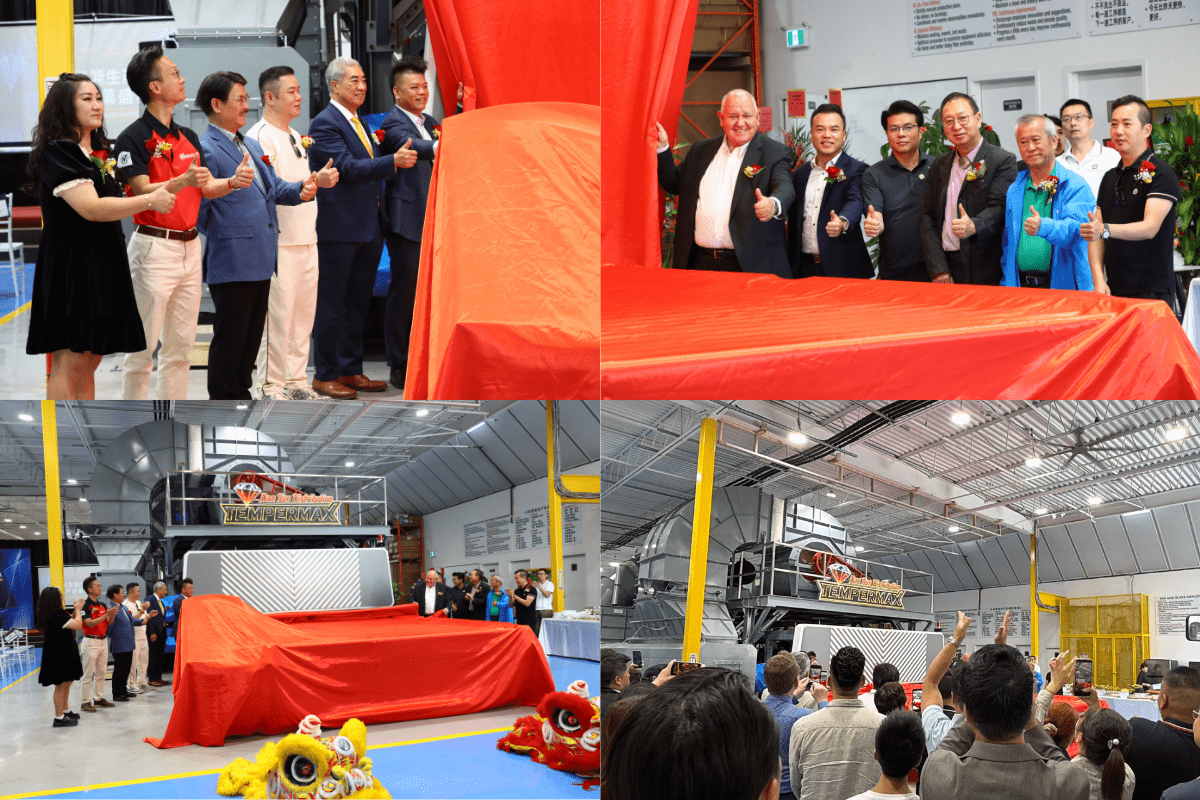
Before the assembled guests, the dignitaries took up the scissors together to complete the ribbon cutting. As the red ribbon fell, camera shutters and applause filled the room.

The curtain draped over the new tempering equipment, TEMPERMAX, was then drawn back, and the new production line was formally revealed.
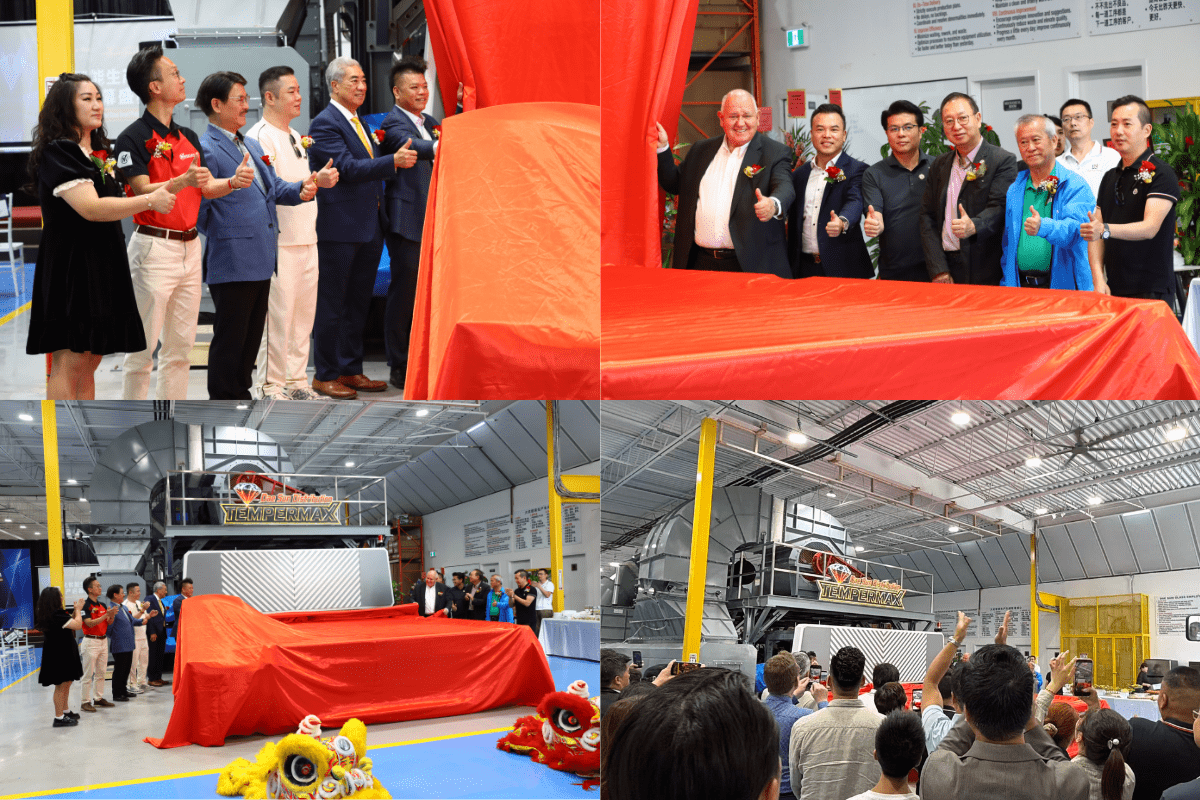
Unveiling of the TEMPERMAX tempering line

Bringing this equipment online marks a new stage in the company’s value-added processing capability. Dae Sun Glass can now complete a more comprehensive glass processing chain locally, shortening lead times and responding more flexibly to project-specific requirements for sizes and finishes.

Eye-dotting and the lion dance

After the unveiling, all eyes turned to the lion waiting at the side of the floor.

Guests took up the vermilion brush in turn to perform the eye-dotting ritual. This was the most ceremonial moment of the day — in Chinese tradition, dotting the eyes awakens the lion and gives it spirit; only once its eyes can see does the lion come alive, and with it, good fortune and vitality.

With the eyes dotted, the drums struck up. The lion sprang forward, weaving nimbly between the equipment and the crowd, now lowering its head, now leaping high, drawing cheers from the floor. The drumbeat was dense and forceful, the lion’s head nodding and swaying in rhythm, carrying the ceremony to its most spirited moment.
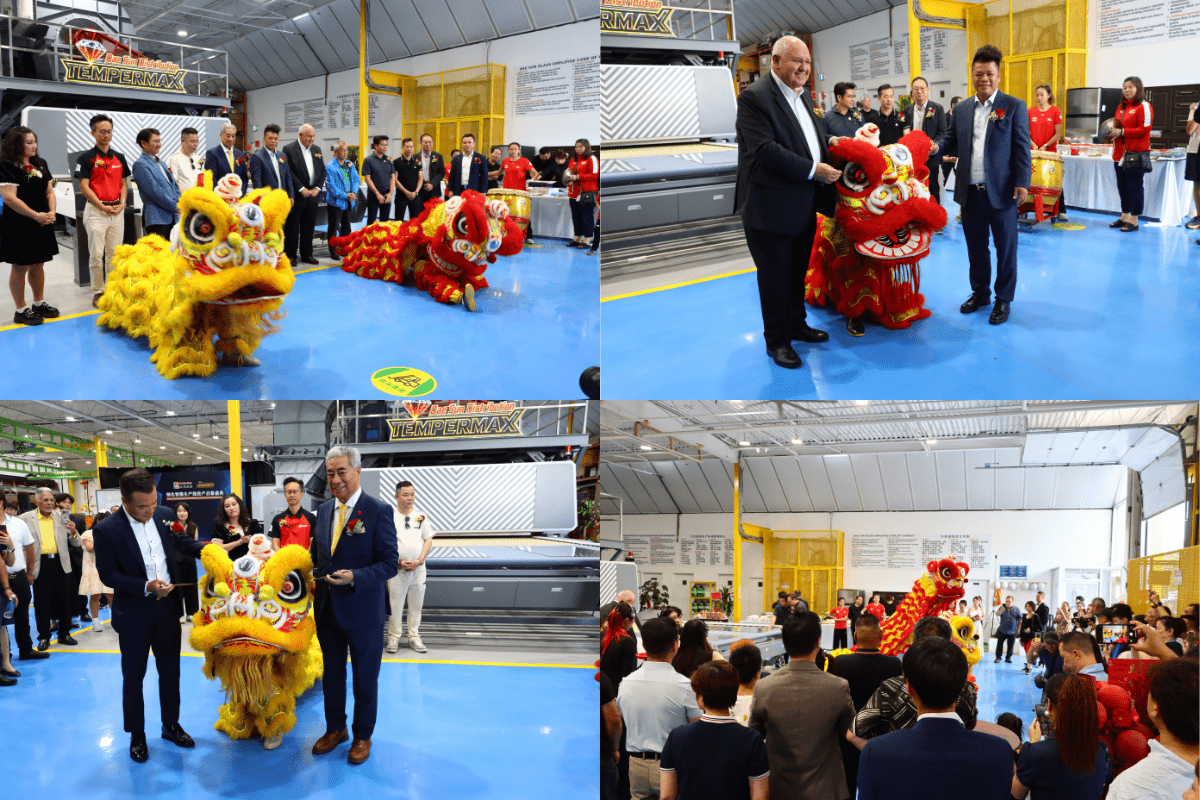
Lion dance performance at the opening ceremony

As the lion danced before the gleaming new equipment, every guest present understood the plain and heartfelt wish behind it: may this line run smoothly, and may this company go far.

With that, the opening ceremony was complete.

Networking: a conversation on the factory floor

Following the ceremony, the event moved into open networking.

Nearly a hundred guests spread out in twos and threes across the workshop and display area. Some gathered around the equipment to hear staff explain how it works; others picked up glass samples to examine edgework and coatings; still others compared notes on materials and schedules for current projects.
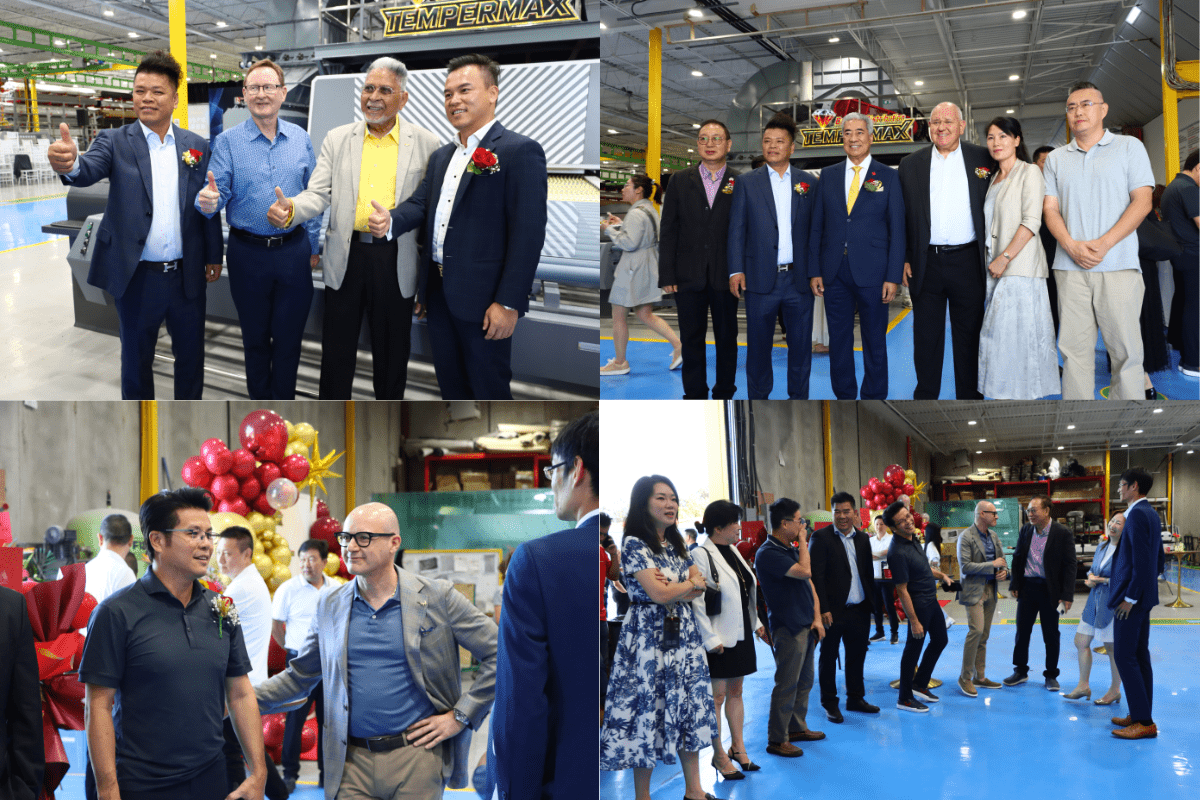
Guests networking at the ceremony

The host had prepared a generous spread of refreshments, and guests talked over food in a relaxed atmosphere that carried on well past the formal programme.
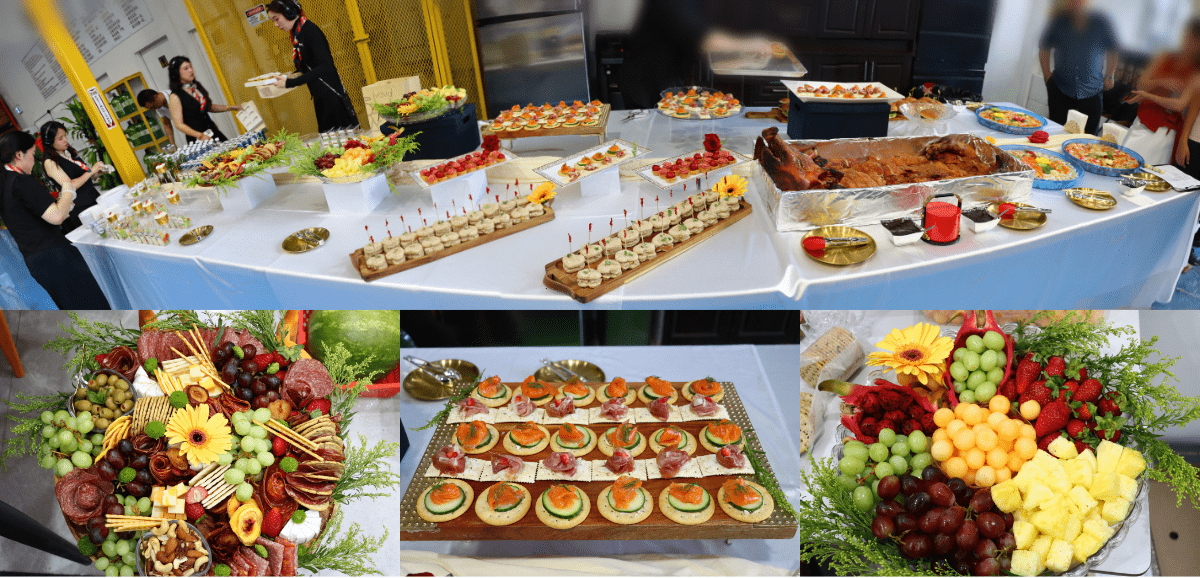
Refreshments served at the ceremony

Occasions like this are often more valuable than formal meetings in a boardroom. Developers, general contractors, interior contracting firms, window-wall and curtain-wall companies and material suppliers stood together in front of the same production line, and the discussion was no longer about abstract quotations but about tangible capacity, process and delivery. New connections were formed on the spot, and existing partners began talking about what they might do next together.

Why one production line matters to the industry

Tempered glass is an irreplaceable form of safety glazing in construction. It is made by heating ordinary float glass and then cooling it rapidly, creating compressive stress at the surface. The result is several times the strength of ordinary glass of the same thickness — and, more importantly, a very different failure mode: when it breaks, it fragments into small, relatively blunt pieces rather than the long, blade-like shards of ordinary glass, substantially reducing the risk of injury.

For this reason, the Ontario Building Code requires safety glazing in specific locations, including glass doors, sidelights adjacent to doors, shower and bath enclosures, floor-to-ceiling windows, and stair and guard areas, with products required to meet the Canadian safety glass standard CAN/CGSB-12.1.

In recent years, volatility in building-material supply cycles has made import-dependent lead times a hidden risk in project scheduling. Local tempering capacity means shorter response times, more room to adjust specifications, and a more controllable project rhythm. That is the practical value this new line brings to the construction industry across the Greater Toronto Area.

A message from CCCA

From a processing workshop to a modern production line, this step by Dae Sun Glass reflects years of persistence and investment by its owner and team. Equipment can be purchased and a line can be built, but the steadiness to keep at one thing for ten or twenty years cannot be bought.

The Canadian Chinese Construction Association (CCCA) has always believed that the value of Chinese-Canadian construction and building-materials businesses shows not only in completed projects, but in production lines like this one that are genuinely rooted here — because they keep the technology local, the jobs local, and the resilience of the supply chain local. The step Dae Sun Glass has taken today is a milestone for one company, and a small step forward for the whole community.

Our sincere hope is that the TEMPERMAX line runs smoothly, and that Dae Sun Glass continues to refine its quality and service — bringing together manufacturing experience and Canadian market standards to chart a path of its own.

We also warmly invite member companies and industry colleagues to open their own workshops, job sites, new equipment and new processes to their peers. Progress in this industry has never been the work of any single company; it accumulates through visits, questions and mutual support.

Guided by its philosophy of exchange, cooperation and shared success, CCCA will continue to serve as a bridge between member companies and government, community and the wider public, following and supporting the growth of every member.

Once again, our warmest congratulations to Dae Sun Glass, President Andy Gao, and the entire team.
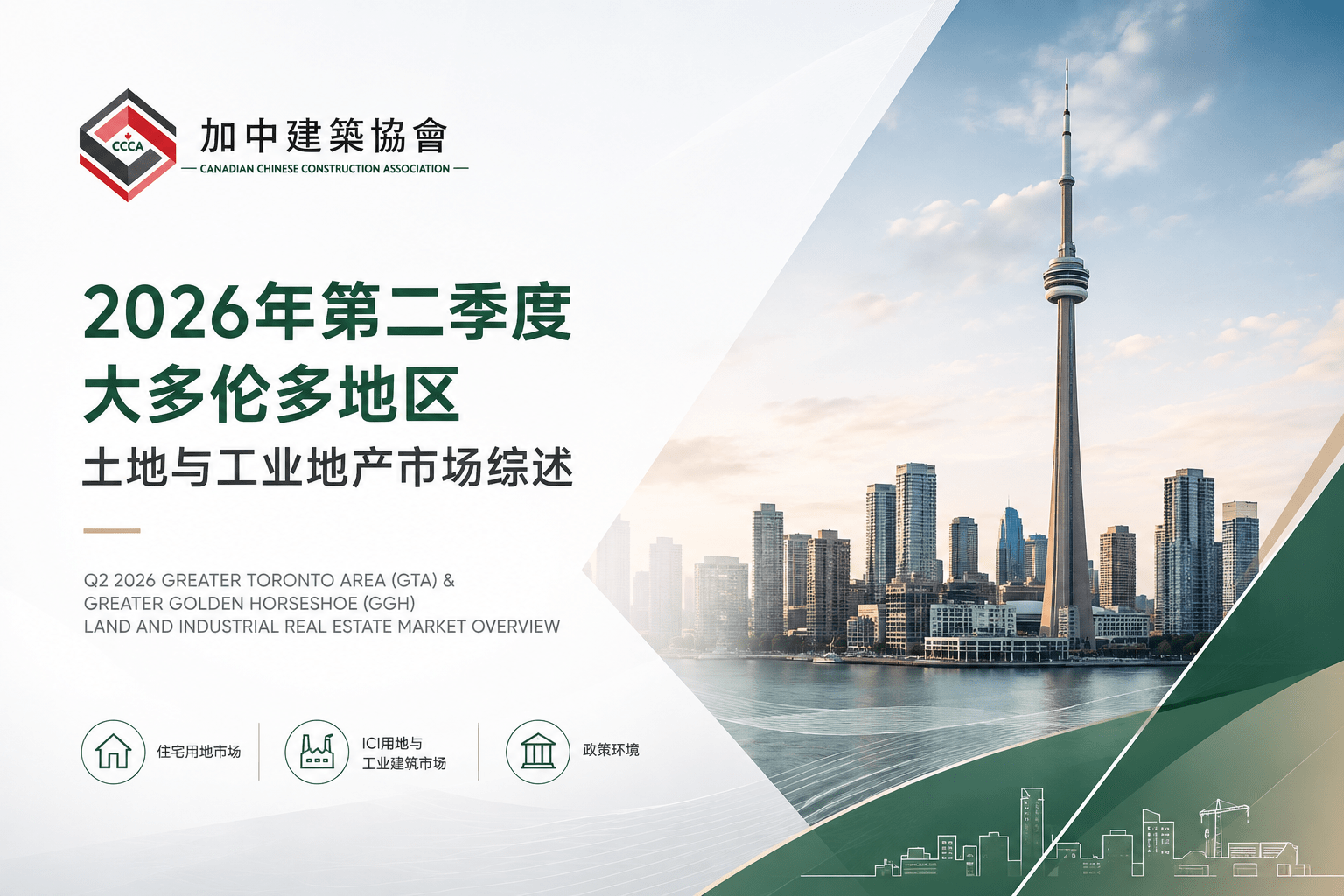
2026 Greater Toronto Area Land & Industrial Real Estate Market Overview


Q2 2026 Greater Toronto Area Land & Industrial Real Estate Market Overview

Residential Land and Industrial Real Estate Rebound Together as the Policy Environment Continues to Improve
The Canadian Chinese Construction Association (CCCA) closely follows developments in land development, residential construction and the industrial real estate market across the Greater Toronto Area (GTA) and the Greater Golden Horseshoe (GGH), and is committed to providing member companies with timely, professional and valuable industry information and market analysis.
Royal LePage Commercial’s Land & Investment Group has recently released its Q2 2026 Residential Land Report and Q2 2026 ICI Land & Industrial Buildings Report. Both reports show that, after a relatively steady first quarter, the GTA residential land and industrial real estate markets rebounded notably in the second quarter, with transaction volumes recovering steadily and market confidence gradually returning. At the same time, a range of federal and Ontario provincial measures continued to take effect, creating a more favourable environment for the real estate and construction sectors.
Drawing on the core data and policy information from the two reports, CCCA has organized and summarized current market trends below for the reference of members and industry colleagues.

1. Residential Land Continues to Recover, While Long-Term Supply Pressure Warrants Attention

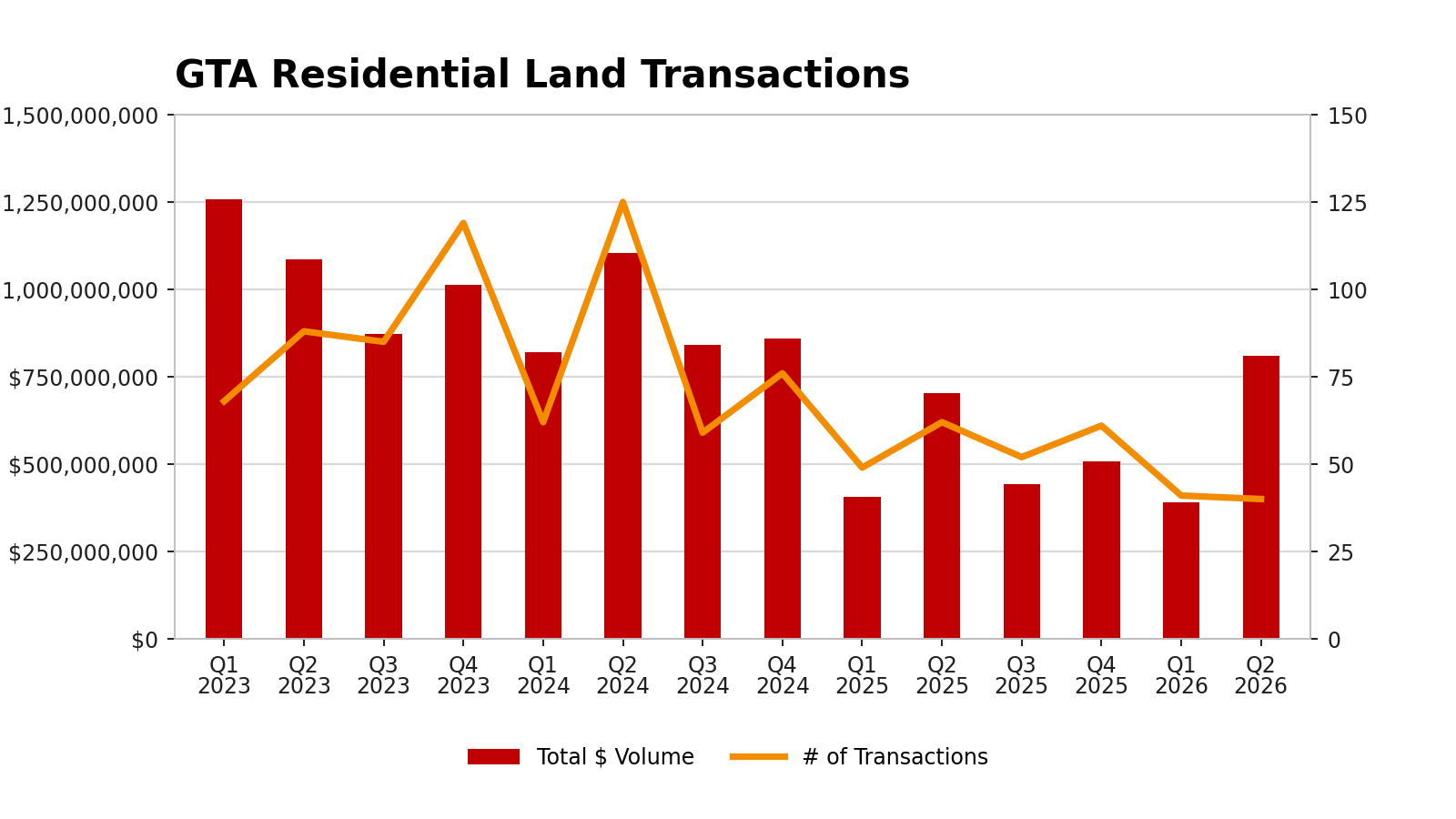
In Q2 2026, the GTA residential land market improved markedly overall, with quarterly sales reaching approximately $810 million — more than double Q1 and up about 15% year over year. Although sales volume recovered significantly, activity remained relatively concentrated, with about 40 transactions completed in the quarter and the ten largest deals accounting for roughly 79% of total GTA volume.
Notably, three of the top ten transactions were distress deals, representing about 41% of the quarter’s dollar volume. These projects were primarily taken over by lenders, who restructured the projects and optimized development arrangements to safeguard asset value, protect the interests of relevant stakeholders and carry the projects through to completion.
The report shows that capital continues to flow mainly toward land with mature development conditions, clear planning, complete municipal servicing and a high degree of certainty. Townhouse development land remained a market favourite and one of the most active residential product types of the quarter, while detached-home development land in established communities also saw steady demand. Meanwhile, distressed and non-arm’s-length transactions accounted for a relatively high share of the market, reflecting institutional investors gradually accelerating their acquisition of quality land through the window of price adjustment.

GTA Residential Land Transactions
Figure 1 | GTA Residential Land Transactions — $ Volume & Deal Count (Q1 2023–Q2 2026)
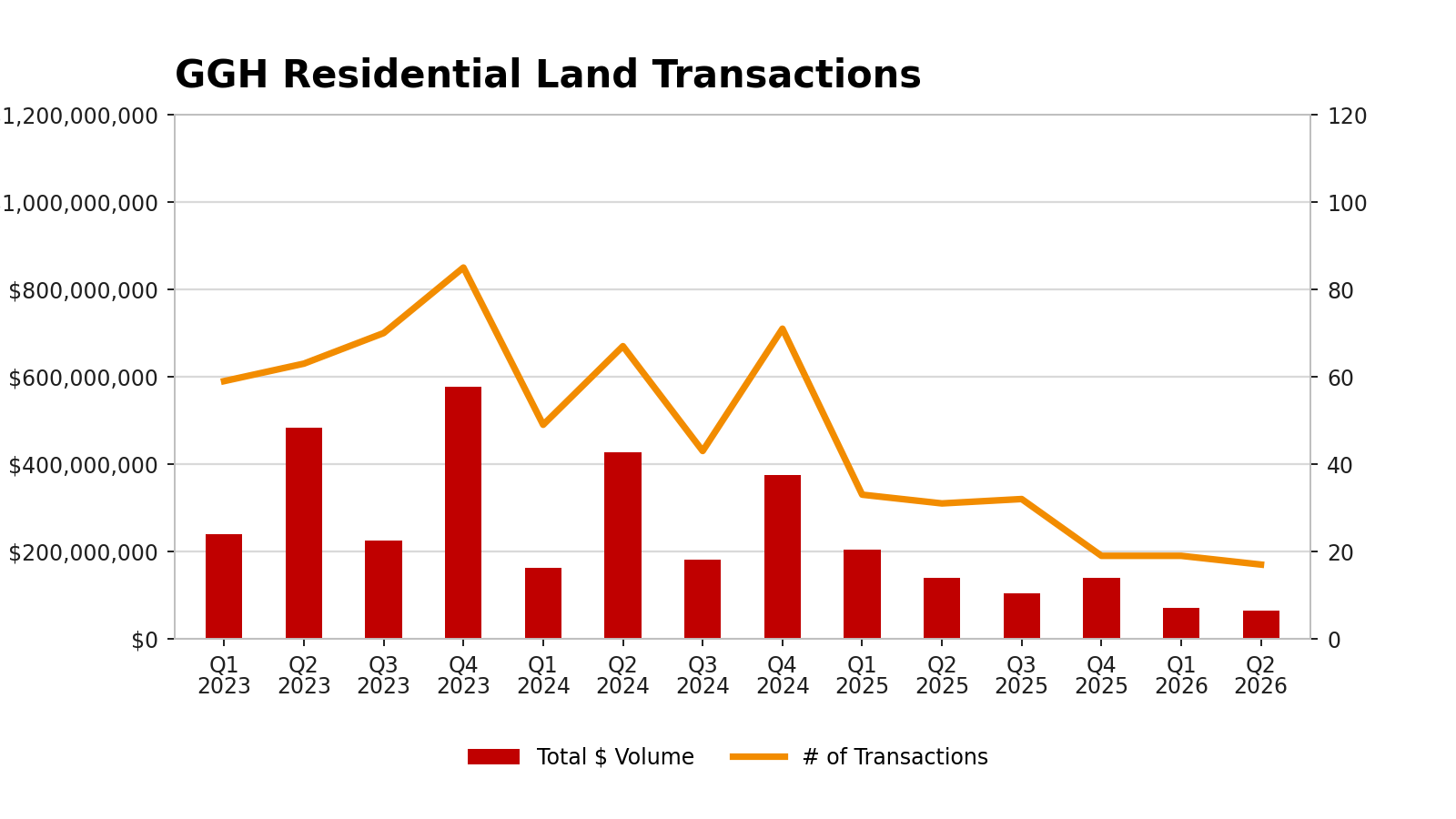
GGH Residential Land Transactions
Figure 2 | GGH Residential Land Transactions — $ Volume & Deal Count (Q1 2023–Q2 2026)

Low-Rise Residential

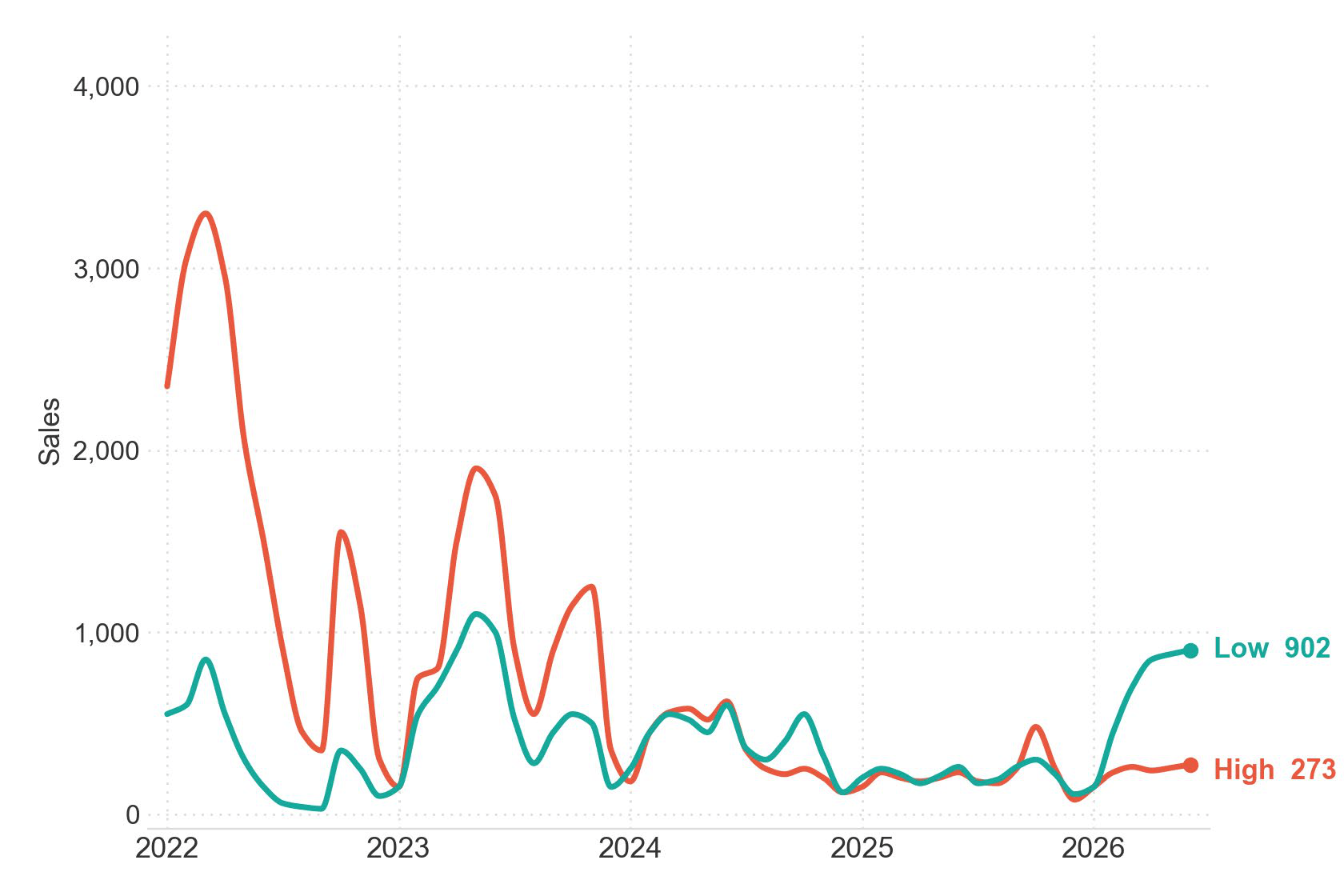
The low-rise residential market continued to send positive signals. Single-family new-home sales reached 902 units in June 2026, about 36% above the ten-year average for the same period. More rational pricing, together with the new-home HST rebate introduced federally and provincially, further lowered purchase costs and brought more stable demand for serviced detached and townhouse development sites.
As of the second quarter, cumulative new low-rise sales in the GTA had already surpassed the full-year 2025 total. If the current sales trend continues, the low-rise market could post its strongest annual performance in recent years.

Monthly New-Home Pre-Construction Sales
Figure 3 | Monthly New-Home Pre-Construction Sales: High-Rise vs Low-Rise
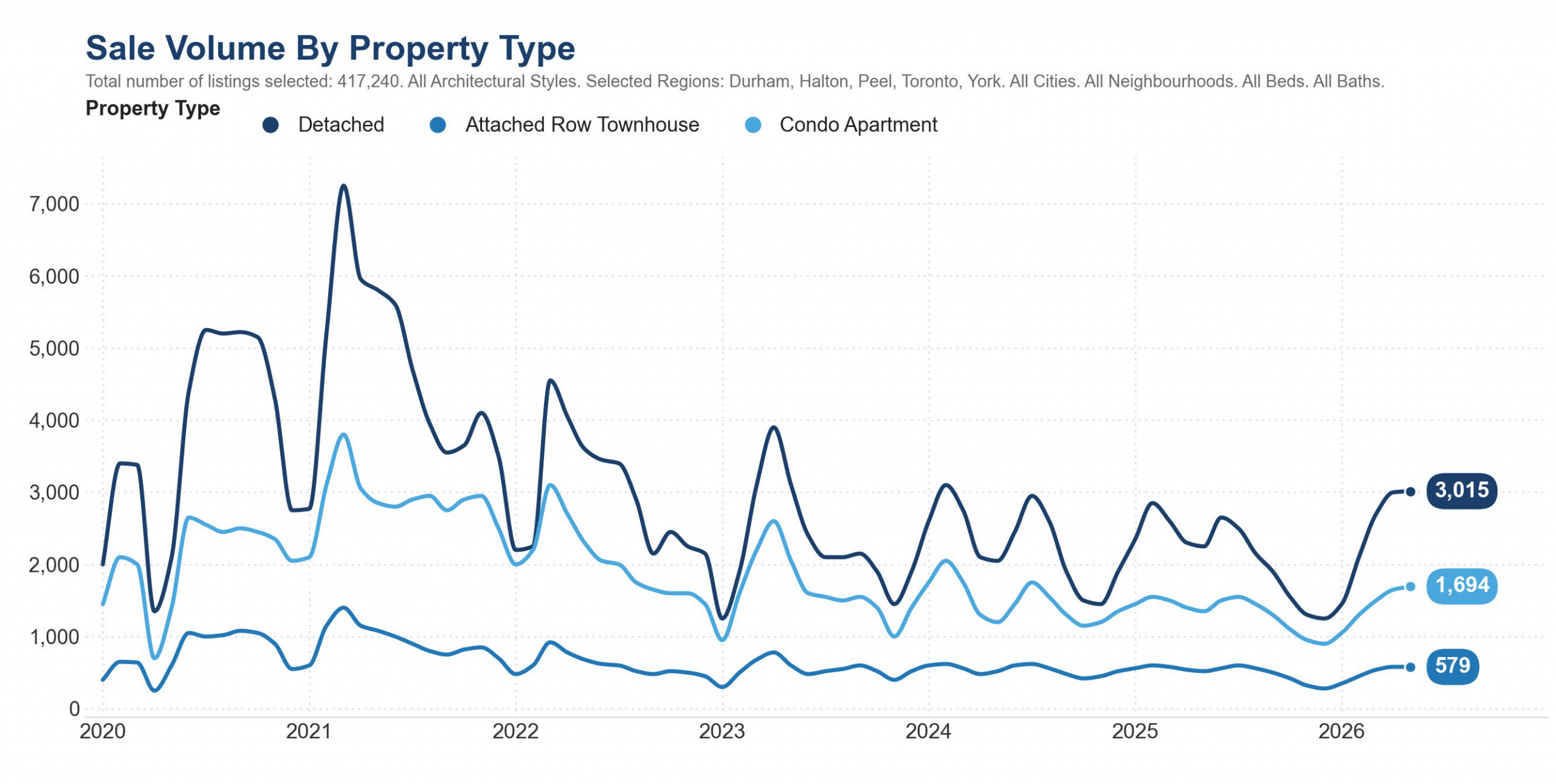
Sale Volume by Property Type
Figure 4 | Sale Volume by Property Type (Detached / Townhouse / Condo)

High-Density Residential

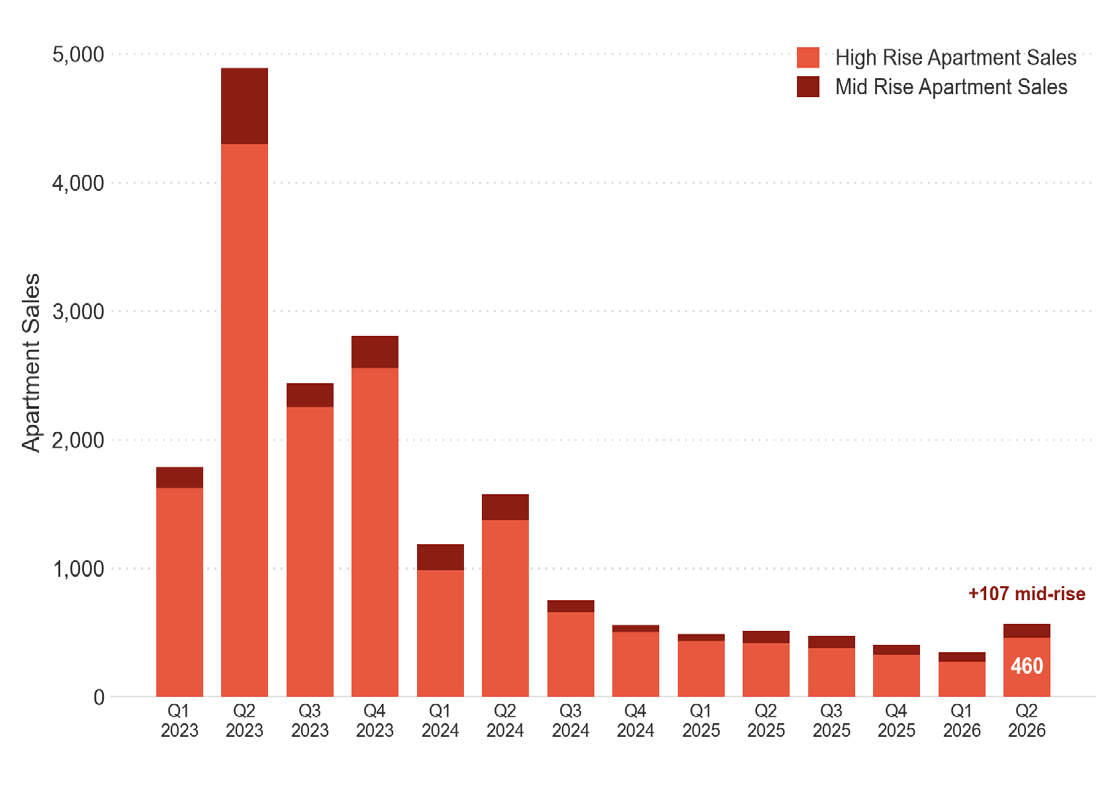
By contrast, the high-density residential market remains in an adjustment phase. In the second quarter, new condominium sales rose approximately 52% year over year to about 700 units — an improvement over last year, but still below the historical average.
At the same time, pre-construction and under-construction inventory declined about 37% year over year, and the market saw no new condominium project launches for a second consecutive quarter, indicating that developers remain relatively cautious overall.

Pre-Construction Apartment Sales by Quarter
Figure 5 | Pre-Construction Apartment Sales by Quarter (High-Rise & Mid-Rise)
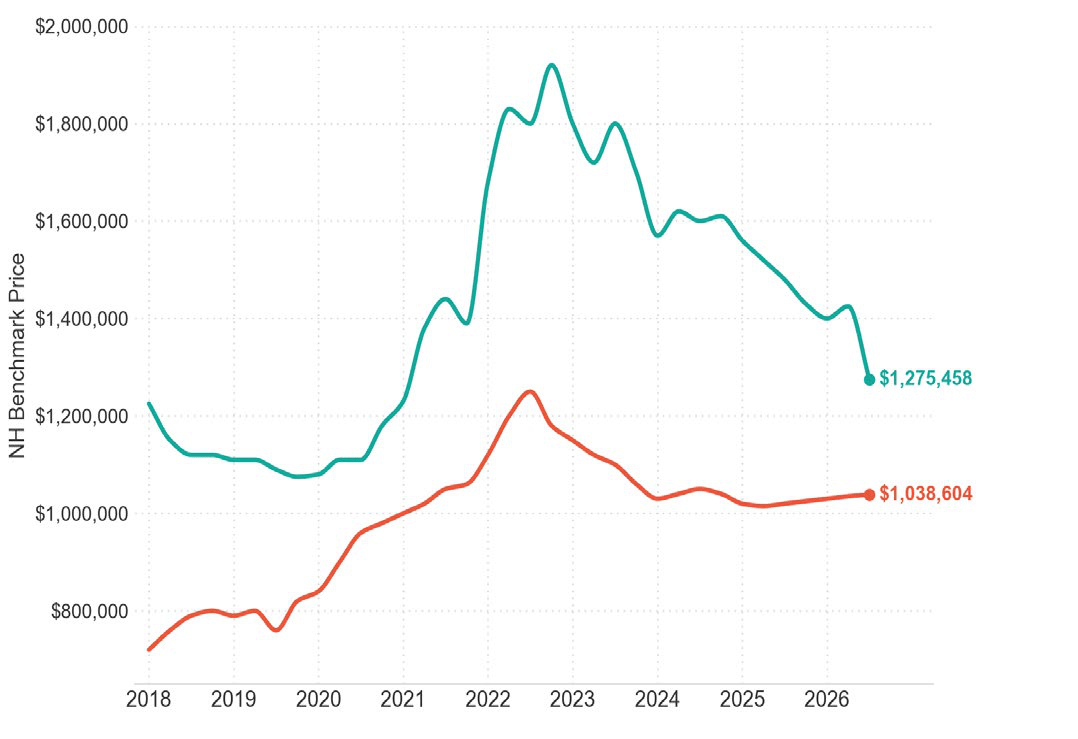
New-Home Pre-Construction Benchmark Price
Figure 6 | New-Home Pre-Construction Benchmark Price (High-Rise vs Low-Rise)

Rental Housing & Development Pipeline

Purpose-built rental remained the most resilient segment of the residential development market. As of the second quarter, more than 38,000 purpose-built rental units were under construction across the Greater Golden Horseshoe, underscoring continued strong long-term rental demand.
On the other hand, the large volume of condo inventory completed and delivered in recent years still needs to be absorbed, and will continue to exert some pressure on residential sales and market absorption in the near term.

Market Outlook

The report suggests that, for the foreseeable future, the residential land market will continue to be led by well-capitalized development companies and institutional investors with long-term investment capacity. Land projects with complete infrastructure, clear locational advantages and mature development conditions will continue to attract attention, and overall land prices are expected to gradually stabilize under the new market conditions.
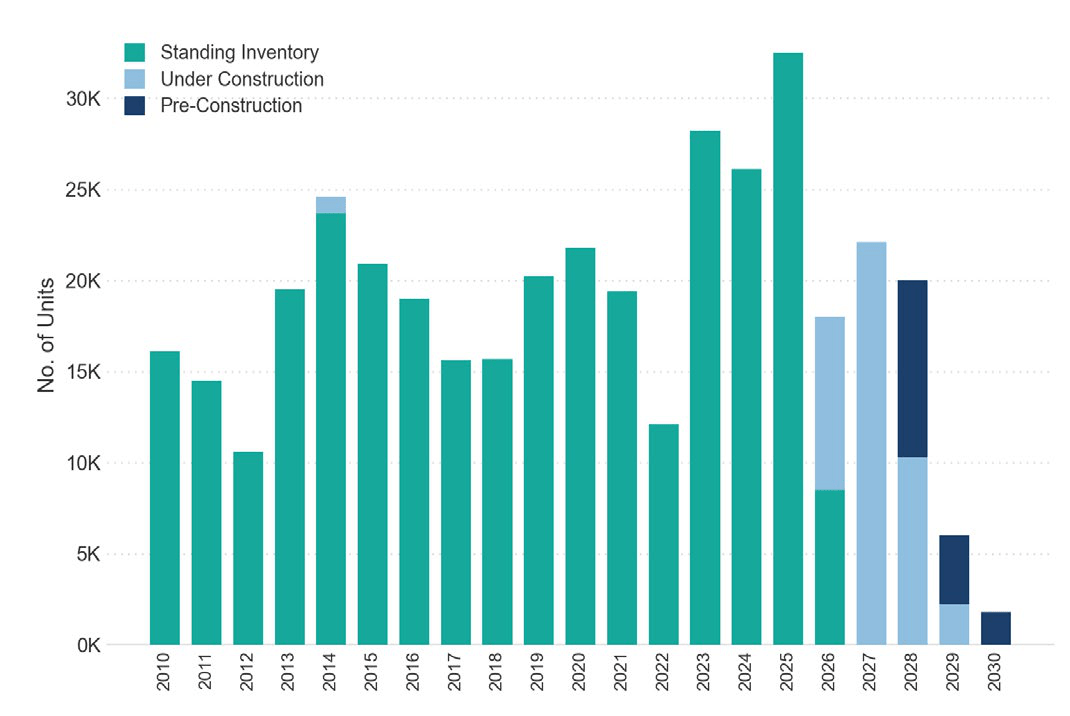
At the same time, the report notes that condominium launches are expected to remain limited through 2026. As existing projects are gradually completed, residential deliveries across the GTA and GGH may begin to decline after 2028. If new project supply does not recover in time, the market could face a phase of insufficient new housing supply around 2030, at which point the supply-demand imbalance may intensify further.

Scheduled Apartment Completions
Figure 7 | Scheduled Apartment Completions: Standing / Under Construction / Pre-Construction (2010–2030)

Representative residential land transactions this quarter included:

  • Mississauga | 1345 Lakeshore Road East: approximately $155 million, 3.1 acres, planned for high-density residential development;
  • Brampton | 10302 Heart Lake Road: approximately $118.3 million, 6.8 acres, planned for medium-density residential development;
  • Markham | 186 Old Kennedy Road: approximately $77.8 million, 9.6 acres, planned for medium-density residential development.

2. ICI Land & Industrial Buildings See Renewed Activity as Market Confidence Improves

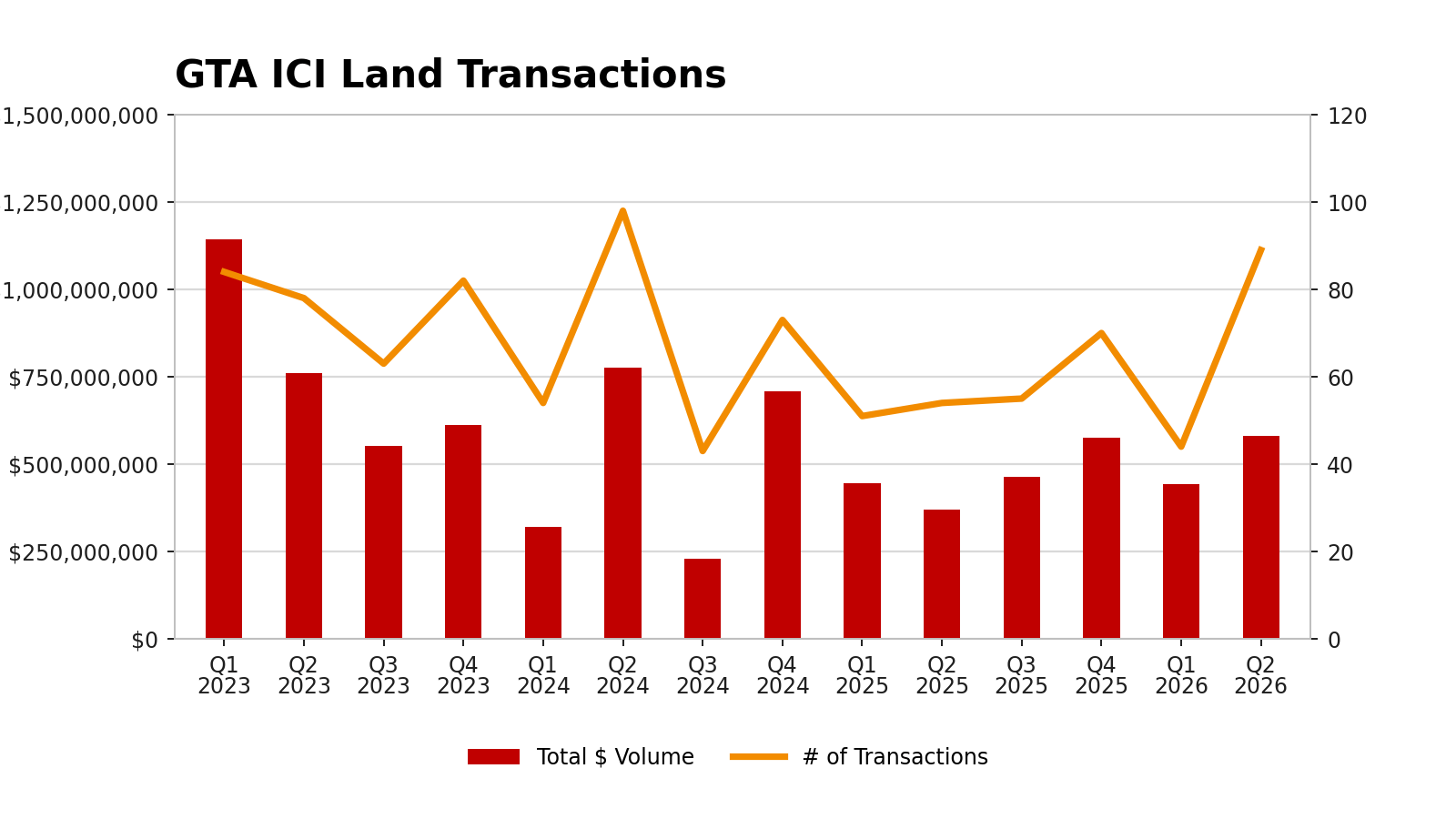
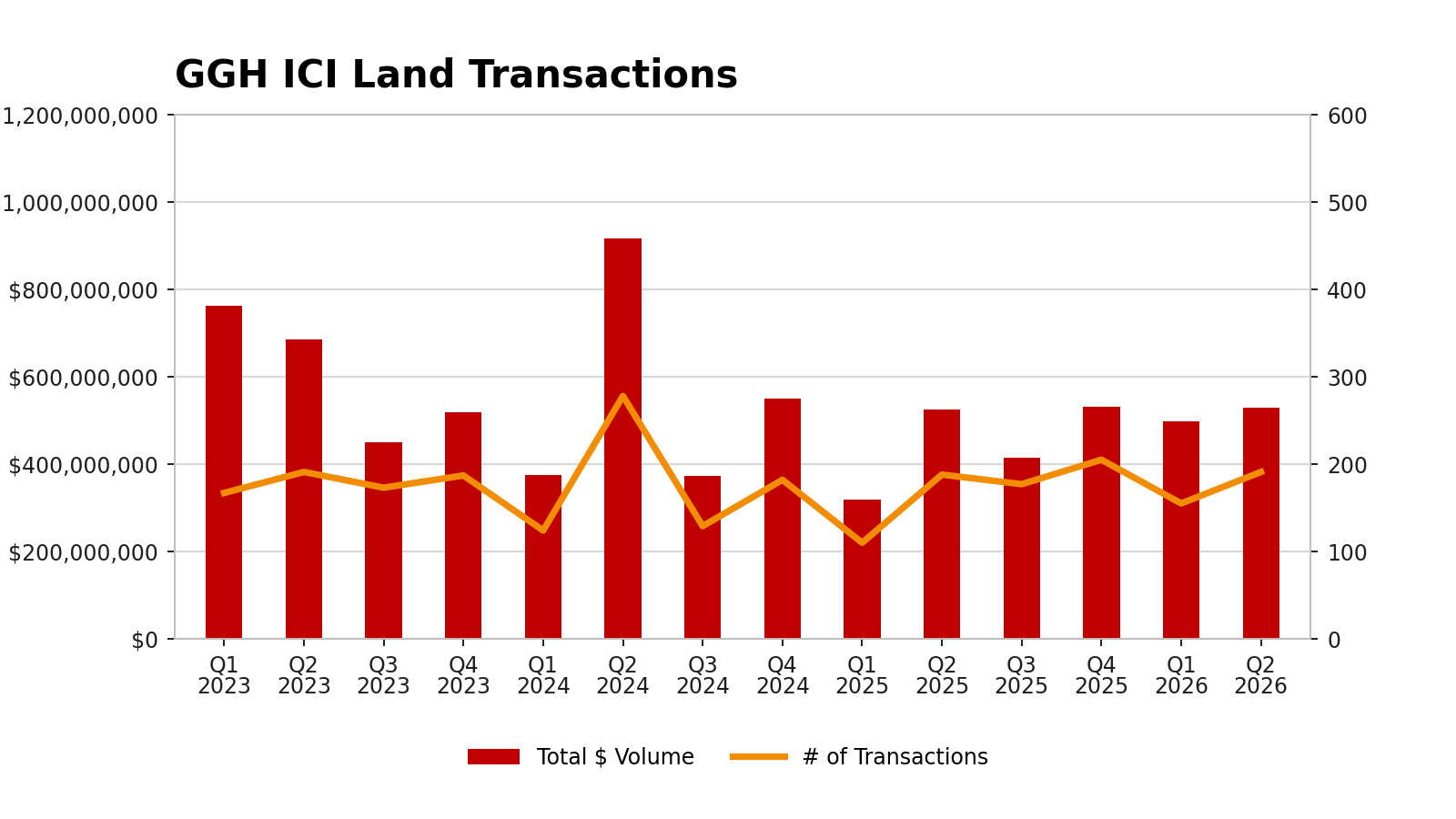
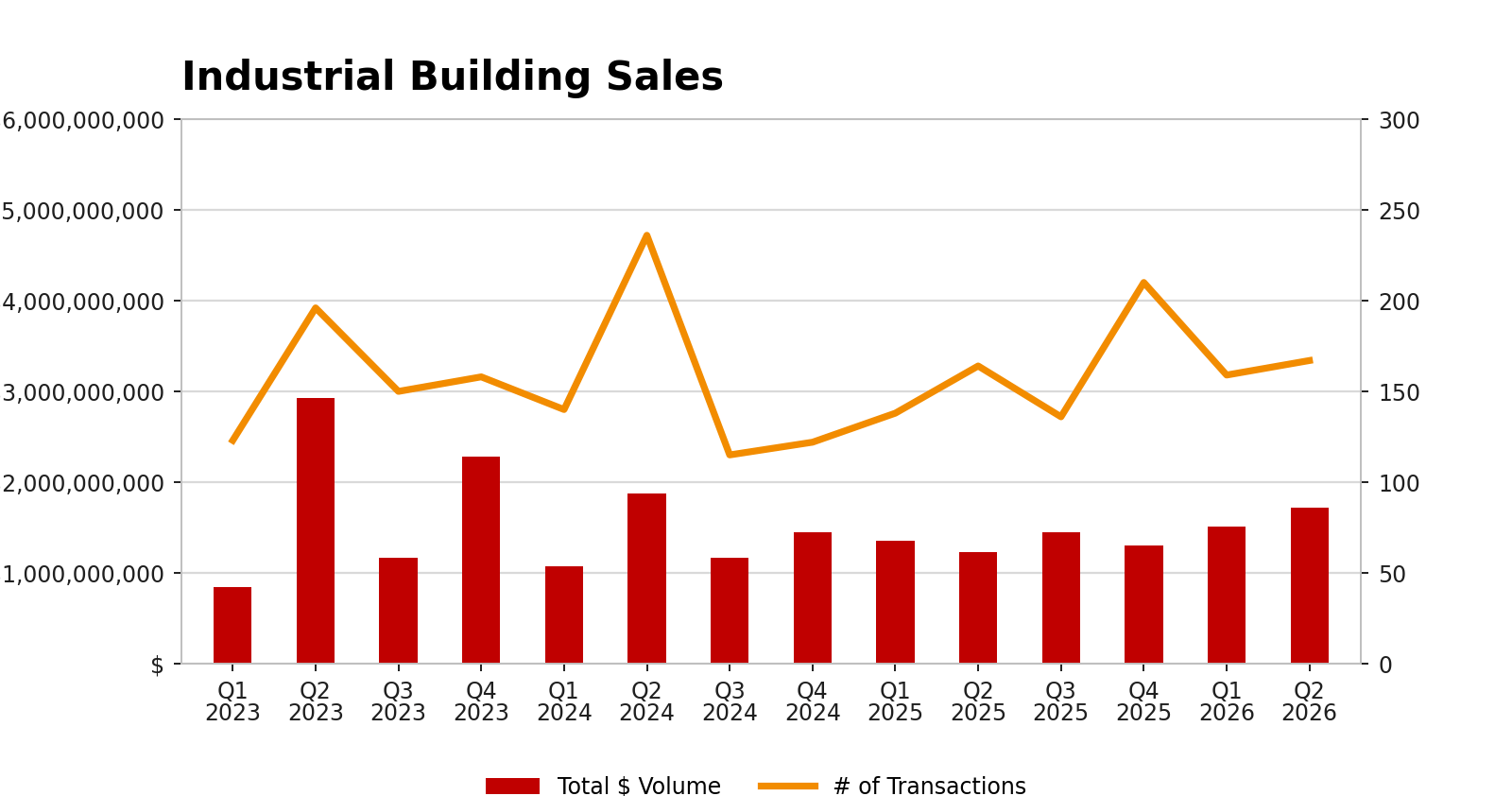
In Q2 2026, the GTA industrial, commercial and institutional (ICI) land market continued its recovery, with a clear pick-up in activity. GTA ICI land sales reached approximately $581.6 million across 89 transactions, up 31% from Q1 and 57% year over year. Meanwhile, the GGH ICI land market held steady at approximately $530.1 million across 191 transactions, while overall industrial building sales reached about $1.72 billion — the highest quarterly total in two years.
The report indicates that the recovery was driven mainly by investment demand from corporate end-users and institutional developers. Facing continued shifts in international trade policy and the supply-chain environment, many companies chose to complete greenfield acquisitions early to strengthen supply-chain stability and reduce future operational risk.
At the same time, a growing number of companies are transitioning from the traditional “just-in-time” supply-chain model toward a “just-in-case” model that places greater emphasis on inventory security and supply assurance. Demand for local warehousing, logistics and industrial real estate has continued to grow, providing new momentum for the industrial land market.
Notably, although greenfield land prices in peripheral areas have adjusted from their market peaks, well-located infill redevelopment sites with mature servicing have retained strong competitiveness and continued to attract investors.

GTA ICI Land Transactions
Figure 8 | GTA ICI Land Transactions — $ Volume & Deal Count (Q1 2023–Q2 2026)
GGH ICI Land Transactions
Figure 9 | GGH ICI Land Transactions — $ Volume & Deal Count (Q1 2023–Q2 2026)

Market Performance

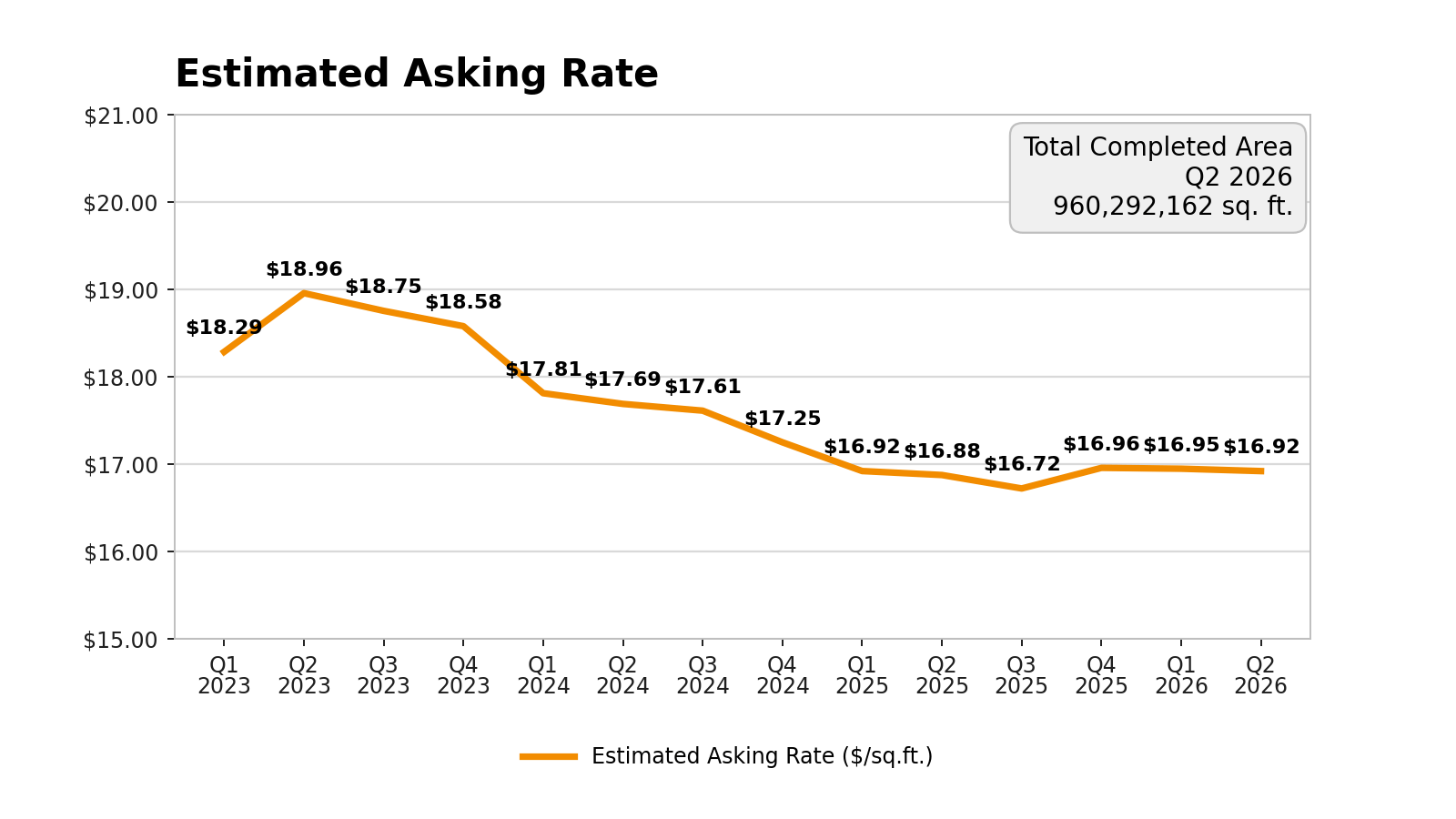
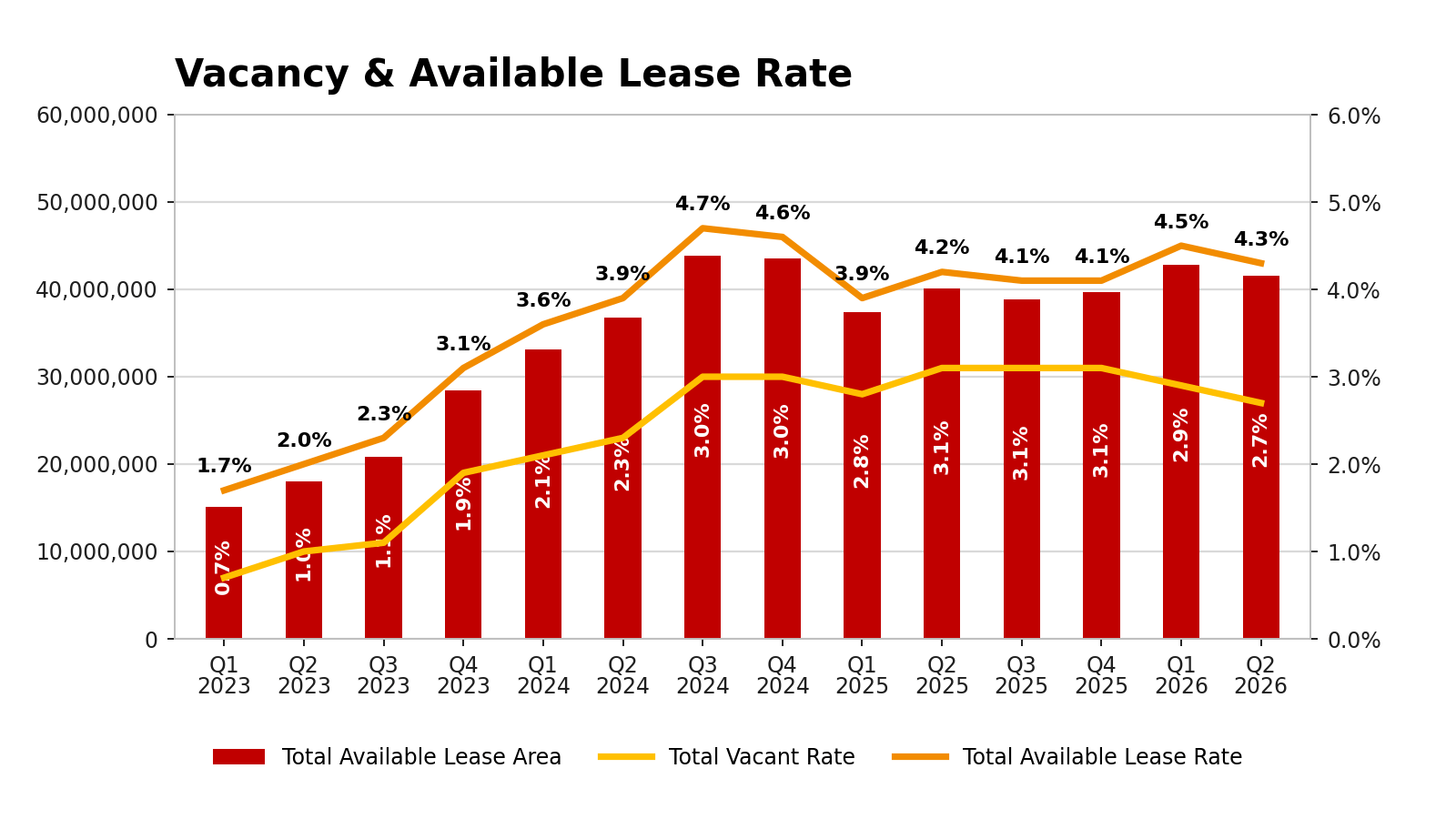
Overall, the GTA industrial market showed positive movement across the board in the second quarter. Both sales value and transaction count grew, industrial vacancy continued to decline, the leasing market held steady, and asking rents remained in the range of $16.00 to $16.50 per square foot.
At the same time, GTA industrial available lease area broadly stabilized, and the market recorded a fourth consecutive quarter of positive net absorption, reflecting continued improvement in real demand. As of the second quarter, total completed industrial area in the market stood at approximately 960 million square feet (about 960,292,162 sq. ft.), indicating a substantial existing industrial inventory in the region.

Industrial Building Sales
Figure 10 | Industrial Building Sales — $ Volume & Deal Count (Q1 2023–Q2 2026)
Estimated Asking Rate and Total Completed Area
Figure 11 | Estimated Asking Rate & Total Completed Area (Q2 2026)

Regional Trends

By region, transactions were concentrated in Halton Hills, Oakville, Mississauga and Caledon. Buyer types were also more diverse, spanning owner-users, real estate developers, technology firms, logistics operators and institutional investors, indicating a broader base of demand and a further strengthening of the market’s foundations.

Valuation & Outlook

The report also points out that a degree of bid-ask gap remains between buyers and sellers. On one hand, developers — constrained by financing costs, construction costs and target returns — have remained relatively cautious in land acquisition; on the other, end-users, focused on long-term operational needs, retain a strong willingness to purchase quality industrial properties that fit their strategic development.
As land prices gradually return to rational levels, the report considers that valuations are approaching a cyclical floor. With further improvement in the financing environment and the continued recovery of market confidence, industrial market activity is expected to strengthen further in the third and fourth quarters of 2026.
On the whole, a more diverse buyer mix and a continually improving investment environment reflect sustained confidence in the long-term value of quality industrial land and buildings. In the leasing market, however, tenants still retain some negotiating leverage in the near term, and the market overall is expected to continue operating in a relatively rational manner.

Industrial Vacancy and Available Lease Rate
Figure 12 | Industrial Vacancy & Available Lease Rate (Q1 2023–Q2 2026)

Representative ICI land transactions this quarter included:

  • Halton Hills | 10862 Steeles Avenue East: approximately $49.9 million, 25 acres, industrial use;
  • Oakville | 3480 Ninth Line: approximately $24 million, 4.3 acres, industrial use;
  • Mississauga | 6039–6155 Erin Mills Parkway: approximately $22.8 million, 6.3 acres, commercial use.

3. A Continually Improving Policy Environment, with Coordinated Federal and Provincial Measures

Q2 2026 marked a key point at which several Ontario housing measures moved into effect, while two major federal bills also completed their passage into law. Collectively, the measures focus on reducing taxes, development charges and financing costs to support new housing supply and to assist tariff-exposed manufacturers, creating a more favourable environment for the real estate and construction sectors.

Housing Policy — Provincial

  • 50% Development Charge Cut: The Canada-Ontario Partnership to Build provides $8.8 billion over ten years for housing infrastructure. Municipalities can qualify by reducing residential development charges (DCs) by 30% to 50% or more for at least three years. Toronto secured $1.5 billion and plans reductions of roughly 40% to 60% between 2026 and 2029, while freezing development-charge indexing at 2024 levels for 2025 and 2026.
  • HST Relief: Ontario’s enhanced HST rebate runs from April 1, 2026 to March 31, 2027, removing the provincial HST portion on eligible new homes up to $1 million for savings of up to $80,000. Combined federal and provincial relief can save eligible first-time buyers up to $130,000, phasing out between $1 million and $1.85 million.
  • Inclusionary Zoning Exemptions: Toronto rezoning, site-plan and building applications filed before July 1, 2027 are exempt from inclusionary-zoning requirements; applications filed after that date must provide 5% affordable housing for 25 years.
  • Conservation Authority Consolidation: Ontario plans to consolidate 36 conservation authorities into nine regional authorities, effective February 1, 2027, to reduce duplication and speed up development permitting.
  • Low-Risk Designations: Changes to Ontario’s Excess Soil Regulation remove some registration, sampling and tracking requirements for low-risk sites, which should reduce costs and timelines for smaller and infill projects, with transition provisions running to late October 2026.

Housing Policy — Federal

  • Federal-Provincial HST Relief: The coordinated rebate removes the full 13% HST on eligible new homes priced up to $1 million, with partial relief up to $1.85 million, effective April 1, 2026, to support buyer demand and improve project feasibility.
  • Bill C-20: Received Royal Assent on June 19, 2026 and established Build Canada Homes as a permanent federal Crown corporation, supported by an initial $13 billion and focused on affordable housing and construction innovation.
  • Bill C-26 and Intergovernmental Partnerships: Received Royal Assent on June 18, 2026 and provides $1.7 billion to provinces and territories for housing programs and development-fee relief, also supporting the $8.8 billion Canada-Ontario infrastructure commitment and municipal development-charge reductions of up to 50%.
  • Low-Cost CMHC Financing: The $55 billion Apartment Construction Loan Program continues to support purpose-built rental housing; by March 2026, CMHC had committed about $30.8 billion toward more than 78,000 rental homes.
  • Modular and Factory-Built Housing: Federal policy also supports modular and factory-built housing through financing, building-code updates and the Build Canada Homes mandate.

Industrial & Trade Policy — Provincial

  • Ontario Made Manufacturing Investment Tax Credit: The refundable credit has been enhanced to 15%, with a maximum of $3 million per year on eligible expenditures of up to $20 million, applying to property available for use on or after May 15, 2025 and before January 1, 2030. A parallel 15% non-refundable credit is now available to corporations that are not Canadian-controlled private corporations, with a ten-year carry-forward. The credit applies to buildings and machinery used for manufacturing or processing in Ontario.
  • Protecting Ontario Account: The Province launched the Protect Ontario Financing Program as the first phase of the $5 billion Protecting Ontario Account, providing working capital to for-profit businesses operating in sectors subject to Section 232 tariffs — namely steel, aluminum, copper and autos — to help cover operating expenses through the trade disruption.
  • Trade and Tax Support: The 2026 Ontario Budget added $100 million to the Ontario Together Trade Fund and cut the small-business corporate income tax rate from 3.2% to 2.2% effective July 1, 2026, projected to deliver $1.1 billion in relief over three years.

Industrial & Trade Policy — Federal

  • Tariff Response Package: On May 4, 2026, the Government of Canada announced $1.5 billion to support tariffed industries, including a new $1 billion Business Development Bank of Canada program offering loans of $2 million to $50 million to firms that manufacture and export products containing steel, aluminum or copper, plus a $500 million top-up to the Regional Tariff Response Initiative, with carve-outs of $150 million for steel, $100 million for automotive and $150 million for food security.
  • Trade Measures and CUSMA: Effective June 8, 2026, a U.S. proclamation eased selected metals tariffs, cutting duties on agricultural machinery and HVAC equipment from 25% to 15% and lowering the U.S.-origin content requirement from 95% to 85% through December 31, 2027. The formal CUSMA joint review is set to begin July 1, 2026; no extension was agreed on that date, but the agreement does not expire until 2036, and the review itself does not change existing tariff rates.

4. Closing

Taken together, the two reports show that the GTA land and industrial real estate market improved on three fronts in Q2 2026 — sales volume, transaction activity and policy support. Residential land sales more than doubled from the previous quarter, industrial land and buildings reached a two-year high, and provincial and federal policy continued to work in concert on cost reduction, tax relief and supply stability. At the same time, the structural concerns of limited condo launches and a shrinking post-2028 completion pipeline, together with ongoing international trade-policy uncertainty, warrant close attention from the industry. For CCCA member companies, this is both a window to capture distressed and well-serviced land opportunities and a strategic moment to position early in local warehousing and manufacturing real estate.
The Canadian Chinese Construction Association (CCCA) will continue to uphold its philosophy of “exchange, cooperation and mutual benefit,” building a platform for industry information and resource sharing and working hand in hand with member companies and industry colleagues to seize market opportunities and move forward steadily.
Data source: Royal LePage Commercial — Land & Investment Group, Q2 2026 Residential Land Report and Q2 2026 ICI Land & Industrial Buildings Report. This article is a summary of market information and does not constitute investment or transaction advice.