Canadian Chinese Construction Association

2026加中建筑协会金秋建筑论坛博览会圆满收官:80家企业参展,逾千人到现场

2026金秋建筑行业论坛博览会 / 2026 Fall Construction Forum & Expo

Policy, capital, green construction and business operations in conversation — 80 exhibitors, with elected officials and industry leaders in attendance
📅 Saturday, September 26, 2026 · 1:00–6:00 p.m.📍 50 Esna Park Drive, Markham

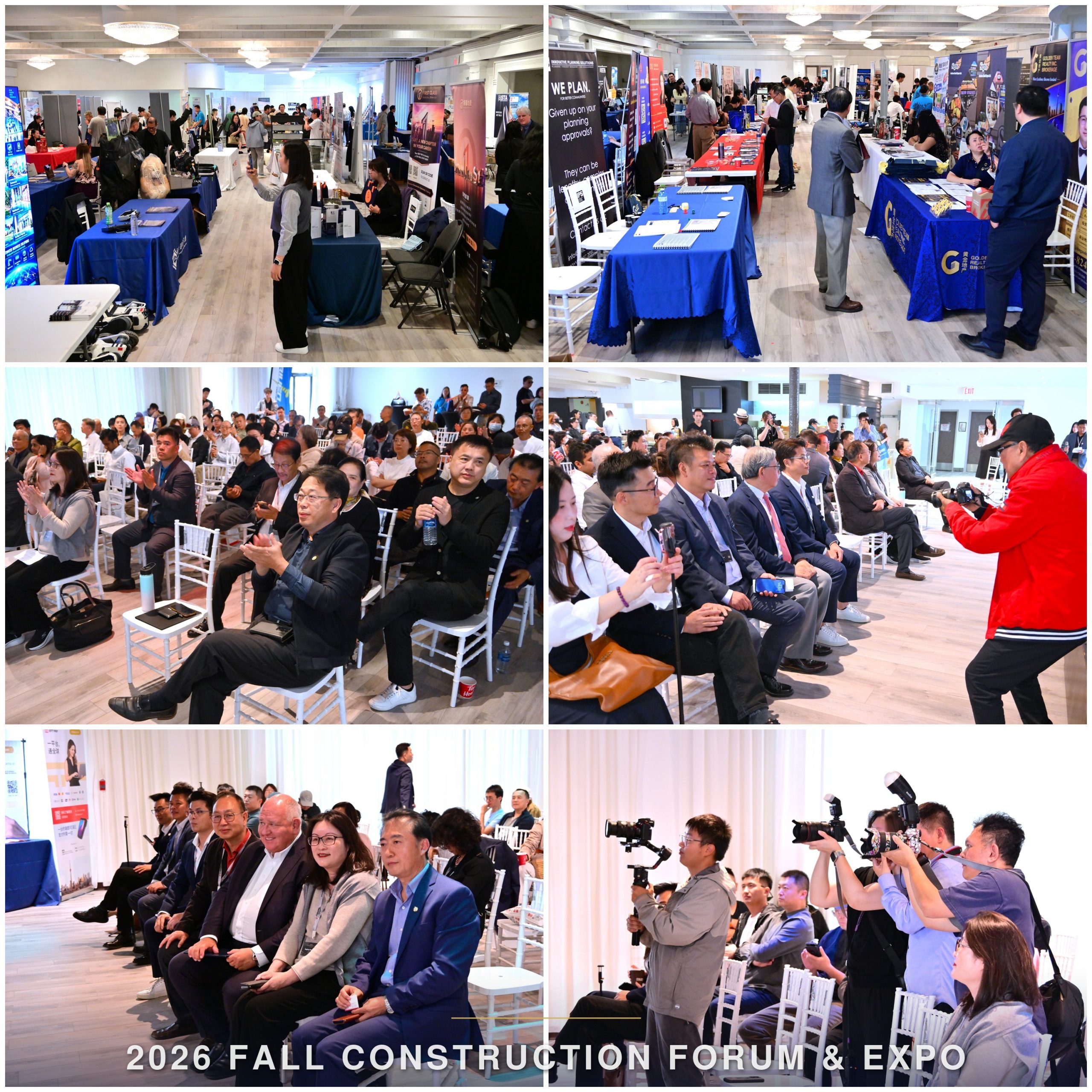
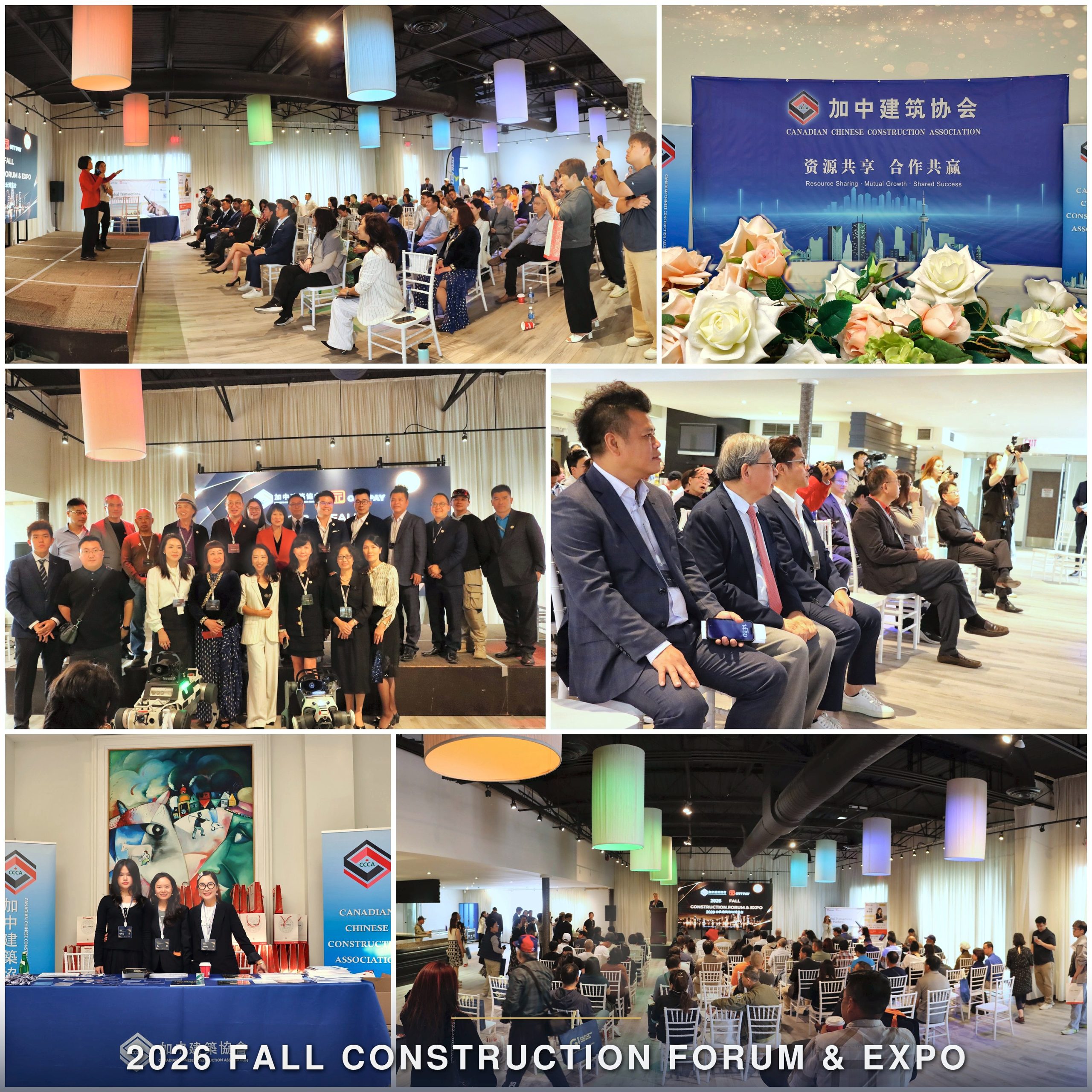
From 1:00 to 6:00 p.m. on Saturday, September 26, 2026, the 2026 Fall Construction Forum & Expo, hosted by the Canadian Chinese Construction Association (CCCA) with title sponsor OTT Pay, took place at 50 Esna Park Drive, Markham.

Themed “Building Cities in a Reshaped Market: Policy, Capital, Green Construction and the Future of Communities,” the forum brought together government representatives, developers, planners and designers, engineers, building-materials and home-furnishing suppliers, and professionals in finance, law, insurance, technology and professional services. 80 companies exhibited and more than 1,000 guests attended. Through a keynote address, four panel discussions, exhibitor showcases and business networking, participants explored trends and opportunities across Canada’s construction and related industries.
1,000+
Attendees
80
Exhibitors
20+
Forum Speakers
$5,000+
Gifts & Prizes
Exhibitors at the 2026 Fall Construction Forum & Expo

From policy and project feasibility to green construction, financing and tax, business operations and risk management, the forum brought the issues construction businesses care about most onto a single platform, further strengthening CCCA’s role in connecting resources across the industry value chain.

HIGHLIGHTS
▸MP Michael Ma explained how construction businesses can access $880 million in government funding for licensed skilled-trades training
▸Toronto Mayor Olivia Chow outlined the latest multiplex housing policies and development charge relief programs
▸OTT Pay CEO Daphne Huang delivered a keynote on payment and cross-border settlement solutions for the construction and renovation industry
▸80 exhibitors from construction and related industries, and 20+ forum speakers on today’s hottest topics
▸Over $5,000 in gifts and raffle prizes, capped by a $1,000 Aero Future grand cash prize
▸Generous Western-style refreshments and a lively, buzzing atmosphere all afternoon
DIGNITARIES

Elected Officials Visit and Address the Gathering

Member of Parliament Michael Ma delivered remarks and introduced $880 million in funding for licensed skilled-trades training, along with how businesses can apply. Toronto Mayor Olivia Chow shared the city’s multiplex housing policies and development charge relief programs. Markham Mayor Frank Scarpitti and Richmond Hill Deputy Mayor Godwin Chan also addressed the gathering, both speaking highly of the annual industry forum hosted by the Canadian Chinese Construction Association.
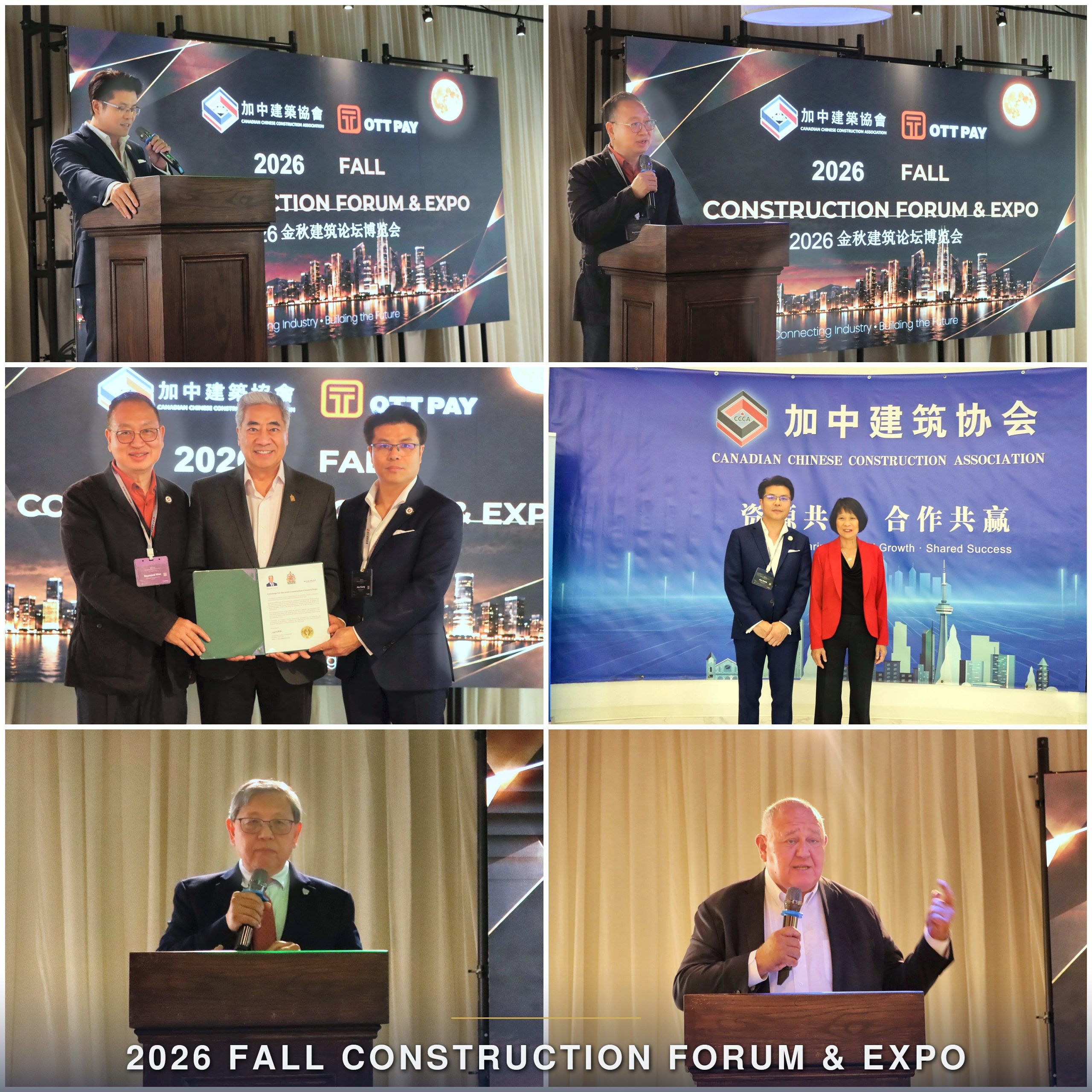
Elected officials addressing the forum

The presence of so many public-sector representatives made city building, community development and industry collaboration important topics of conversation beyond the forum stage.

Community leaders and business representatives also joined the event and met with guests, including Zhifeng Sun, President of the Canada China Real Estate Investment Chamber of Commerce; Jinpeng Zhang, Chair of the Chinese Real Estate Agents Alliance; Gang Peng, Executive President of the Canada China Shandong Chamber of Commerce; Lydia Yang, General Manager of FOTILE Canada; Rui Jiang of Taichu Capital; Guangtong Wang of Stanley Financial; Jie Zhang, Chair of the Canada China Trade Innovation Alliance; Jinhong Jian, President of the Canadian Kaiping Cultural Heritage Association; Carl Chen of OTT Pay; Zhe Zhou of ZLaw; and Alex of TBEA.

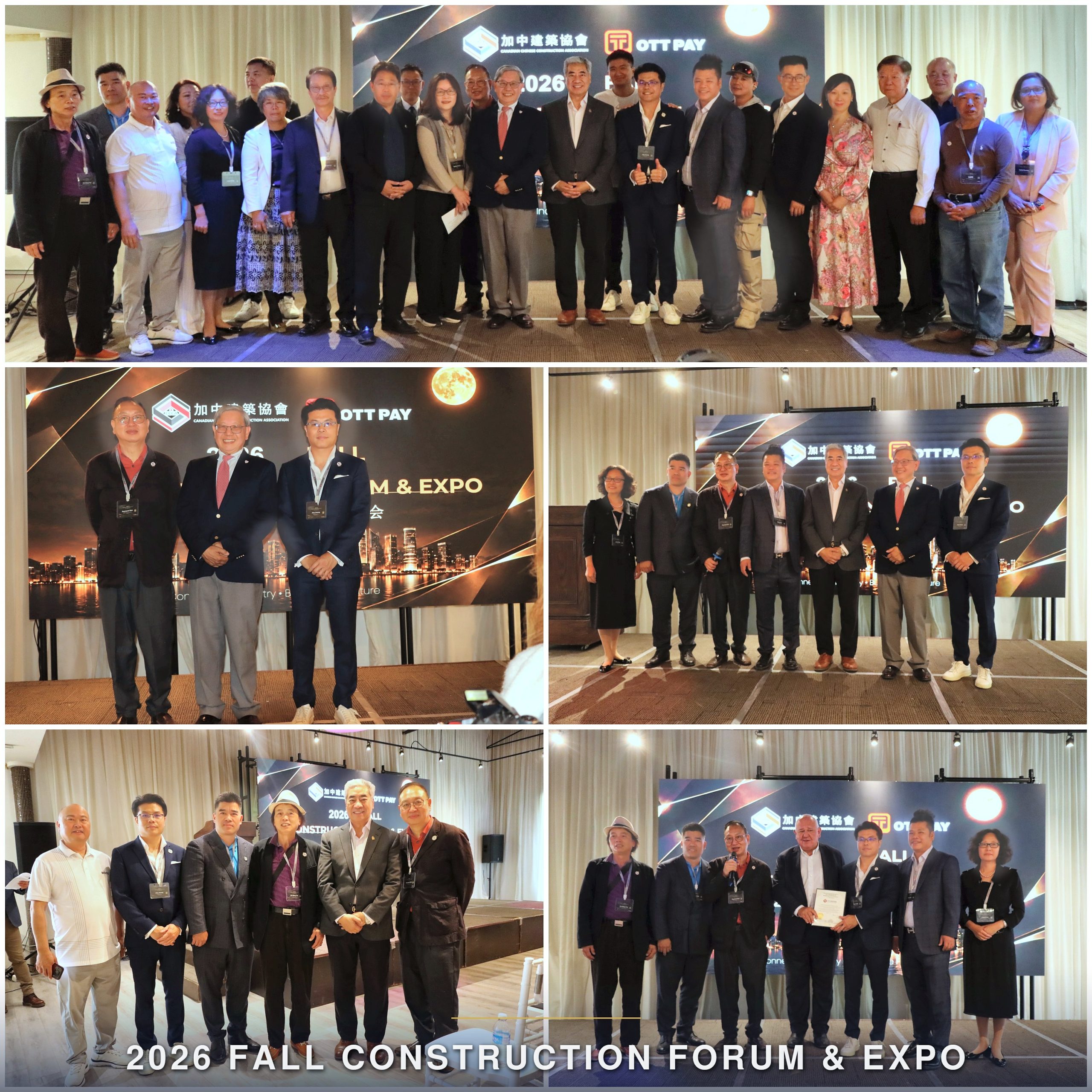
During the opening, CCCA President Alex Huang and Founding President Raymond Wan each delivered remarks, welcoming and thanking government guests, industry partners, member companies, sponsors, exhibitors and all attendees.

Opening remarks and guest speeches
KEYNOTE

Title Sponsor OTT Pay: Keynote on Payments and Cross-Border Settlement

The 2026 Fall Construction Forum & Expo was title sponsored by OTT Pay. OTT Pay CEO Daphne Huang delivered the keynote address, “Payment and Cross-Border Settlement Solutions for the Construction and Home Renovation Industry.”

With more than 20 years of experience in financial services and cross-border payments, including serving as head of SWIFT China, Daphne Huang drew on real-world scenarios from the construction and home industries to discuss client collections, payments to overseas suppliers, cross-border settlement and cash management. The forum then moved into four panel discussions, each led by a moderator.
OTT Pay CEO Daphne Huang delivering the keynote
Forum stage Group photo in the forum area
PANEL 01

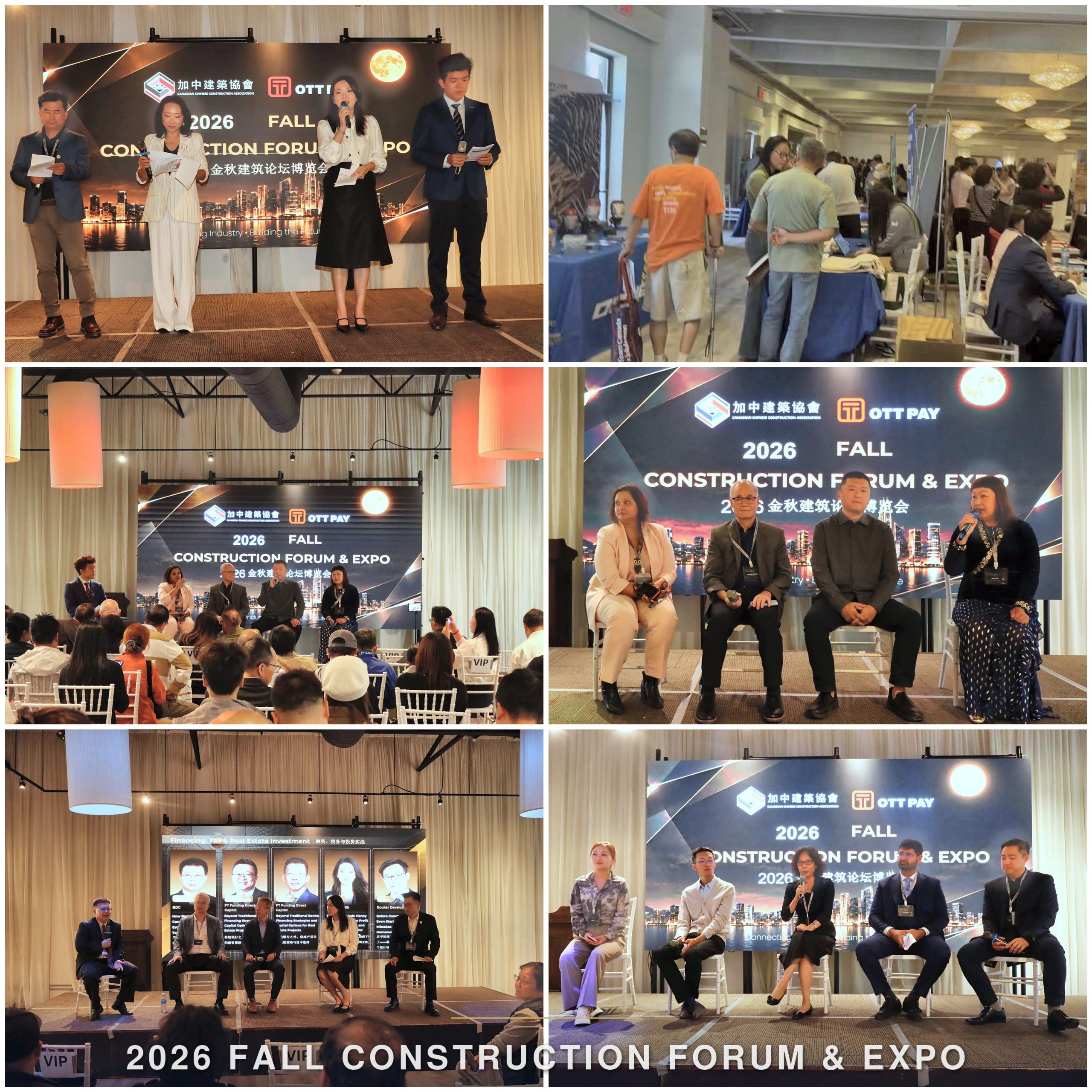
Panel 1: Policy, Planning and Project Feasibility

The first panel, moderated by Michael and themed “Policy, Planning and Project Feasibility,” examined planning, design and development feasibility in a changing market.

Panelists included Katie Pandey, Shenshu Zhang of TAES Architects, Mengdi Zhen of Z Square, and Judy Xie of Aero Future Canada.

Katie Pandey discussed planning policy and financial incentives; Shenshu Zhang responded to market shifts from an architecture and planning perspective; Mengdi Zhen shared new thinking under the theme “From Design to Feasibility”; and Judy Xie extended the conversation from individual developments to the community level, exploring how to create higher-quality communities and living environments.

As the market continues to adjust, project feasibility depends not only on design, but also on planning policy, market positioning, cost and community needs. The discussion moved beyond “how to design a project” to “why build it, and how to make it succeed.”

PANEL 02

Panel 2: Building Technology and Green Construction
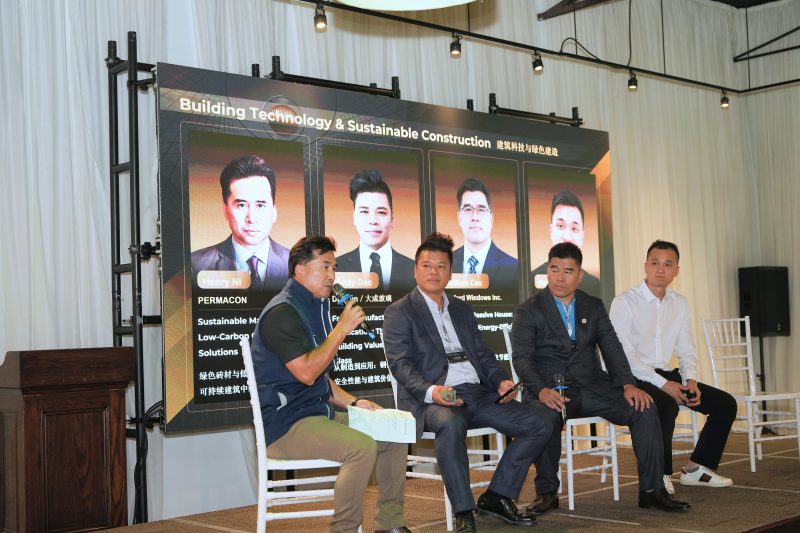
The second panel, moderated by Henry, focused on “Building Technology and Green Construction,” discussing how materials, building technology and residential systems can improve building performance and long-term value.

Panelists included Henry Ni of PERMACON, Andy Gao of DaeSun Glass, William Cao of Winford Windows Inc., and Simon Cao of Union Mechanical.

Henry Ni shared applications of green masonry and low-carbon cement; Andy Gao examined the safety performance and building value of tempered glass; William Cao focused on windows, doors and energy-efficient technology for the buildings of the future; and Simon Cao discussed residential HVAC upgrades and energy-saving practices.

This panel brought “green construction” down from a broad concept to specific components such as materials, windows and doors, curtain walls and HVAC. Green building is increasingly shaping building performance, operating costs, market value and the user experience.

PANEL 03

Panel 3: Financing, Tax and Investment in Practice

Moderated by Iris and themed “Financing, Tax and Investment in Practice,” the third panel asked where the money comes from and how to keep the profit, covering project financing, capital structure, wealth management and tax.

Panelists included Steven Wu of BDC, Frank Zhang and Tony Yu of FT Funding Direct Capital, Iris Zhu of Irisky Wealth, and a representative of Dexter Development.

Steven Wu discussed financing support for construction and real estate businesses in today’s market; Frank Zhang and Tony Yu shared financing channels beyond traditional banks, project financing strategies and capital options; Iris Zhu addressed real estate investment, cash flow and capital structure from a wealth management perspective; and the Dexter Development representative shared hands-on experience in project development.

This session broadened “financing” to cover sources of capital, cost of capital, tax planning and investment returns, offering developers, builders and investors a discussion grounded in real projects.

PANEL 04

Panel 4: Business Growth and Risk Protection for Construction Companies
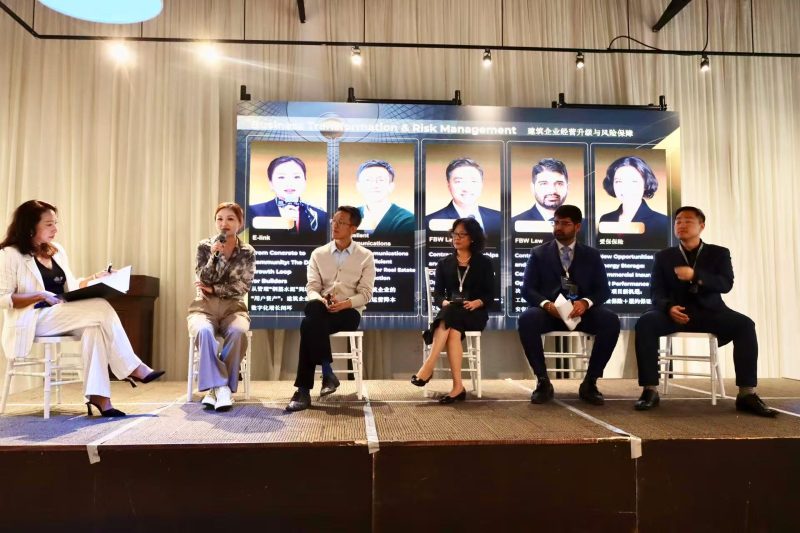
The fourth panel, “Business Growth and Risk Protection for Construction Companies,” moderated by Danielle Chen, ranged from client growth to risk protection, covering digital operations, client management, legal risk and commercial insurance.

Panelists included Anna Luo of E-link, Eric Xie of Axcellent Communications, Greg Wu and Perry Benipal of FBW Law, and Linda Geng of 爱保保险.

Anna Luo shared insights on digital operations and client growth; Eric Xie discussed smart communications and operating costs for real estate and construction businesses; Greg Wu and Perry Benipal covered construction contracts, liens and legal risk; and Linda Geng spoke on protecting projects and operations through commercial insurance.

This session extended the forum from project development to business operations. The more complex the market, the more construction companies need to pay attention to clients, operations, contracts, legal liability and risk protection all at once.

EXPO

80 Exhibitors: B2B Connections Take Center Stage

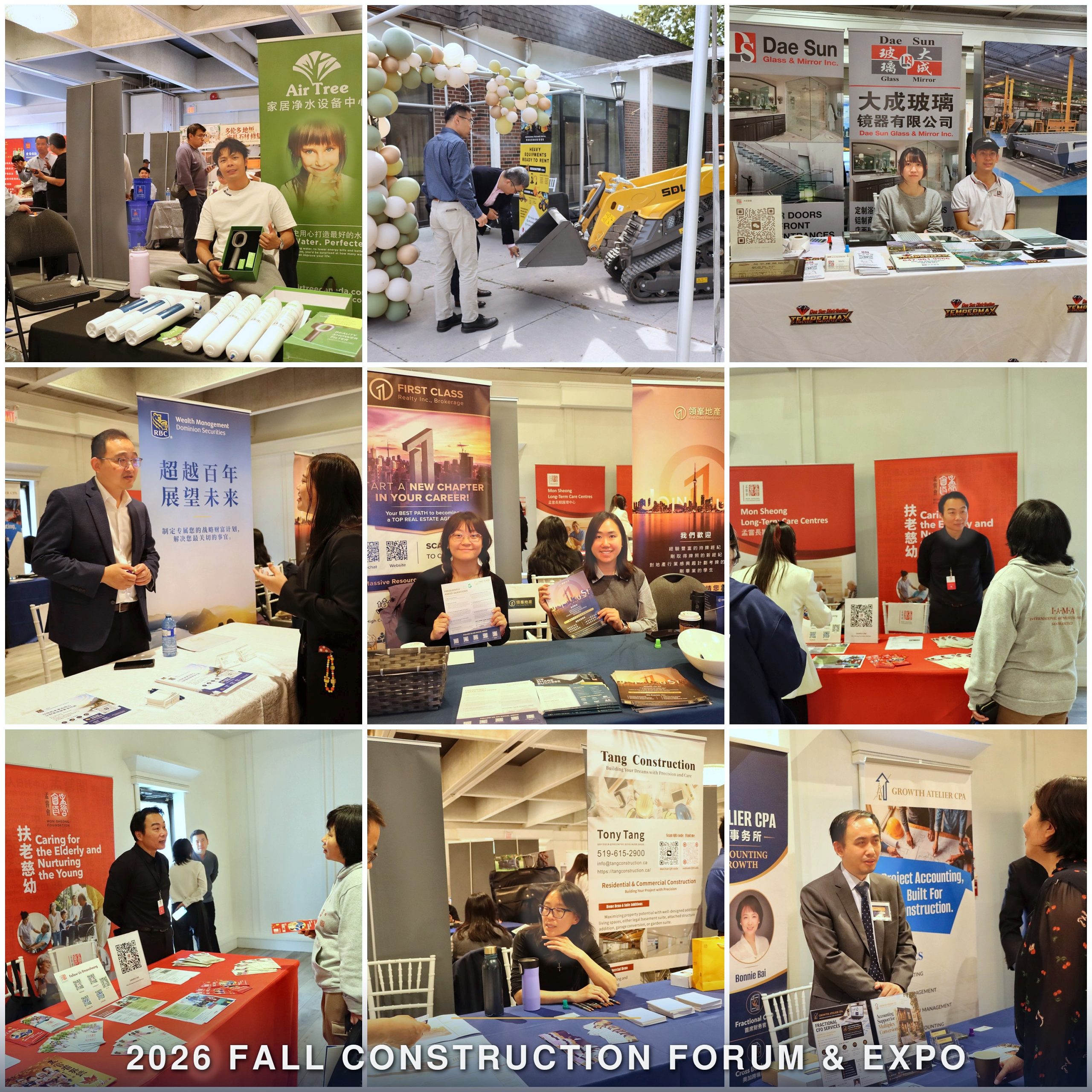
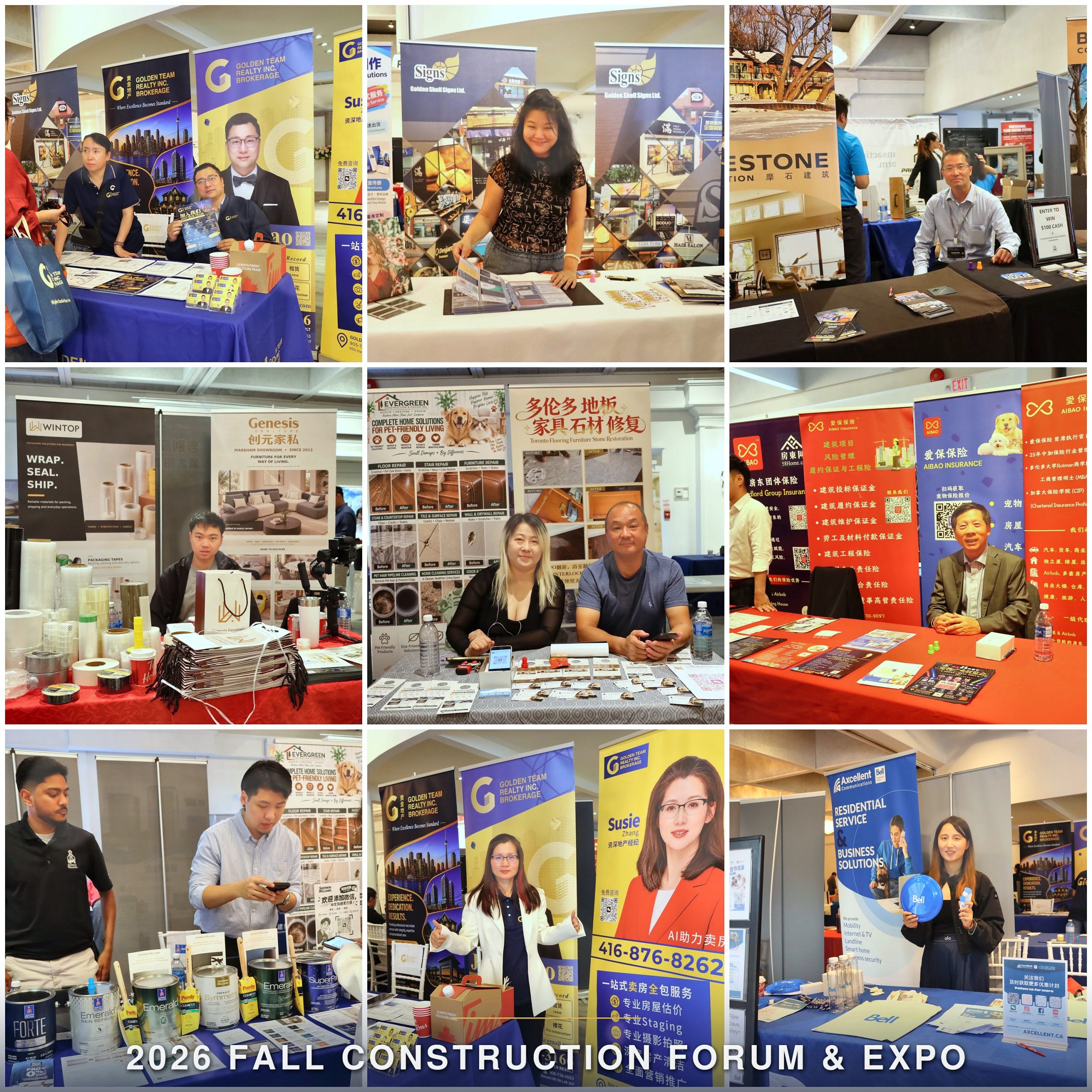
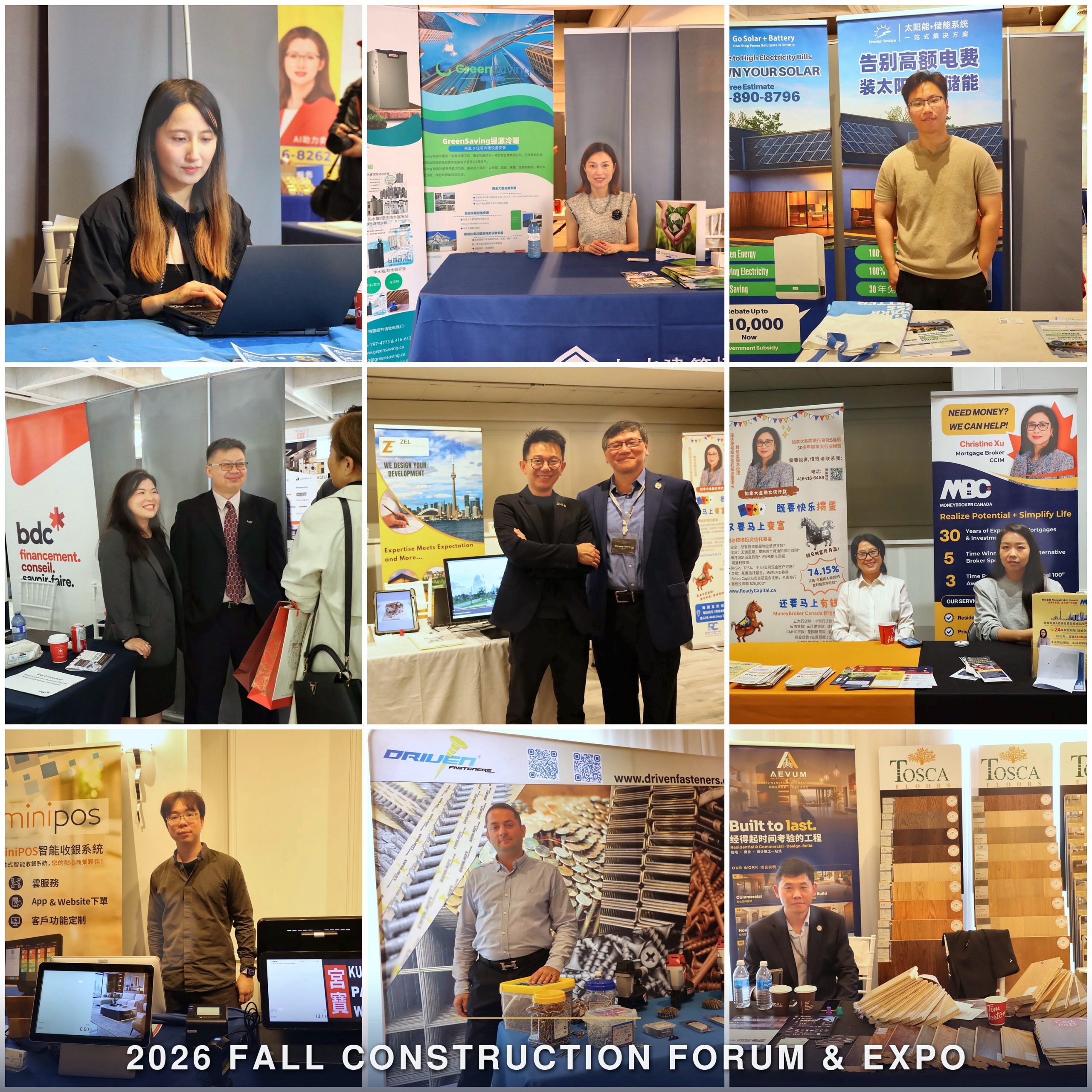
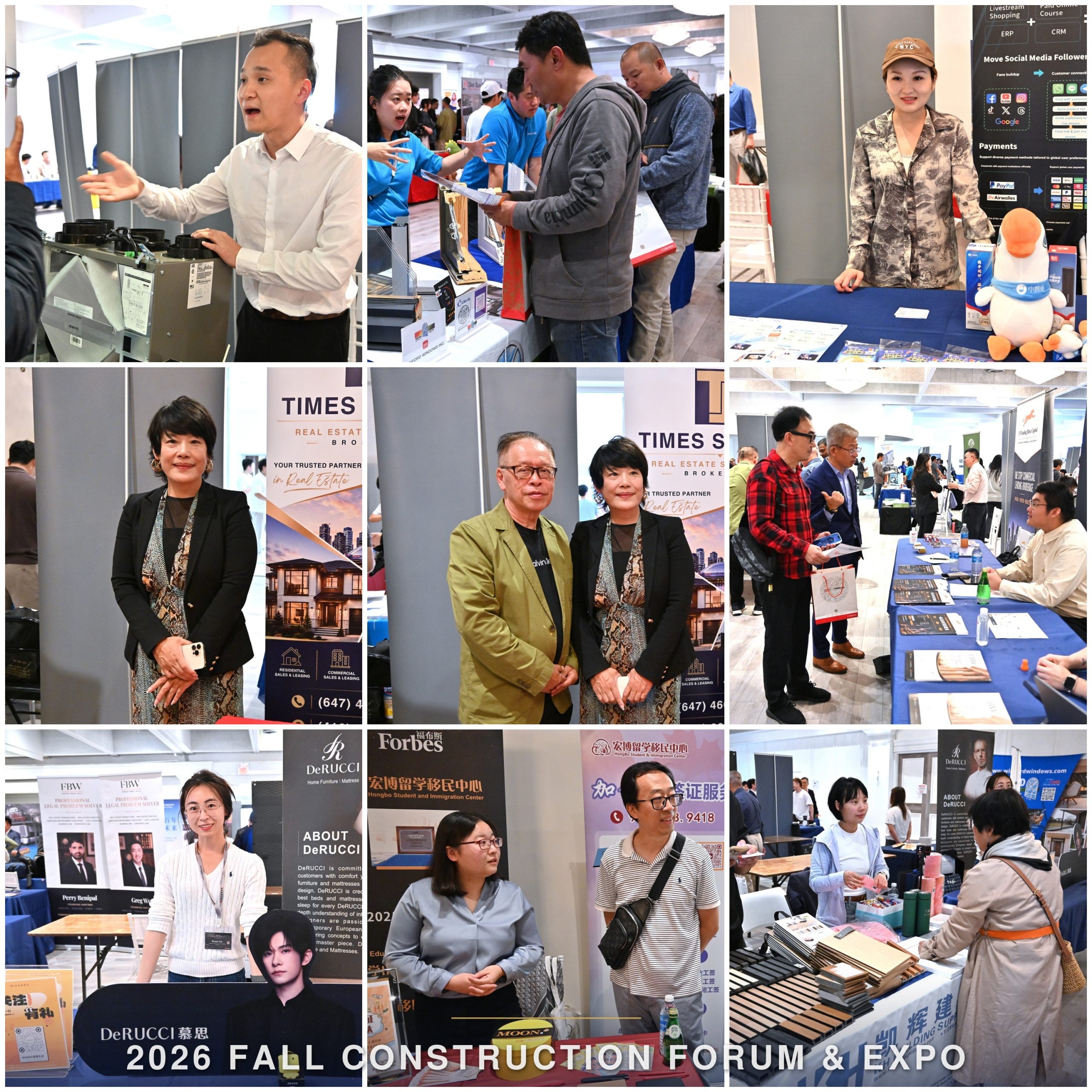
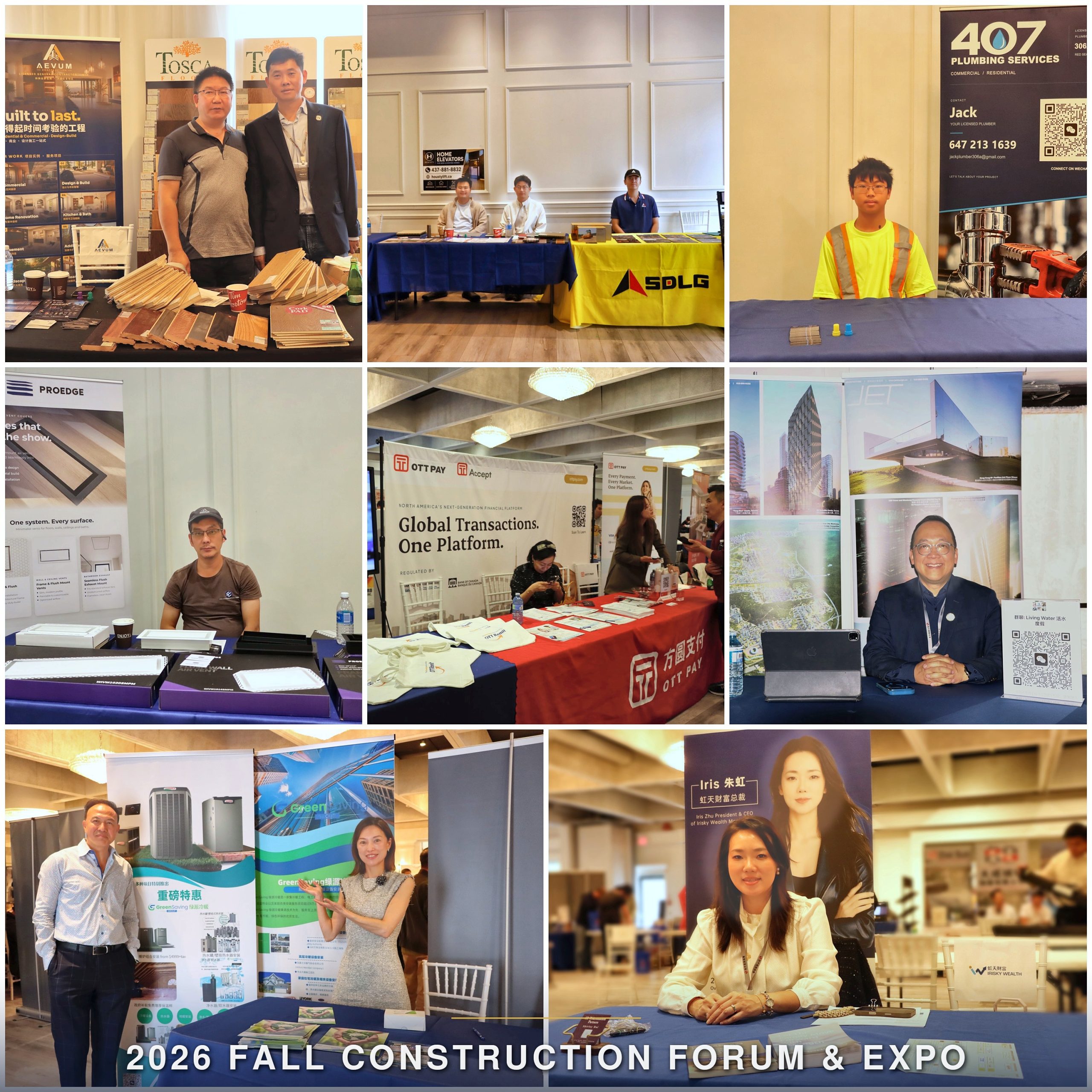
Running alongside the forum, the expo was another highlight of the day. 80 companies exhibited, spanning architectural design, building materials, windows and doors, roofing, machinery and equipment, home furnishings, real estate, finance, law, insurance, technology and professional services.

From the moment doors opened at 1:00 p.m., the exhibition floor stayed busy. With a strong B2B focus, the event put developers, builders, designers, material suppliers, financial institutions and professional service firms in the same room, enabling more efficient connections up and down the value chain.

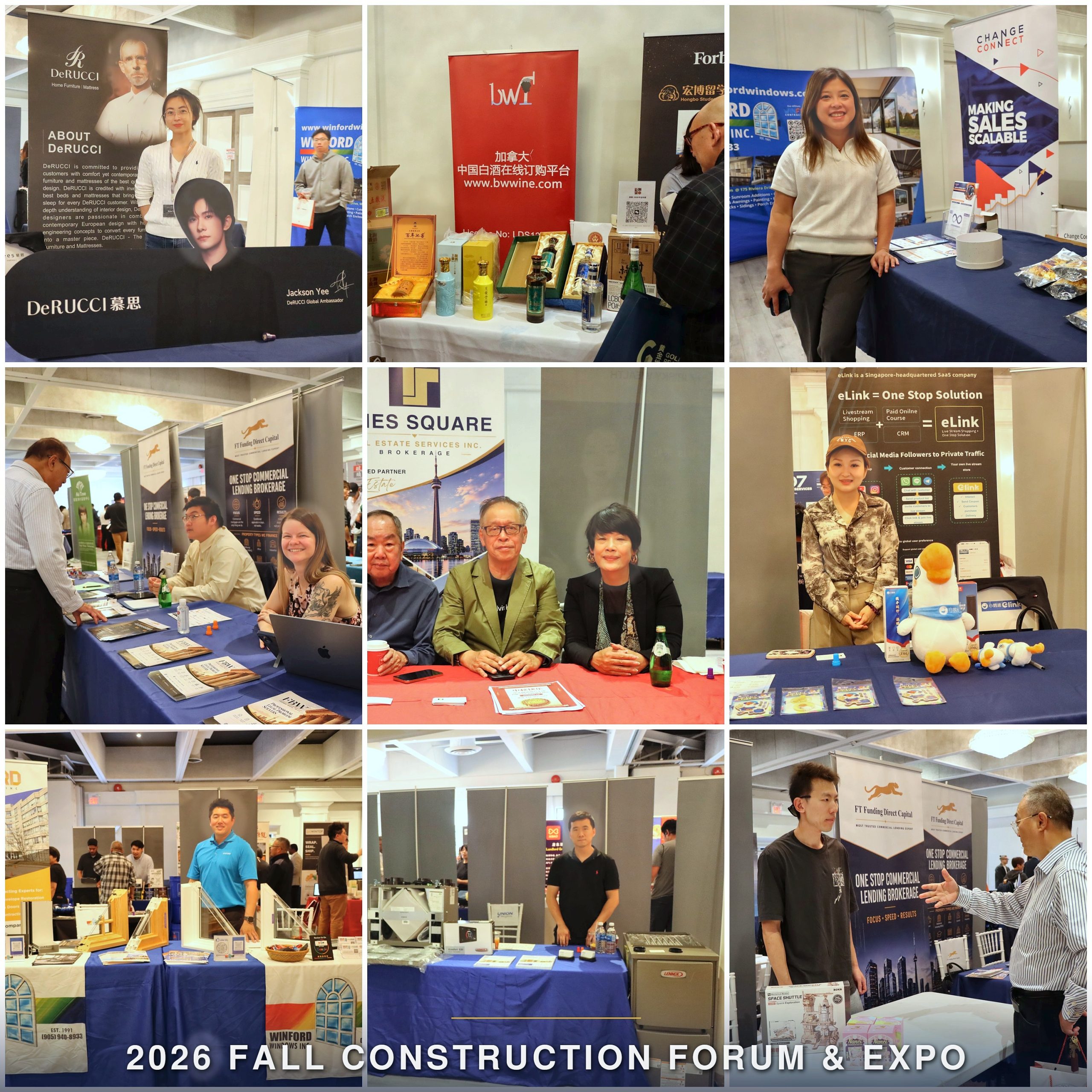
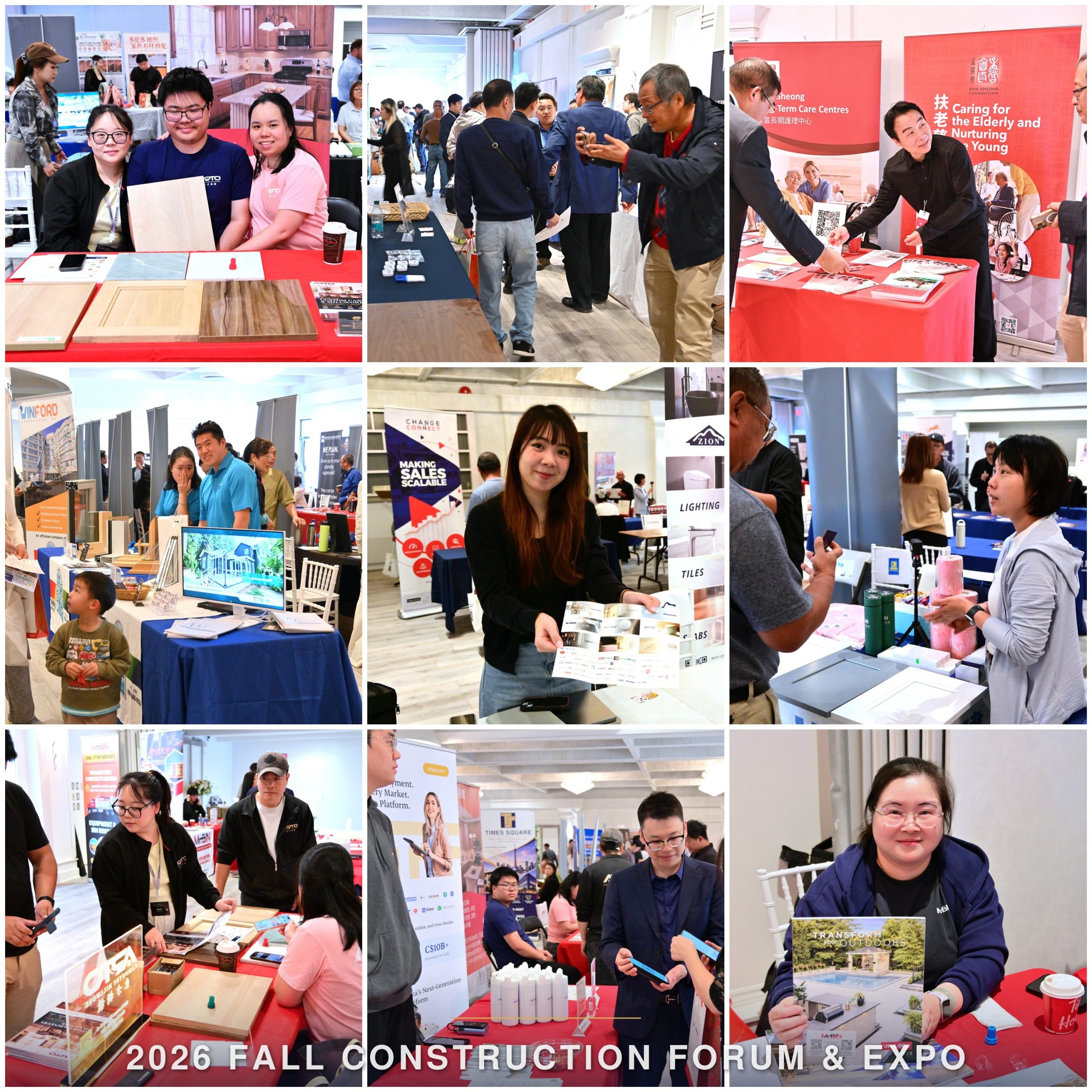
Exhibitors at the 2026 Fall Construction Forum & Expo Exhibitors at the 2026 Fall Construction Forum & Expo Exhibitors at the 2026 Fall Construction Forum & Expo Exhibitors at the 2026 Fall Construction Forum & Expo Exhibitors at the 2026 Fall Construction Forum & Expo Exhibitors at the 2026 Fall Construction Forum & Expo

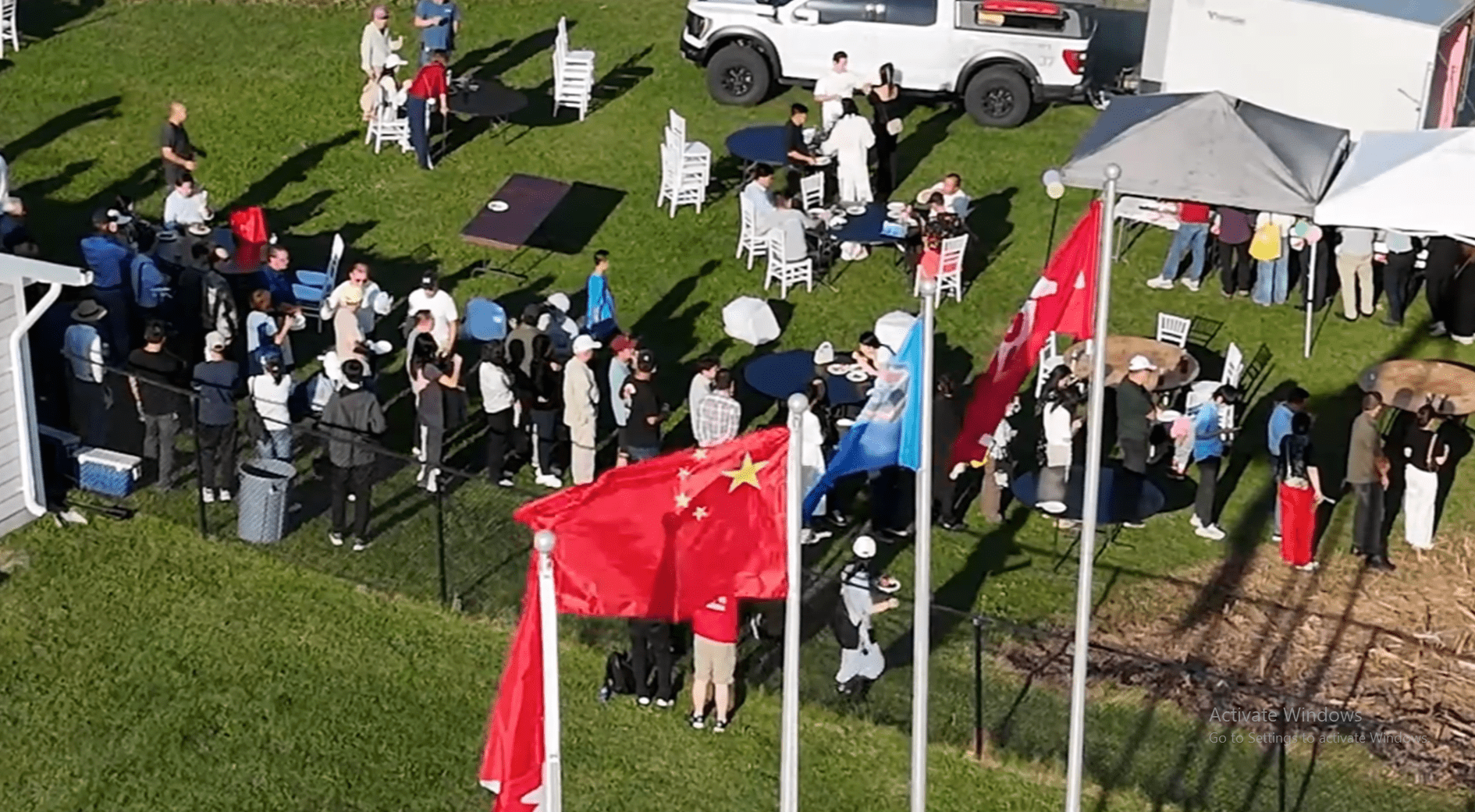
Throughout the expo, a robot dog roamed among the booths and crowds, becoming a popular interactive attraction and adding a touch of technology and fun. The organizers also served generous Western-style refreshments so guests could take a break between conversations.
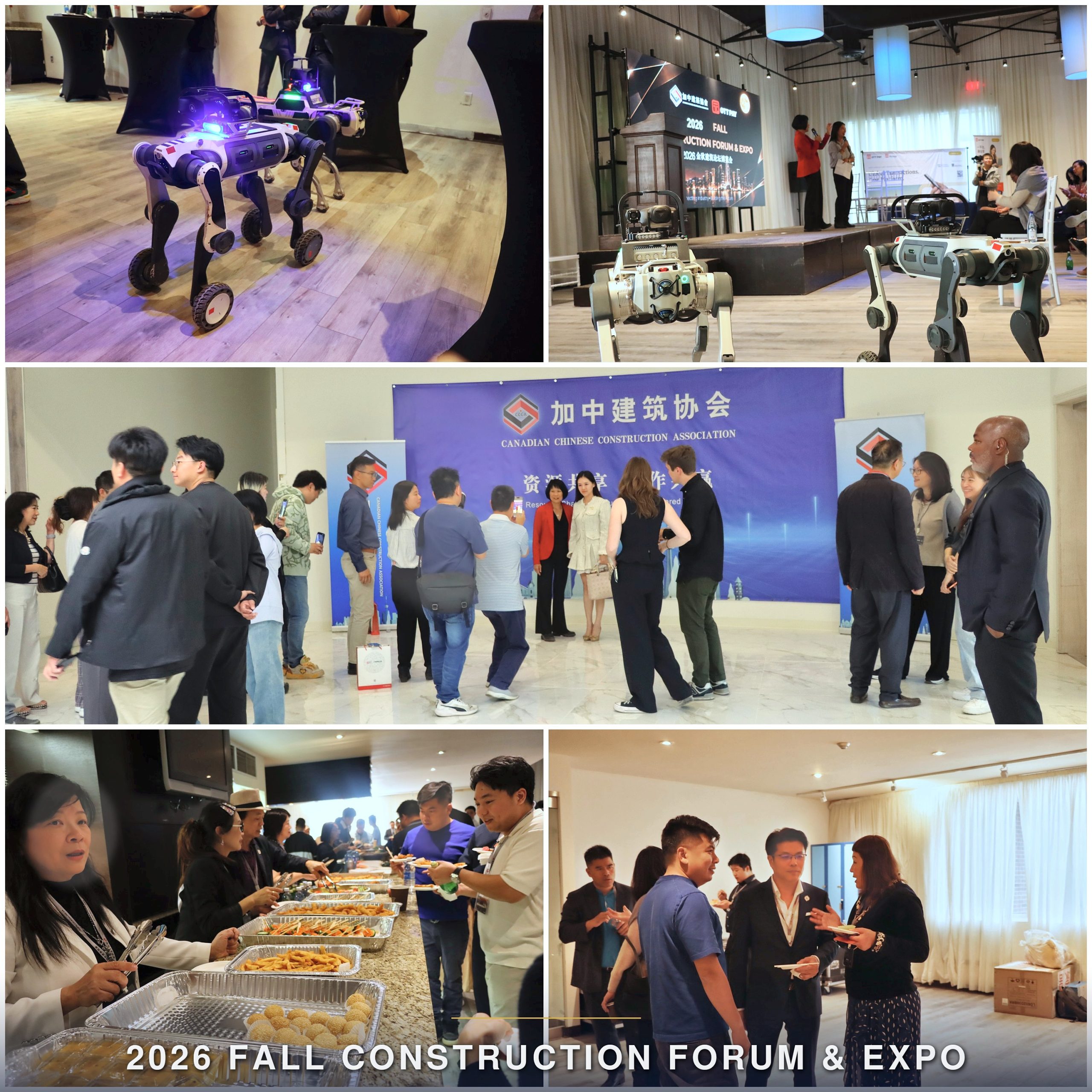
Robot dog and networking on the expo floor

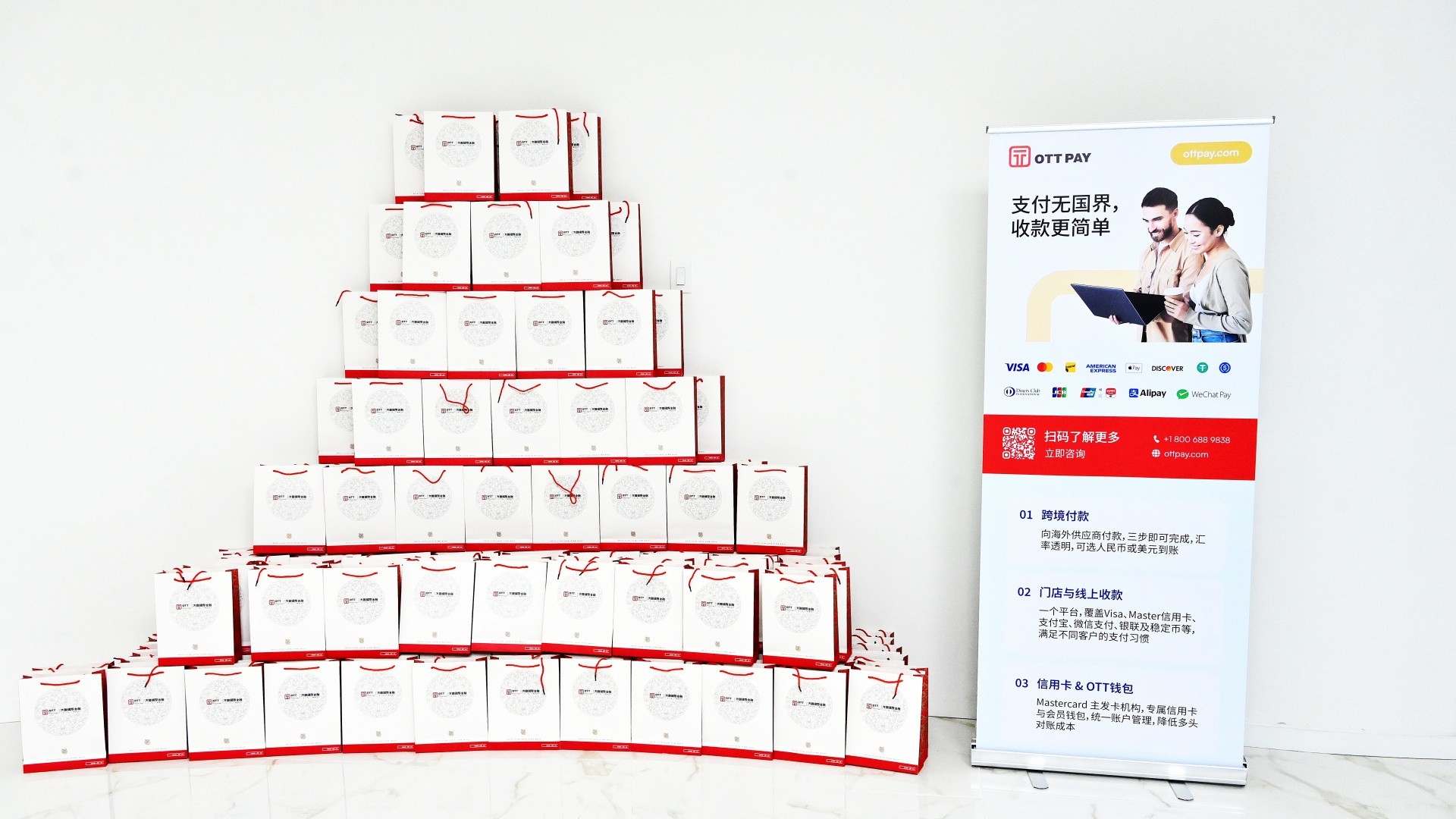
The organizers also designed a booth stamp card, encouraging guests to visit different booths and enter two rounds of lucky draws. The top prize was a $1,000 cash red envelope, with the two rounds of cash prizes totalling $2,000, sponsored by Aero Future Canada (AF-C) Inc. Together with other gifts, the total value of gifts and prizes exceeded $5,000.

Lucky draw grand prize of $1,000 cash, sponsored by Aero Future Canada
Grand prize: $1,000 cash, sponsored by Aero Future Canada
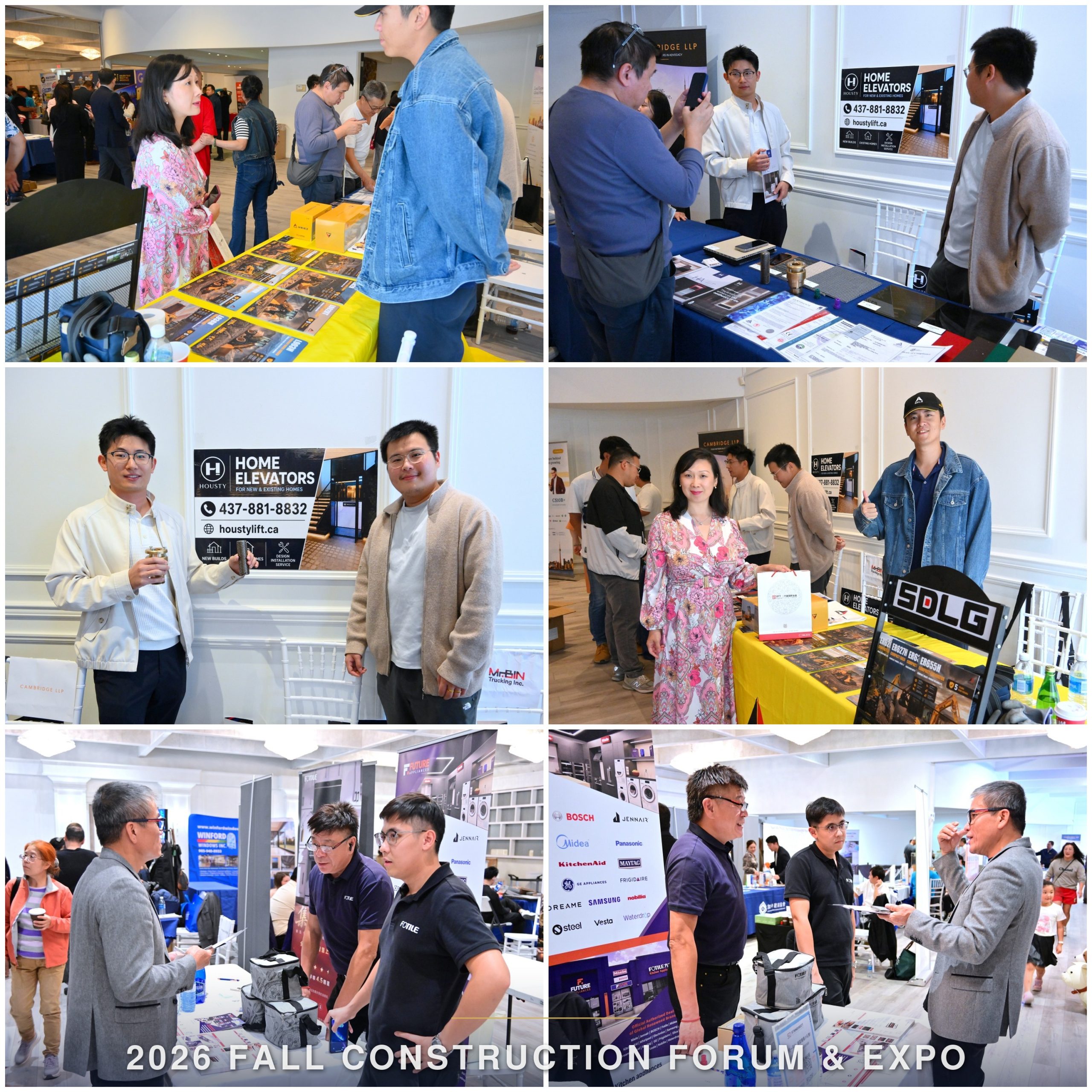
Exhibitors at the 2026 Fall Construction Forum & Expo Exhibitors at the 2026 Fall Construction Forum & Expo Exhibitors at the 2026 Fall Construction Forum & Expo Exhibitors at the 2026 Fall Construction Forum & Expo
NETWORKING

More Than 1,000 Attendees: From Introductions to Partnerships

More than 1,000 guests attended over the course of the afternoon, and from the 1:00 p.m. opening to the 6:00 p.m. close, both the forum and exhibition areas remained lively.

After the event, many exhibitors and guests remarked on the professionalism and strong industry relevance of the participating companies. They not only met potential clients but also connected with partners across the value chain — a particularly valuable outcome for B2B businesses. Guests were especially full of praise for the expert panel sessions, which the association found greatly encouraging.

Guests networking

Rather than simply chasing foot traffic, being able to meet developers, builders, designers, material suppliers, and finance, legal and insurance firms at a single event makes it easier to build business relationships with real potential for follow-up. Many companies said they “gained a lot” and found upstream and downstream contacts worth pursuing further.

This is a core purpose behind CCCA’s forum and expo: not just to help companies “be seen,” but to help businesses with genuine commercial ties get to know each other — so that a single meeting can grow into lasting collaboration.

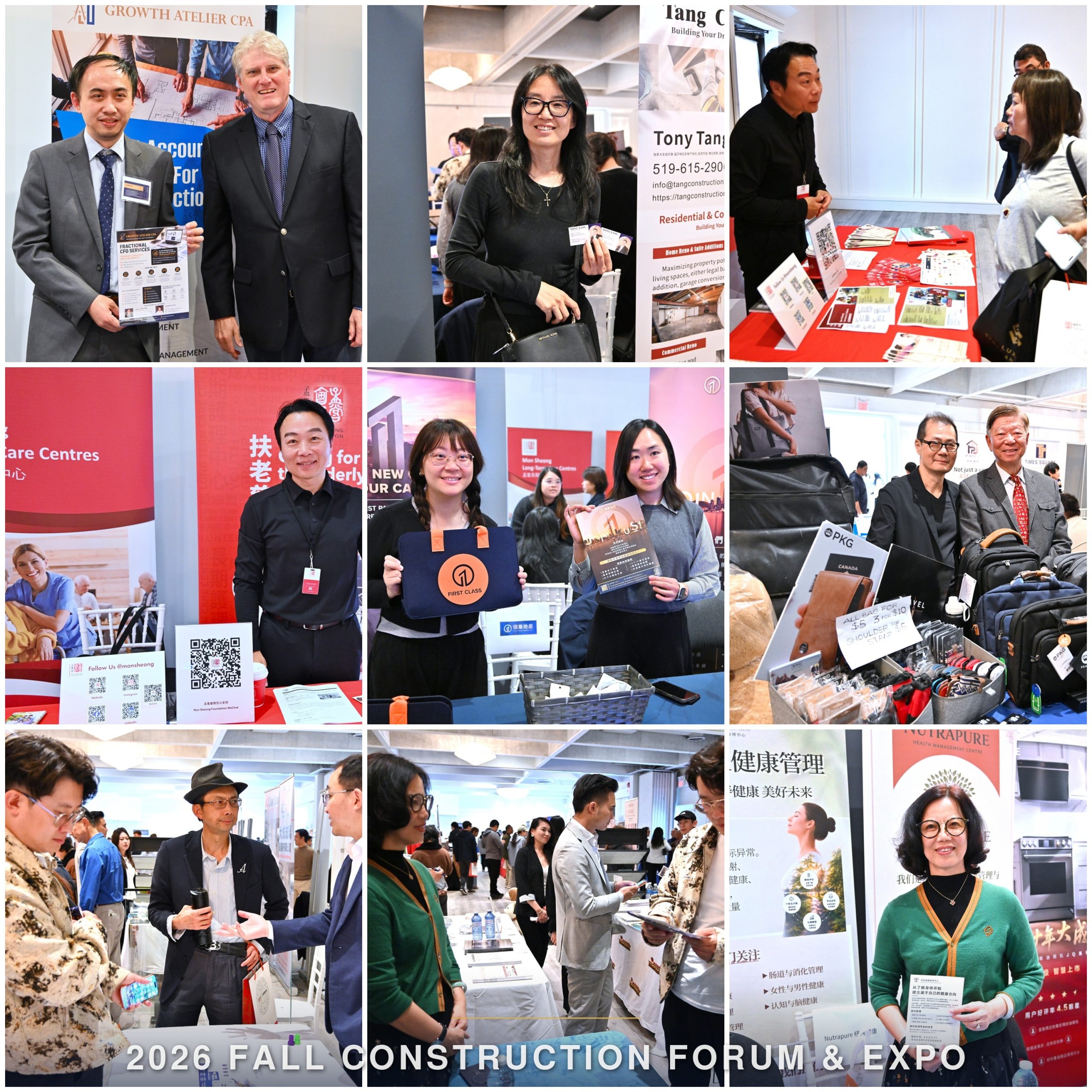
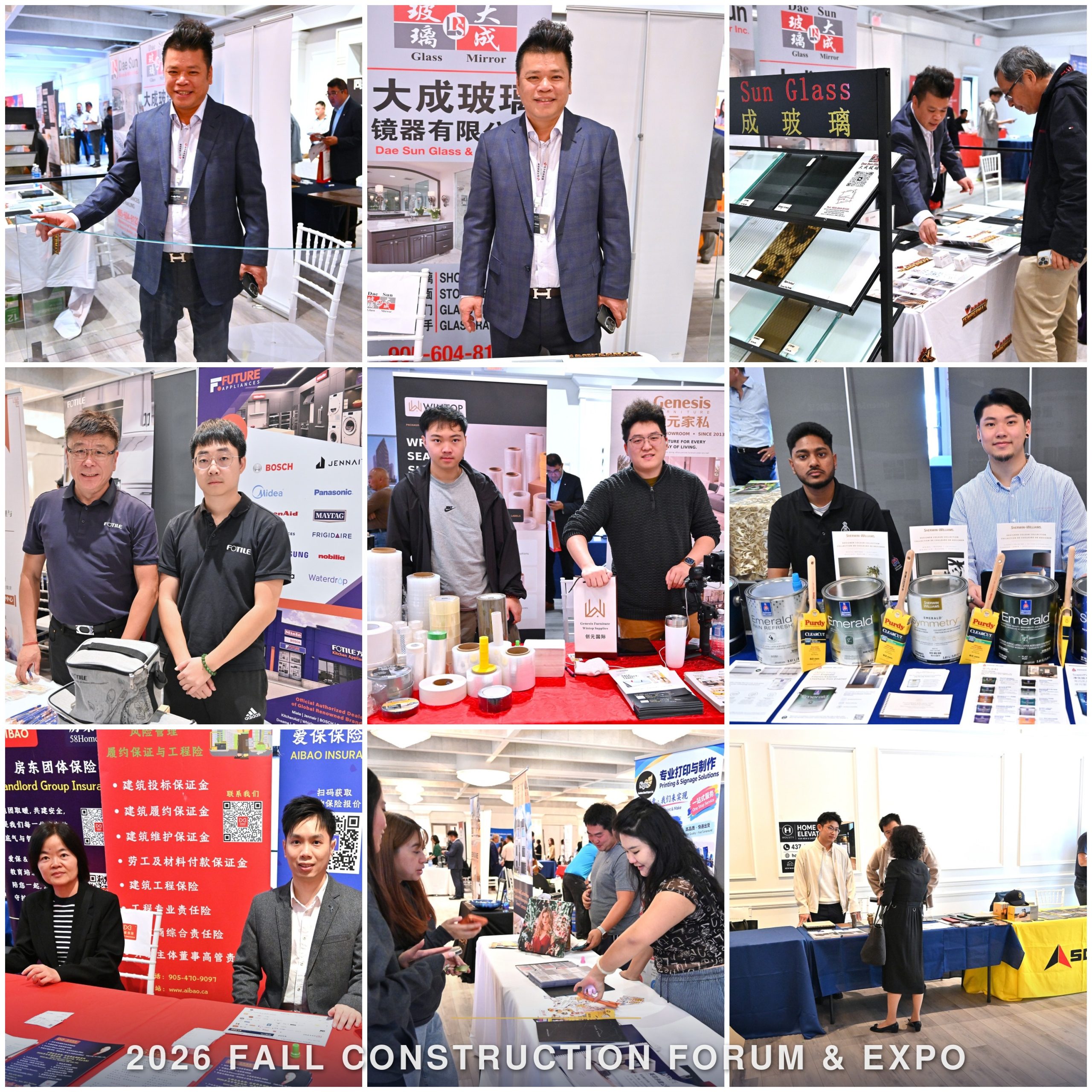
Exhibitors at the 2026 Fall Construction Forum & Expo Exhibitors at the 2026 Fall Construction Forum & Expo Exhibitors at the 2026 Fall Construction Forum & Expo Exhibitors at the 2026 Fall Construction Forum & Expo Exhibitors at the 2026 Fall Construction Forum & Expo Exhibitors at the 2026 Fall Construction Forum & Expo
Exhibitors at the 2026 Fall Construction Forum & Expo
THANK YOU

With Gratitude to Everyone Who Made It Possible
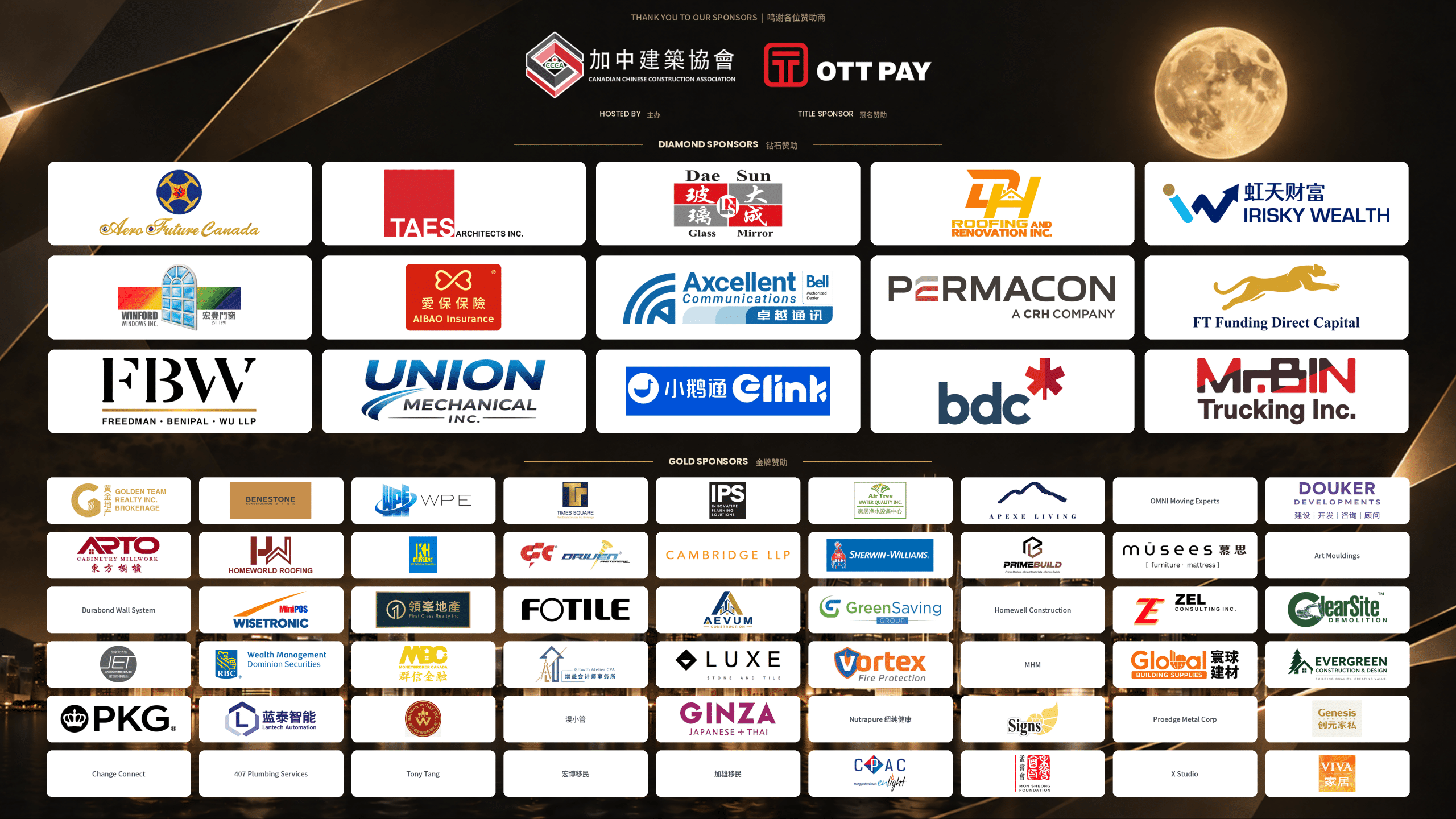
TITLE SPONSOR
OTT Pay
DIAMOND SPONSORS
TAES ArchitectsDaeSun GlassDH RoofingPERMACON爱保保险Irisky WealthWinford WindowsAxcellent CommunicationsAero Future CanadaUnion MechanicalFT Funding Direct CapitalFBW LawBDCE-link
2026 Fall Construction Forum & Expo sponsor wall
Thank you to all our sponsors for their generous support

The Canadian Chinese Construction Association thanks its title sponsor and sponsors at every level, exhibitors, keynote and panel speakers, partner organizations, media friends, and all the staff and volunteers who helped plan and run the event.

From early planning, exhibitor recruitment and forum programming to booth setup, registration, guest reception and wrap-up, the success of an event welcoming more than 1,000 guests was made possible by the dedication of many partners, both on stage and behind the scenes.
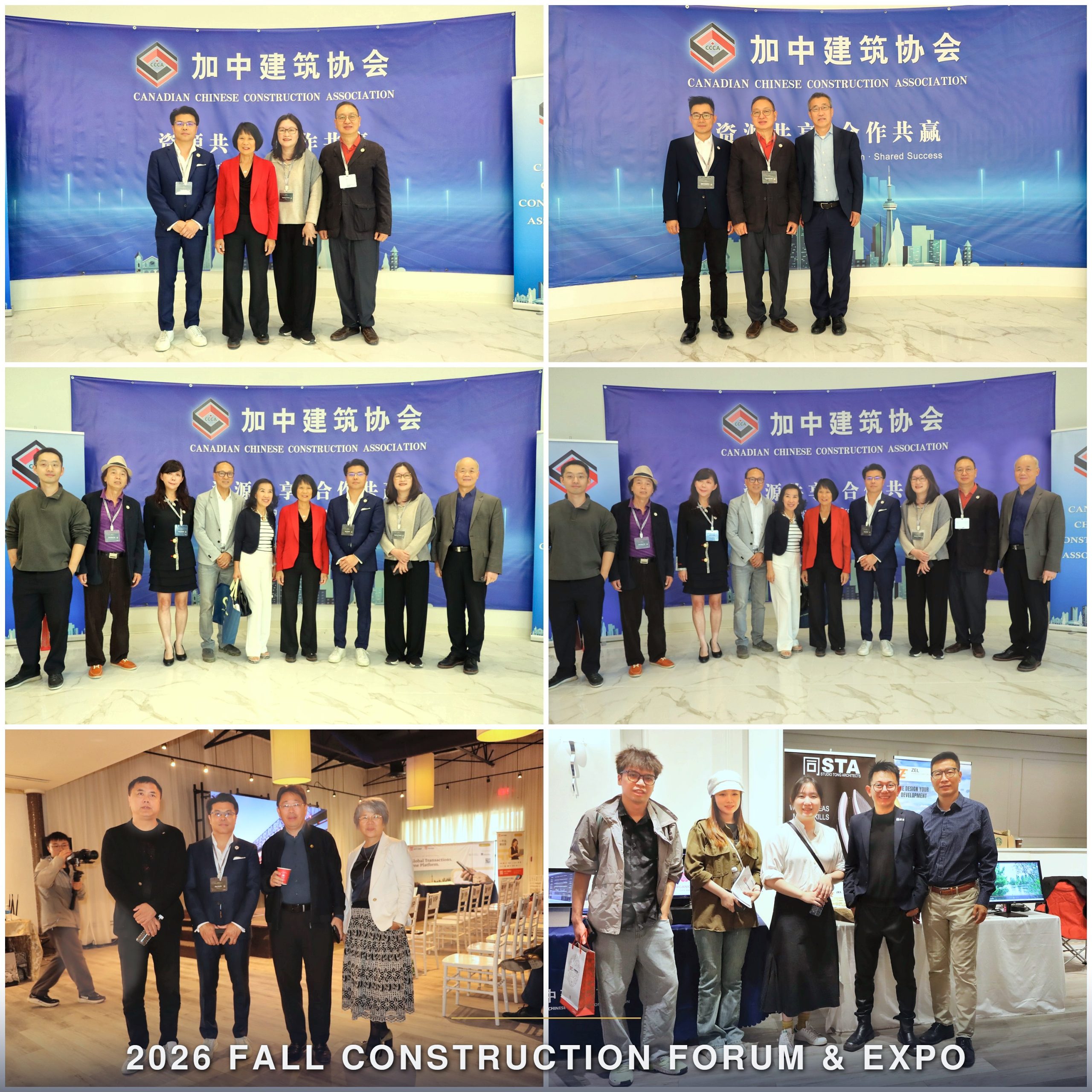
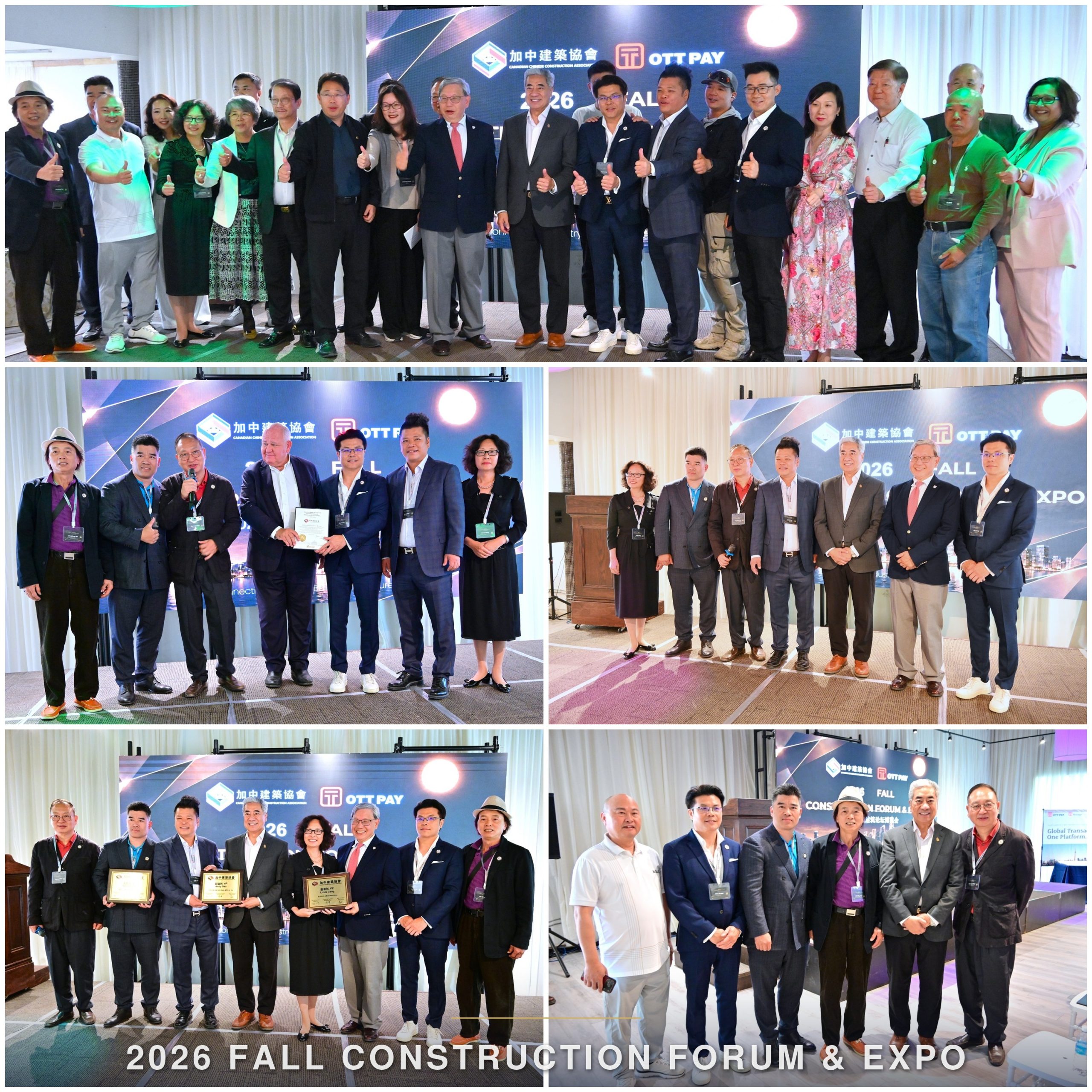
Group photo Group photo

The 2026 Fall Construction Forum & Expo has concluded successfully, but the connections and collaborations formed that day continue. With 80 exhibitors, more than 1,000 attendees, and topics ranging from policy, design and green construction to financing, tax, digital operations and risk protection, the event reflected the industry’s growing demand for professional exchange, resource integration and cross-sector collaboration. We look forward to joining hands with partners across the industry for an even more exciting and successful gathering next time.

A single meeting can be the start of a partnership.
And that is exactly why CCCA continues to build platforms for our industry.
ABOUT CCCA

About the Canadian Chinese Construction Association

The Canadian Chinese Construction Association (CCCA) is a Canadian non-profit industry organization dedicated to building a platform for professional exchange and resource sharing across construction and related industries, connecting development, design, engineering, building materials, home furnishings, real estate, finance, law, insurance, technology and professional services.

Guided by its philosophy of “Shared Resources, Mutual Success,” the association creates opportunities for members and industry partners to showcase, connect and collaborate through industry forums, company visits, professional exchanges and large-scale events.

As more companies join, CCCA will continue to serve as a bridge — strengthening connections among businesses, across the value chain, and between industry and community — to drive more practical collaboration.

Official website: cccaonline.ca
2026 CCCA(加中建筑协会) 建筑产业论坛博览会即将与大家在9月26日见面!
2026 · MARKHAM · 免费入场

OTT Pay 之 2026建筑行业论坛博览会

汇聚行业智慧 · 共筑合作未来

date
2026年9月26日 · 星期六
time
下午 1:00 – 6:00
Place
50 Esna Park Dr, Markham

2026年9月26日,加中建筑协会(Canadian Chinese Construction Association,简称 CCCA)将在 Markham 举办 OTT Pay 之 2026建筑行业论坛博览会。活动由专业论坛与产业博览两大板块组成,聚焦建筑、地产、家居及相关行业的政策变化、市场趋势与合作机会。

本届论坛总主题为「市场重塑下的城市建设:政策、资本、绿色建造与社区未来」(Building Through Market Change: Policy, Capital, Sustainable Construction and Community)。内容按四条线索层层推进——金融与市场环境、政策与项目可行性、融资税务与投资回报、建筑科技与全周期风险管理,从”钱的环境如何”,到”什么项目还能做”,再到”利润怎么留下”,最后落到”房子怎么建得更好”。

当天流程

展区下午 1:00 开放,论坛环节 2:30 开始

下午 1:00  |  博览会展区开放
80+ 展位开放参观,嘉宾签到与自由交流。
下午 2:30  |  论坛开幕
主持人开场,加中建筑协会会长致欢迎辞,政府官员及嘉宾致辞。
下午 2:40 – 5:20  |  主题论坛(四大板块)
冠名演讲、三组专题分享,中场设休息与第一轮抽奖。
下午 5:20 – 6:00  |  闭幕与交流
第二轮抽奖、结束致辞、全体合影,随后为商务交流、BBQ 与中秋欢聚环节。

论坛四大板块

从金融环境,到项目落地,再到建造与风险

01
金融与市场环境

当前经济与商业环境、企业支付与资金管理、跨境金融服务,以及金融科技如何支持房地产及相关企业的发展。由冠名赞助商带来主题演讲。

02
政策、规划与项目可行性

市场重塑下,什么样的项目还能做?

省市两级规划政策、开发费(Development Charges)与相关激励措施;设计与价值工程(Value Engineering)如何提高项目可行性;开发与合作经营中的法律风险;以及开发项目如何真正形成具有长期价值的社区。

03
融资、税务与投资实战

钱从哪里来,利润如何留下?

当前市场下机构贷款人如何评估建筑与房地产企业;传统银行之外的融资策略与资本选择;房地产投资的税务、现金流与资本架构;以及旧房翻建从项目筛选到价值提升的投资测算。

04
建筑科技、绿色建造与全周期风险管理

建筑与地产企业的数字化运营与降本;绿色建材与低碳水泥的应用;玻璃、门窗等建筑围护结构的性能;被动房与节能建筑;住宅 HVAC 系统升级;以及新能源与储能项目的保险与履约风险。

论坛具体嘉宾与演讲题目仍在确认中,将陆续公开,敬请期待。

产业博览:80+ 展位

一站式连接建筑、地产与家居行业资源

博览区集中展示建筑与施工、设计与专业服务、建筑材料、家居与设备、地产及相关服务五大类企业。对行业专业人士,这里是了解产品、寻找供应商与拓展上下游资源的场合;对正在考虑购房、建房、装修或家居升级的公众,也可以一次接触多个领域的企业与专业人士。

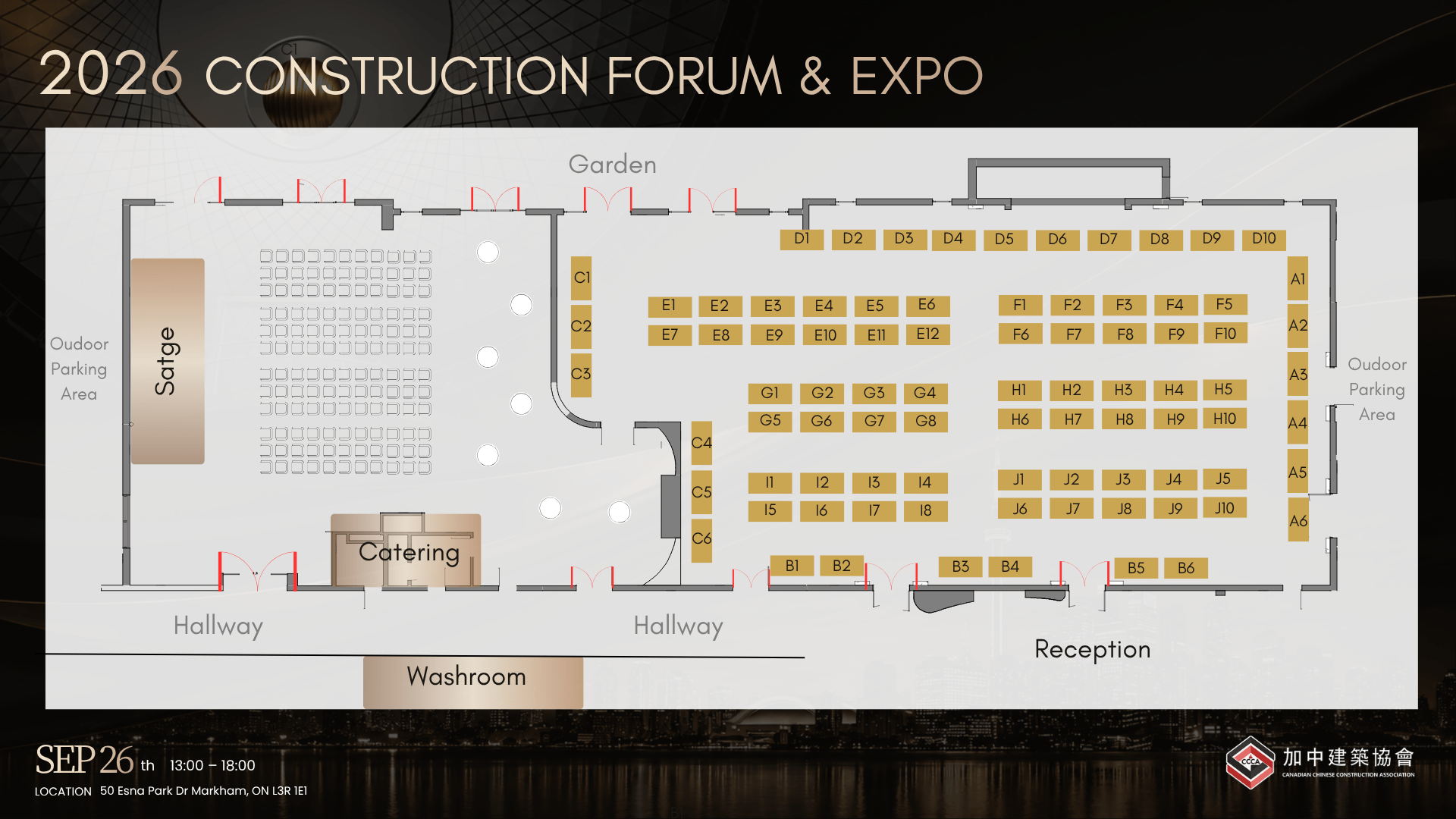
OTT Pay 之 2026建筑行业论坛博览会展位图 - 50 Esna Park Dr Markham

冠名赞助商
TITLE SPONSOR

OTT Pay 标志 - 冠名赞助商

本次活动特别感谢冠名赞助商 OTT Pay 的鼎力支持。OTT Pay 是总部位于多伦多的领先金融科技与支付服务平台,也是加拿大移动支付领域的先行者之一。自成立以来,OTT Pay 持续以科技创新连接商户、消费者与全球市场,目前已为超过 10,000 家活跃商户提供服务,年支付交易规模超过 100 亿加元,业务覆盖全球 130 多个市场。从线下及线上支付、国际电子钱包,到跨境结算、银行卡发行及数字钱包,OTT Pay 不断完善多元化金融科技服务体系,为加拿大企业提供更加便捷、安全、高效的支付解决方案,也为本地商业与全球市场之间搭建起更加高效的连接桥梁。

诚邀参加

OTT Pay 之 2026建筑行业论坛博览会

2026年9月26日(星期六)下午 1:00 – 6:00
50 Esna Park Dr, Markham, ON L3R 1E1
主办单位:加中建筑协会(CCCA) · 免费入场

立即报名参加

本活动报名仅限 CCCA 会员,请先登录会员账户后完成报名。
咨询:647-988-0738 · info2.ccca@gmail.com

[/trp_language]

2026 · MARKHAM · FREE ADMISSION

OTT Pay 2026 Construction Forum & Expo

Industry Insight · Partnership for the Future

DATE
Saturday, September 26, 2026
TIME
1:00 – 6:00 PM
LOCATION
50 Esna Park Dr, Markham

On September 26, 2026, the Canadian Chinese Construction Association (CCCA) will host the OTT Pay 2026 Construction Forum & Expo in Markham. The event brings together two components — a professional forum and an industry expo — covering policy shifts, market trends and partnership opportunities across the construction, real estate and home sectors.

This year’s forum theme is Building Through Market Change: Policy, Capital, Sustainable Construction and Community. The programme moves through four connected stages — the financial and market environment, policy and project feasibility, financing, tax and investment returns, and construction technology with whole-lifecycle risk management. It begins with the cost of capital, moves to which projects still pencil out, then to how profit is retained, and ends with how buildings are actually delivered.

Programme at a Glance

Expo floor opens at 1:00 PM; the forum begins at 2:30 PM

1:00 PM  |  Expo Floor Opens
80+ exhibitor booths open to visitors, with guest registration and networking.
2:30 PM  |  Opening Ceremony
Remarks by the Master of Ceremonies, welcome address by the CCCA President, and remarks by government officials and distinguished guests.
2:40 – 5:20 PM  |  Forum (Four Sessions)
Title sponsor keynote followed by three themed sessions, with an intermission and the first prize draw.
5:20 – 6:00 PM  |  Closing & Networking
Second prize draw, closing remarks and group photo, followed by business networking, a BBQ and a Mid-Autumn gathering.

The Four Forum Sessions

From the financing environment, to project delivery, to construction and risk

01
Finance & Market Environment

The current economic and business environment, corporate payments and treasury management, cross-border financial services, and how financial technology supports real estate and related businesses. Delivered as the title sponsor keynote.

02
Policy, Planning & Project Feasibility

Which projects still work in a reshaped market?

Provincial and municipal planning policy, Development Charges and related incentive programs; how design and value engineering improve project feasibility; legal risk in development and joint ventures; and how development projects become communities with long-term value.

03
Financing, Tax & Investment in Practice

Where does the capital come from, and how is the profit kept?

How institutional lenders assess construction and real estate businesses in today’s market; financing strategies and capital options beyond the banks; tax, cash flow and capital structure in real estate investment; and the economics of rebuilds, from project selection through to value creation.

04
Construction Technology, Sustainable Building & Lifecycle Risk

Digital operations and cost reduction for construction and real estate firms; green masonry and low-carbon cement; the performance of glass, windows and the building envelope; passive house and energy-efficient construction; residential HVAC upgrades; and insurance and surety considerations for energy storage projects.

Speakers and session topics are being finalized and will be announced in the weeks ahead. Stay tuned.

Industry Expo: 80+ Booths

Construction, real estate and home industry resources in one place

The expo floor brings together five categories of exhibitors: construction and trades, design and professional services, building materials, home products and equipment, and real estate and related services. For industry professionals, it is a place to review products, source suppliers and build supply-chain relationships. For members of the public considering a purchase, a build, a renovation or a home upgrade, it is a chance to meet companies from several fields in a single afternoon.

OTT Pay 2026 Construction Forum and Expo floor plan - 50 Esna Park Dr Markham

TITLE SPONSOR
With sincere thanks

OTT Pay logo - Title Sponsor

We extend our sincere thanks to our title sponsor, OTT Pay, for its generous support of this event. Headquartered in Toronto, OTT Pay is a leading fintech and payment services platform and one of the early pioneers of mobile payments in Canada. Since its founding, OTT Pay has used technology to connect merchants, consumers and global markets. It now serves more than 10,000 active merchants, processes over CAD $10 billion in annual payment volume, and operates in more than 130 markets worldwide. From in-store and online payments and international e-wallets to cross-border settlement, card issuing and digital wallets, OTT Pay continues to broaden its fintech services — giving Canadian businesses convenient, secure and efficient ways to get paid, and building a more efficient bridge between local commerce and global markets.

You Are Invited

OTT Pay 2026 Construction Forum & Expo

Saturday, September 26, 2026 · 1:00 – 6:00 PM
50 Esna Park Dr, Markham, ON L3R 1E1
Hosted by the Canadian Chinese Construction Association (CCCA) · Free Admission

Register Now

Registration is open to CCCA members. Please sign in to your member account to complete your registration.
Enquiries: 647-988-0738 · info2.ccca@gmail.com

2026 Greater Toronto Area Land & Industrial Real Estate Market Overview


Q2 2026 Greater Toronto Area Land & Industrial Real Estate Market Overview

Residential Land and Industrial Real Estate Rebound Together as the Policy Environment Continues to Improve
The Canadian Chinese Construction Association (CCCA) closely follows developments in land development, residential construction and the industrial real estate market across the Greater Toronto Area (GTA) and the Greater Golden Horseshoe (GGH), and is committed to providing member companies with timely, professional and valuable industry information and market analysis.
Royal LePage Commercial’s Land & Investment Group has recently released its Q2 2026 Residential Land Report and Q2 2026 ICI Land & Industrial Buildings Report. Both reports show that, after a relatively steady first quarter, the GTA residential land and industrial real estate markets rebounded notably in the second quarter, with transaction volumes recovering steadily and market confidence gradually returning. At the same time, a range of federal and Ontario provincial measures continued to take effect, creating a more favourable environment for the real estate and construction sectors.
Drawing on the core data and policy information from the two reports, CCCA has organized and summarized current market trends below for the reference of members and industry colleagues.

1. Residential Land Continues to Recover, While Long-Term Supply Pressure Warrants Attention

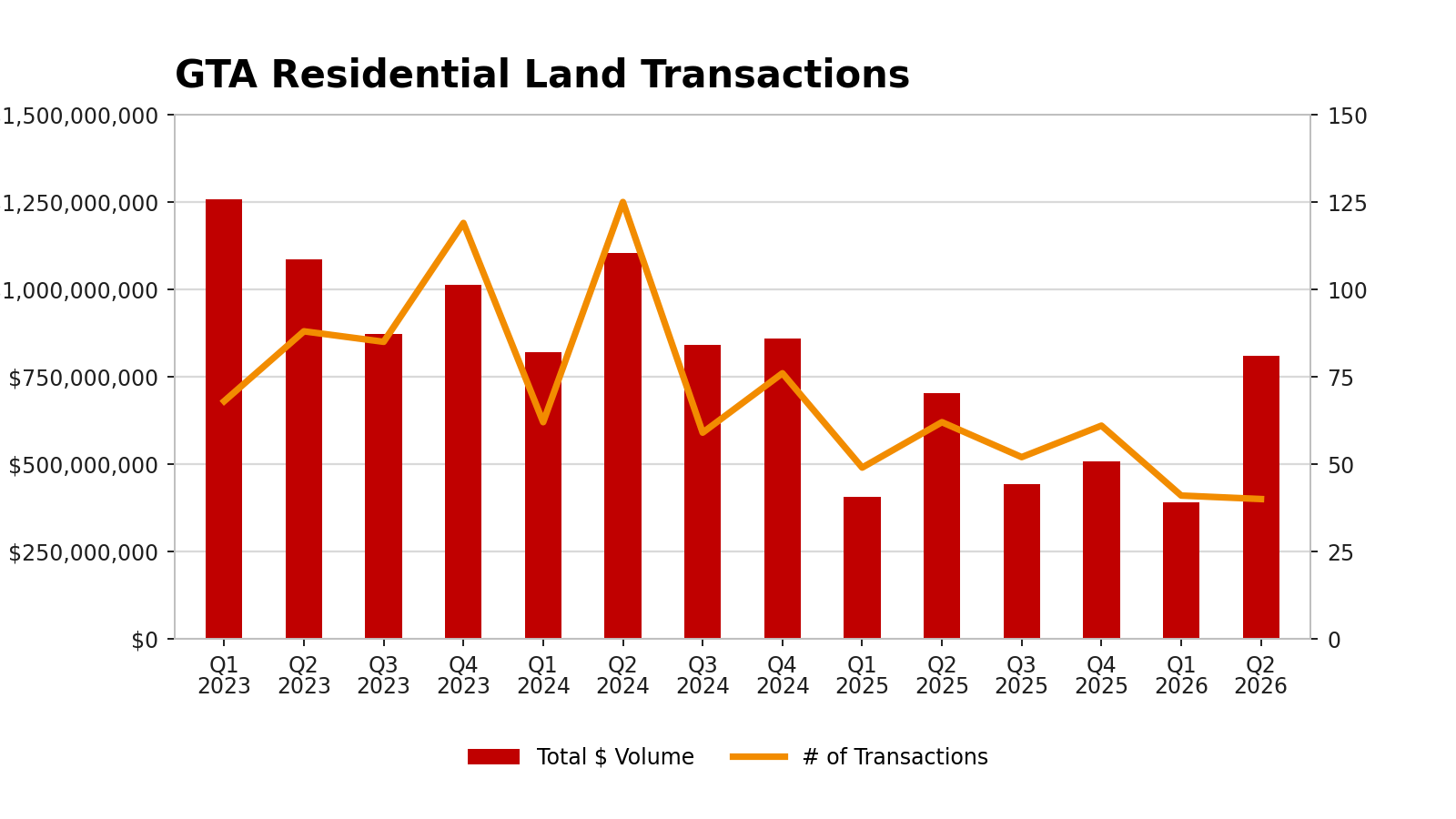
In Q2 2026, the GTA residential land market improved markedly overall, with quarterly sales reaching approximately $810 million — more than double Q1 and up about 15% year over year. Although sales volume recovered significantly, activity remained relatively concentrated, with about 40 transactions completed in the quarter and the ten largest deals accounting for roughly 79% of total GTA volume.
Notably, three of the top ten transactions were distress deals, representing about 41% of the quarter’s dollar volume. These projects were primarily taken over by lenders, who restructured the projects and optimized development arrangements to safeguard asset value, protect the interests of relevant stakeholders and carry the projects through to completion.
The report shows that capital continues to flow mainly toward land with mature development conditions, clear planning, complete municipal servicing and a high degree of certainty. Townhouse development land remained a market favourite and one of the most active residential product types of the quarter, while detached-home development land in established communities also saw steady demand. Meanwhile, distressed and non-arm’s-length transactions accounted for a relatively high share of the market, reflecting institutional investors gradually accelerating their acquisition of quality land through the window of price adjustment.

GTA Residential Land Transactions
Figure 1 | GTA Residential Land Transactions — $ Volume & Deal Count (Q1 2023–Q2 2026)
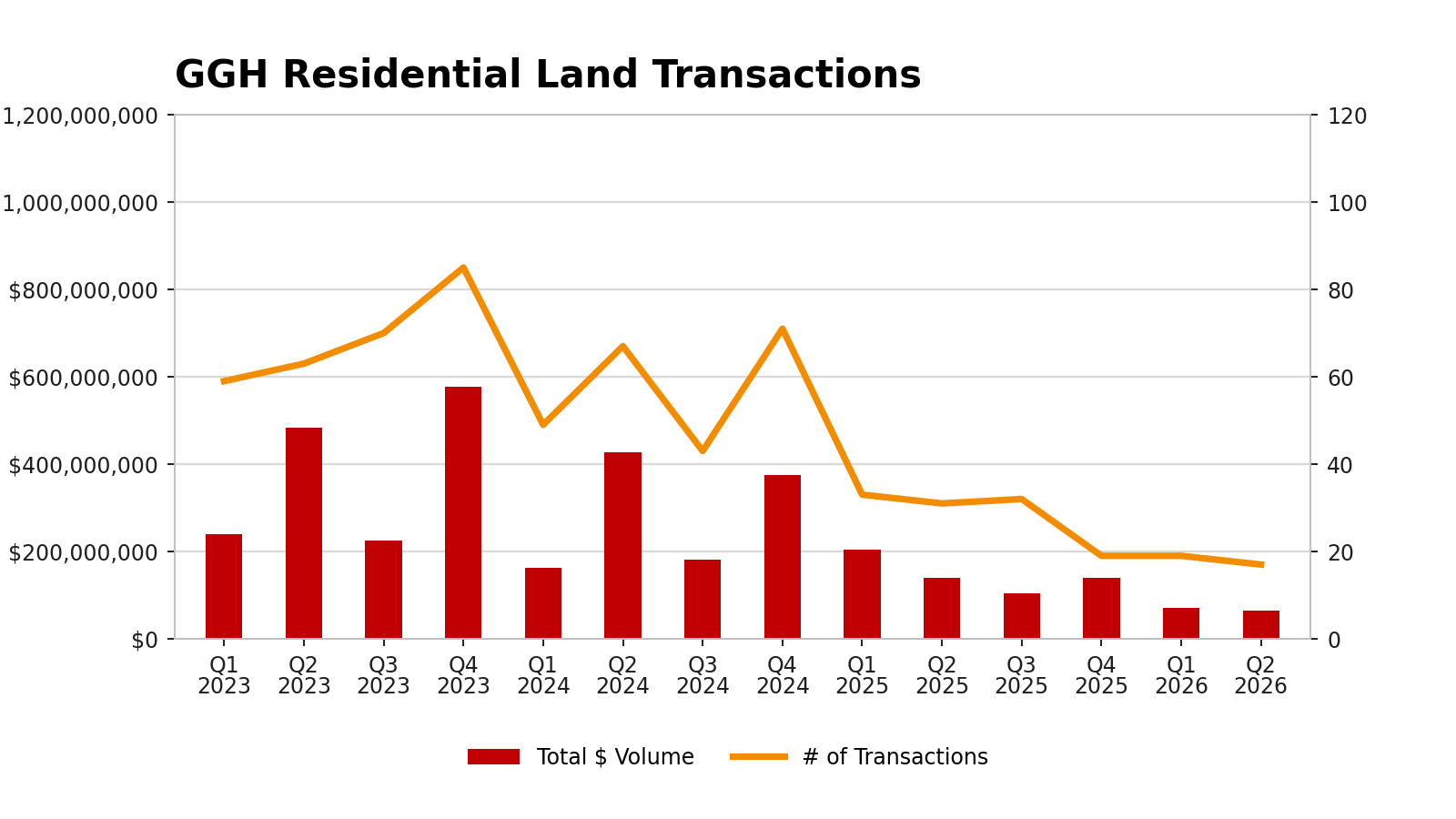
GGH Residential Land Transactions
Figure 2 | GGH Residential Land Transactions — $ Volume & Deal Count (Q1 2023–Q2 2026)

Low-Rise Residential

The low-rise residential market continued to send positive signals. Single-family new-home sales reached 902 units in June 2026, about 36% above the ten-year average for the same period. More rational pricing, together with the new-home HST rebate introduced federally and provincially, further lowered purchase costs and brought more stable demand for serviced detached and townhouse development sites.
As of the second quarter, cumulative new low-rise sales in the GTA had already surpassed the full-year 2025 total. If the current sales trend continues, the low-rise market could post its strongest annual performance in recent years.

Monthly New-Home Pre-Construction Sales
Figure 3 | Monthly New-Home Pre-Construction Sales: High-Rise vs Low-Rise
Sale Volume by Property Type
Figure 4 | Sale Volume by Property Type (Detached / Townhouse / Condo)

High-Density Residential

By contrast, the high-density residential market remains in an adjustment phase. In the second quarter, new condominium sales rose approximately 52% year over year to about 700 units — an improvement over last year, but still below the historical average.
At the same time, pre-construction and under-construction inventory declined about 37% year over year, and the market saw no new condominium project launches for a second consecutive quarter, indicating that developers remain relatively cautious overall.

Pre-Construction Apartment Sales by Quarter
Figure 5 | Pre-Construction Apartment Sales by Quarter (High-Rise & Mid-Rise)
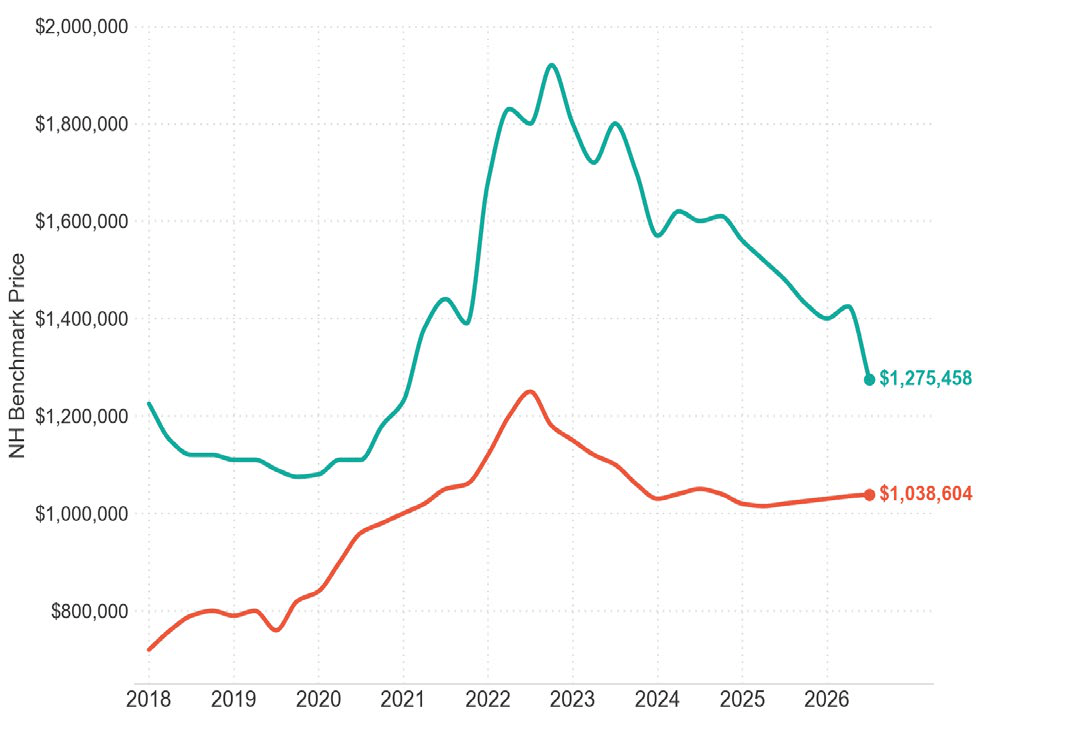
New-Home Pre-Construction Benchmark Price
Figure 6 | New-Home Pre-Construction Benchmark Price (High-Rise vs Low-Rise)

Rental Housing & Development Pipeline

Purpose-built rental remained the most resilient segment of the residential development market. As of the second quarter, more than 38,000 purpose-built rental units were under construction across the Greater Golden Horseshoe, underscoring continued strong long-term rental demand.
On the other hand, the large volume of condo inventory completed and delivered in recent years still needs to be absorbed, and will continue to exert some pressure on residential sales and market absorption in the near term.

Market Outlook

The report suggests that, for the foreseeable future, the residential land market will continue to be led by well-capitalized development companies and institutional investors with long-term investment capacity. Land projects with complete infrastructure, clear locational advantages and mature development conditions will continue to attract attention, and overall land prices are expected to gradually stabilize under the new market conditions.
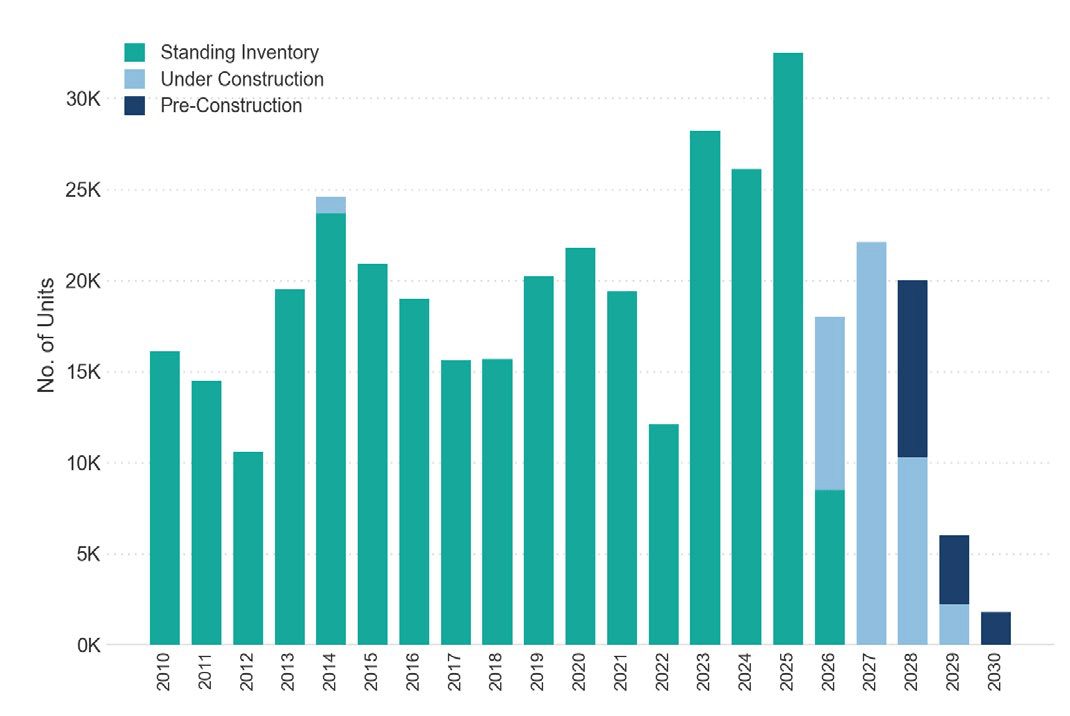
At the same time, the report notes that condominium launches are expected to remain limited through 2026. As existing projects are gradually completed, residential deliveries across the GTA and GGH may begin to decline after 2028. If new project supply does not recover in time, the market could face a phase of insufficient new housing supply around 2030, at which point the supply-demand imbalance may intensify further.

Scheduled Apartment Completions
Figure 7 | Scheduled Apartment Completions: Standing / Under Construction / Pre-Construction (2010–2030)

Representative residential land transactions this quarter included:

  • Mississauga | 1345 Lakeshore Road East: approximately $155 million, 3.1 acres, planned for high-density residential development;
  • Brampton | 10302 Heart Lake Road: approximately $118.3 million, 6.8 acres, planned for medium-density residential development;
  • Markham | 186 Old Kennedy Road: approximately $77.8 million, 9.6 acres, planned for medium-density residential development.

2. ICI Land & Industrial Buildings See Renewed Activity as Market Confidence Improves

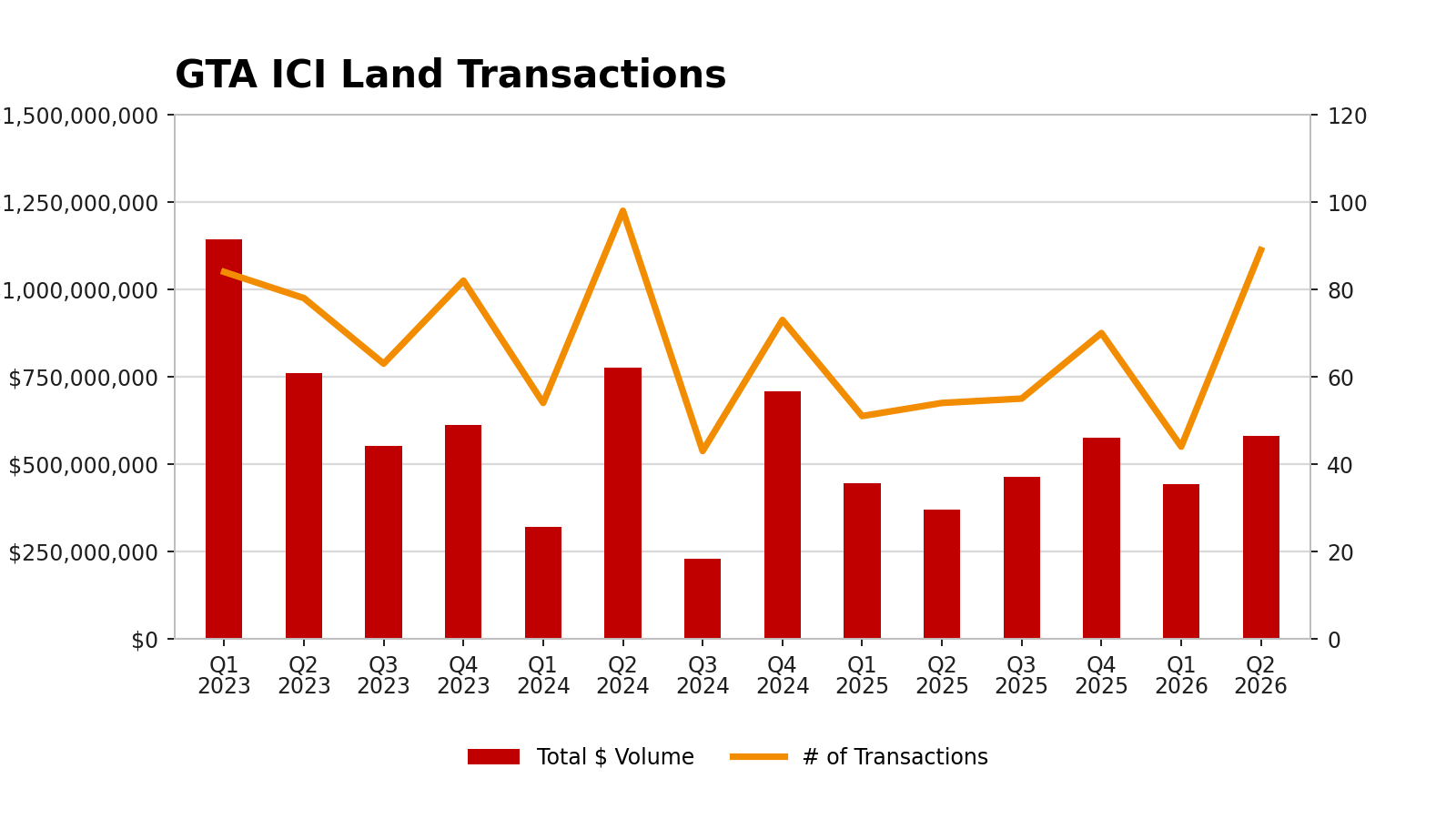
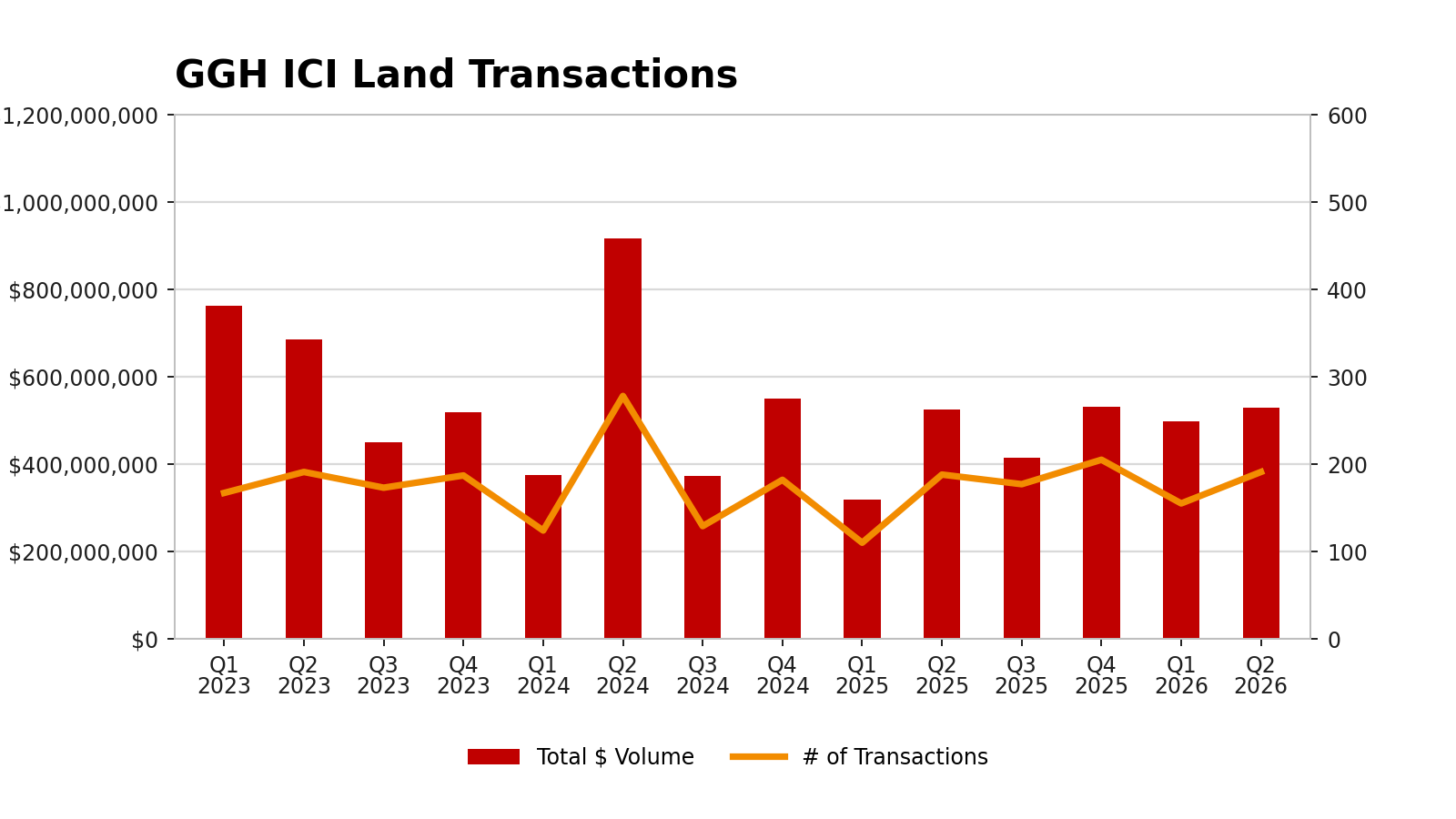
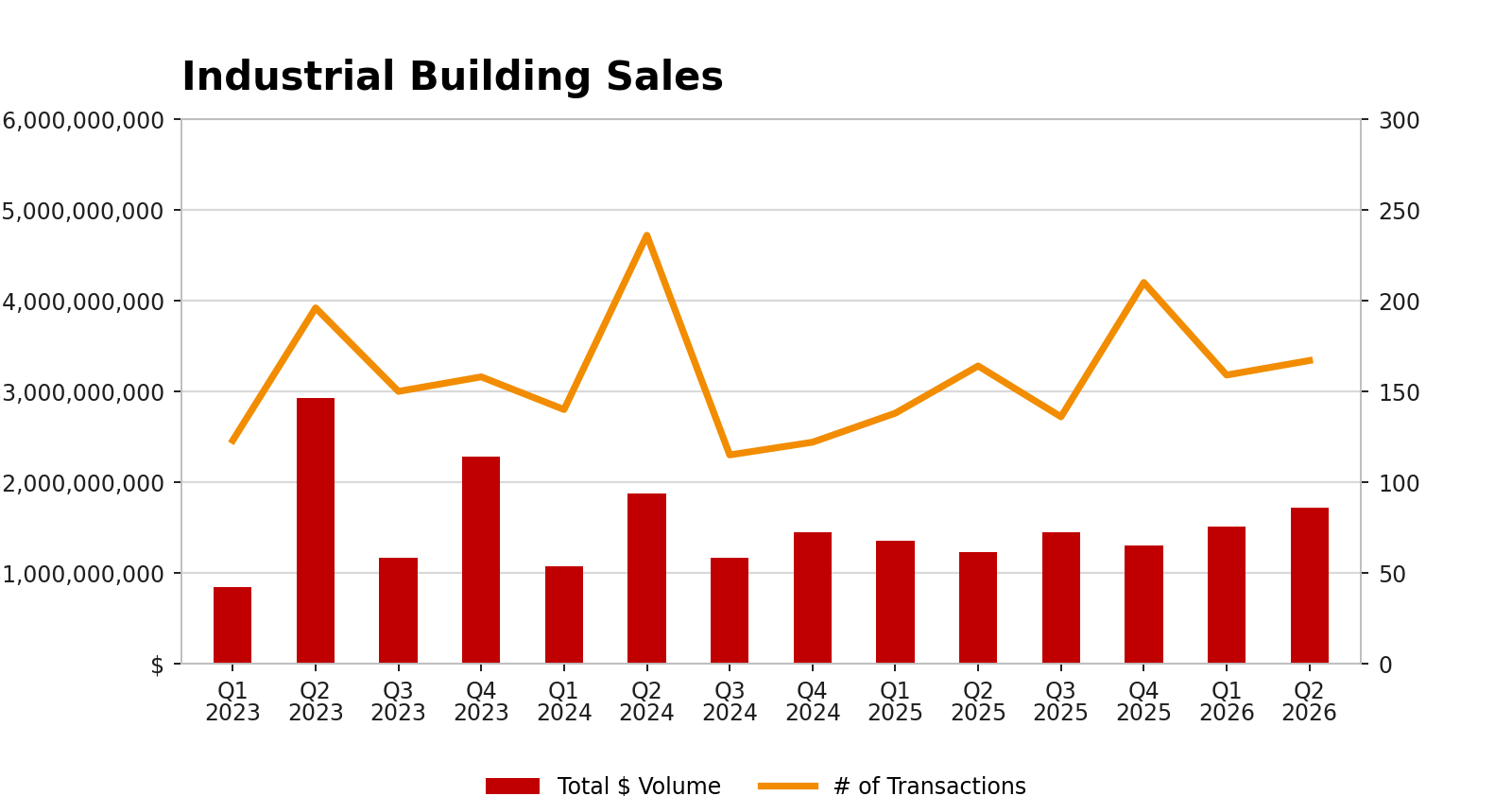
In Q2 2026, the GTA industrial, commercial and institutional (ICI) land market continued its recovery, with a clear pick-up in activity. GTA ICI land sales reached approximately $581.6 million across 89 transactions, up 31% from Q1 and 57% year over year. Meanwhile, the GGH ICI land market held steady at approximately $530.1 million across 191 transactions, while overall industrial building sales reached about $1.72 billion — the highest quarterly total in two years.
The report indicates that the recovery was driven mainly by investment demand from corporate end-users and institutional developers. Facing continued shifts in international trade policy and the supply-chain environment, many companies chose to complete greenfield acquisitions early to strengthen supply-chain stability and reduce future operational risk.
At the same time, a growing number of companies are transitioning from the traditional “just-in-time” supply-chain model toward a “just-in-case” model that places greater emphasis on inventory security and supply assurance. Demand for local warehousing, logistics and industrial real estate has continued to grow, providing new momentum for the industrial land market.
Notably, although greenfield land prices in peripheral areas have adjusted from their market peaks, well-located infill redevelopment sites with mature servicing have retained strong competitiveness and continued to attract investors.

GTA ICI Land Transactions
Figure 8 | GTA ICI Land Transactions — $ Volume & Deal Count (Q1 2023–Q2 2026)
GGH ICI Land Transactions
Figure 9 | GGH ICI Land Transactions — $ Volume & Deal Count (Q1 2023–Q2 2026)

Market Performance

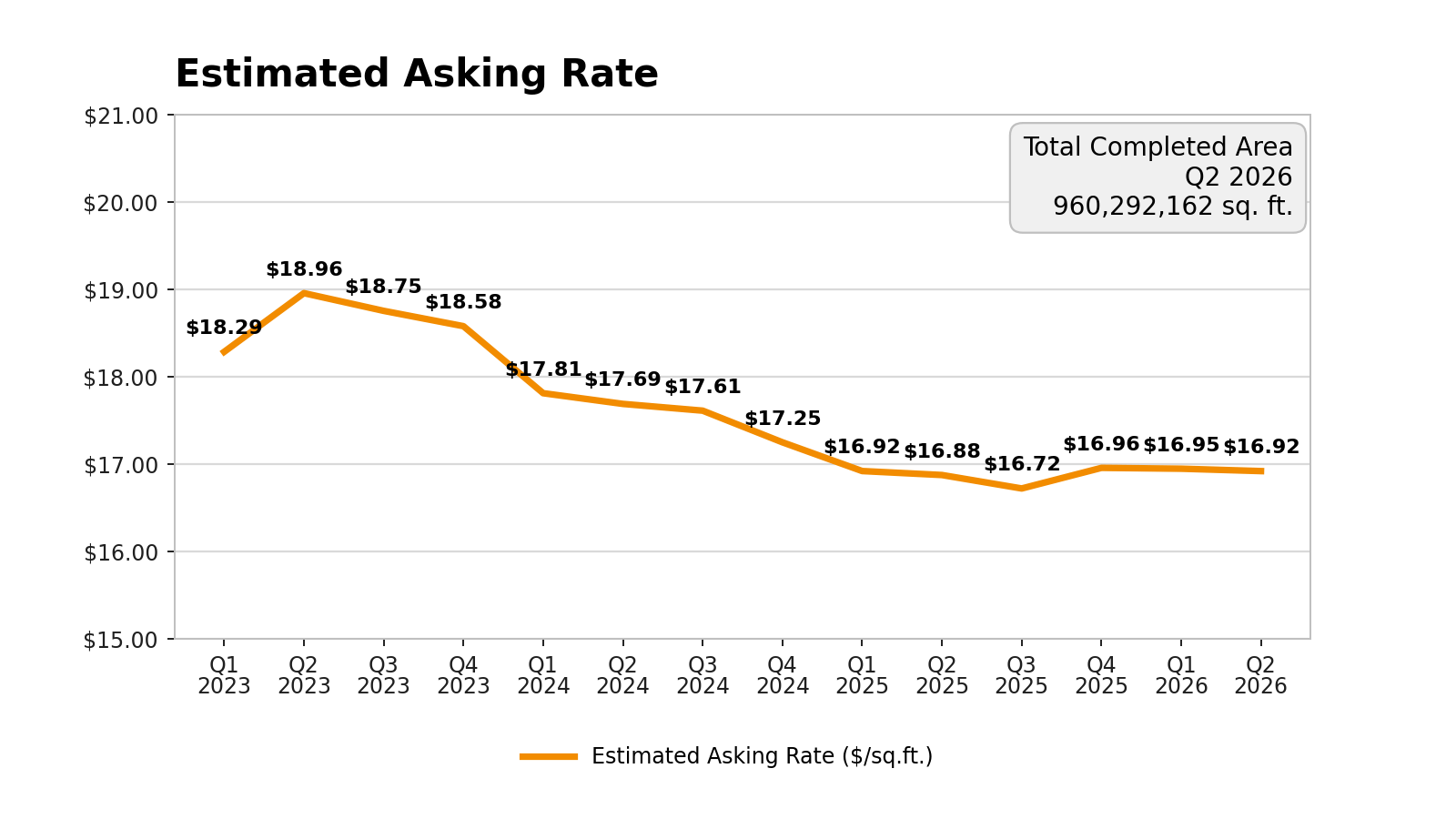
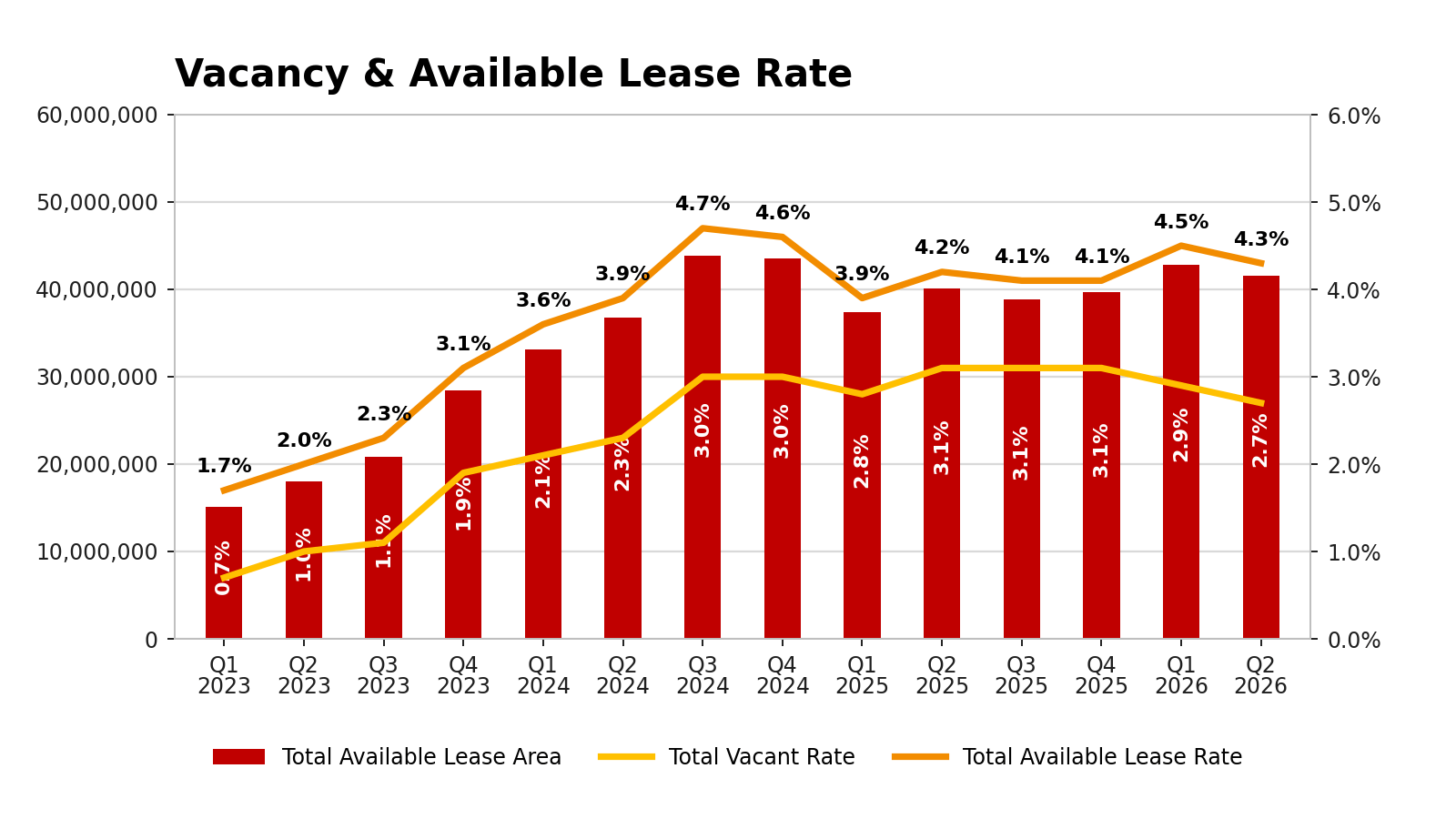
Overall, the GTA industrial market showed positive movement across the board in the second quarter. Both sales value and transaction count grew, industrial vacancy continued to decline, the leasing market held steady, and asking rents remained in the range of $16.00 to $16.50 per square foot.
At the same time, GTA industrial available lease area broadly stabilized, and the market recorded a fourth consecutive quarter of positive net absorption, reflecting continued improvement in real demand. As of the second quarter, total completed industrial area in the market stood at approximately 960 million square feet (about 960,292,162 sq. ft.), indicating a substantial existing industrial inventory in the region.

Industrial Building Sales
Figure 10 | Industrial Building Sales — $ Volume & Deal Count (Q1 2023–Q2 2026)
Estimated Asking Rate and Total Completed Area
Figure 11 | Estimated Asking Rate & Total Completed Area (Q2 2026)

Regional Trends

By region, transactions were concentrated in Halton Hills, Oakville, Mississauga and Caledon. Buyer types were also more diverse, spanning owner-users, real estate developers, technology firms, logistics operators and institutional investors, indicating a broader base of demand and a further strengthening of the market’s foundations.

Valuation & Outlook

The report also points out that a degree of bid-ask gap remains between buyers and sellers. On one hand, developers — constrained by financing costs, construction costs and target returns — have remained relatively cautious in land acquisition; on the other, end-users, focused on long-term operational needs, retain a strong willingness to purchase quality industrial properties that fit their strategic development.
As land prices gradually return to rational levels, the report considers that valuations are approaching a cyclical floor. With further improvement in the financing environment and the continued recovery of market confidence, industrial market activity is expected to strengthen further in the third and fourth quarters of 2026.
On the whole, a more diverse buyer mix and a continually improving investment environment reflect sustained confidence in the long-term value of quality industrial land and buildings. In the leasing market, however, tenants still retain some negotiating leverage in the near term, and the market overall is expected to continue operating in a relatively rational manner.

Industrial Vacancy and Available Lease Rate
Figure 12 | Industrial Vacancy & Available Lease Rate (Q1 2023–Q2 2026)

Representative ICI land transactions this quarter included:

  • Halton Hills | 10862 Steeles Avenue East: approximately $49.9 million, 25 acres, industrial use;
  • Oakville | 3480 Ninth Line: approximately $24 million, 4.3 acres, industrial use;
  • Mississauga | 6039–6155 Erin Mills Parkway: approximately $22.8 million, 6.3 acres, commercial use.

3. A Continually Improving Policy Environment, with Coordinated Federal and Provincial Measures

Q2 2026 marked a key point at which several Ontario housing measures moved into effect, while two major federal bills also completed their passage into law. Collectively, the measures focus on reducing taxes, development charges and financing costs to support new housing supply and to assist tariff-exposed manufacturers, creating a more favourable environment for the real estate and construction sectors.

Housing Policy — Provincial

  • 50% Development Charge Cut: The Canada-Ontario Partnership to Build provides $8.8 billion over ten years for housing infrastructure. Municipalities can qualify by reducing residential development charges (DCs) by 30% to 50% or more for at least three years. Toronto secured $1.5 billion and plans reductions of roughly 40% to 60% between 2026 and 2029, while freezing development-charge indexing at 2024 levels for 2025 and 2026.
  • HST Relief: Ontario’s enhanced HST rebate runs from April 1, 2026 to March 31, 2027, removing the provincial HST portion on eligible new homes up to $1 million for savings of up to $80,000. Combined federal and provincial relief can save eligible first-time buyers up to $130,000, phasing out between $1 million and $1.85 million.
  • Inclusionary Zoning Exemptions: Toronto rezoning, site-plan and building applications filed before July 1, 2027 are exempt from inclusionary-zoning requirements; applications filed after that date must provide 5% affordable housing for 25 years.
  • Conservation Authority Consolidation: Ontario plans to consolidate 36 conservation authorities into nine regional authorities, effective February 1, 2027, to reduce duplication and speed up development permitting.
  • Low-Risk Designations: Changes to Ontario’s Excess Soil Regulation remove some registration, sampling and tracking requirements for low-risk sites, which should reduce costs and timelines for smaller and infill projects, with transition provisions running to late October 2026.

Housing Policy — Federal

  • Federal-Provincial HST Relief: The coordinated rebate removes the full 13% HST on eligible new homes priced up to $1 million, with partial relief up to $1.85 million, effective April 1, 2026, to support buyer demand and improve project feasibility.
  • Bill C-20: Received Royal Assent on June 19, 2026 and established Build Canada Homes as a permanent federal Crown corporation, supported by an initial $13 billion and focused on affordable housing and construction innovation.
  • Bill C-26 and Intergovernmental Partnerships: Received Royal Assent on June 18, 2026 and provides $1.7 billion to provinces and territories for housing programs and development-fee relief, also supporting the $8.8 billion Canada-Ontario infrastructure commitment and municipal development-charge reductions of up to 50%.
  • Low-Cost CMHC Financing: The $55 billion Apartment Construction Loan Program continues to support purpose-built rental housing; by March 2026, CMHC had committed about $30.8 billion toward more than 78,000 rental homes.
  • Modular and Factory-Built Housing: Federal policy also supports modular and factory-built housing through financing, building-code updates and the Build Canada Homes mandate.

Industrial & Trade Policy — Provincial

  • Ontario Made Manufacturing Investment Tax Credit: The refundable credit has been enhanced to 15%, with a maximum of $3 million per year on eligible expenditures of up to $20 million, applying to property available for use on or after May 15, 2025 and before January 1, 2030. A parallel 15% non-refundable credit is now available to corporations that are not Canadian-controlled private corporations, with a ten-year carry-forward. The credit applies to buildings and machinery used for manufacturing or processing in Ontario.
  • Protecting Ontario Account: The Province launched the Protect Ontario Financing Program as the first phase of the $5 billion Protecting Ontario Account, providing working capital to for-profit businesses operating in sectors subject to Section 232 tariffs — namely steel, aluminum, copper and autos — to help cover operating expenses through the trade disruption.
  • Trade and Tax Support: The 2026 Ontario Budget added $100 million to the Ontario Together Trade Fund and cut the small-business corporate income tax rate from 3.2% to 2.2% effective July 1, 2026, projected to deliver $1.1 billion in relief over three years.

Industrial & Trade Policy — Federal

  • Tariff Response Package: On May 4, 2026, the Government of Canada announced $1.5 billion to support tariffed industries, including a new $1 billion Business Development Bank of Canada program offering loans of $2 million to $50 million to firms that manufacture and export products containing steel, aluminum or copper, plus a $500 million top-up to the Regional Tariff Response Initiative, with carve-outs of $150 million for steel, $100 million for automotive and $150 million for food security.
  • Trade Measures and CUSMA: Effective June 8, 2026, a U.S. proclamation eased selected metals tariffs, cutting duties on agricultural machinery and HVAC equipment from 25% to 15% and lowering the U.S.-origin content requirement from 95% to 85% through December 31, 2027. The formal CUSMA joint review is set to begin July 1, 2026; no extension was agreed on that date, but the agreement does not expire until 2036, and the review itself does not change existing tariff rates.

4. Closing

Taken together, the two reports show that the GTA land and industrial real estate market improved on three fronts in Q2 2026 — sales volume, transaction activity and policy support. Residential land sales more than doubled from the previous quarter, industrial land and buildings reached a two-year high, and provincial and federal policy continued to work in concert on cost reduction, tax relief and supply stability. At the same time, the structural concerns of limited condo launches and a shrinking post-2028 completion pipeline, together with ongoing international trade-policy uncertainty, warrant close attention from the industry. For CCCA member companies, this is both a window to capture distressed and well-serviced land opportunities and a strategic moment to position early in local warehousing and manufacturing real estate.
The Canadian Chinese Construction Association (CCCA) will continue to uphold its philosophy of “exchange, cooperation and mutual benefit,” building a platform for industry information and resource sharing and working hand in hand with member companies and industry colleagues to seize market opportunities and move forward steadily.
Data source: Royal LePage Commercial — Land & Investment Group, Q2 2026 Residential Land Report and Q2 2026 ICI Land & Industrial Buildings Report. This article is a summary of market information and does not constitute investment or transaction advice.

Ontario Introduces Major New Housing Incentives: Up to $130,000 in HST Rebates for New Home Buyers and Development Charges Reduced by Up to 50%

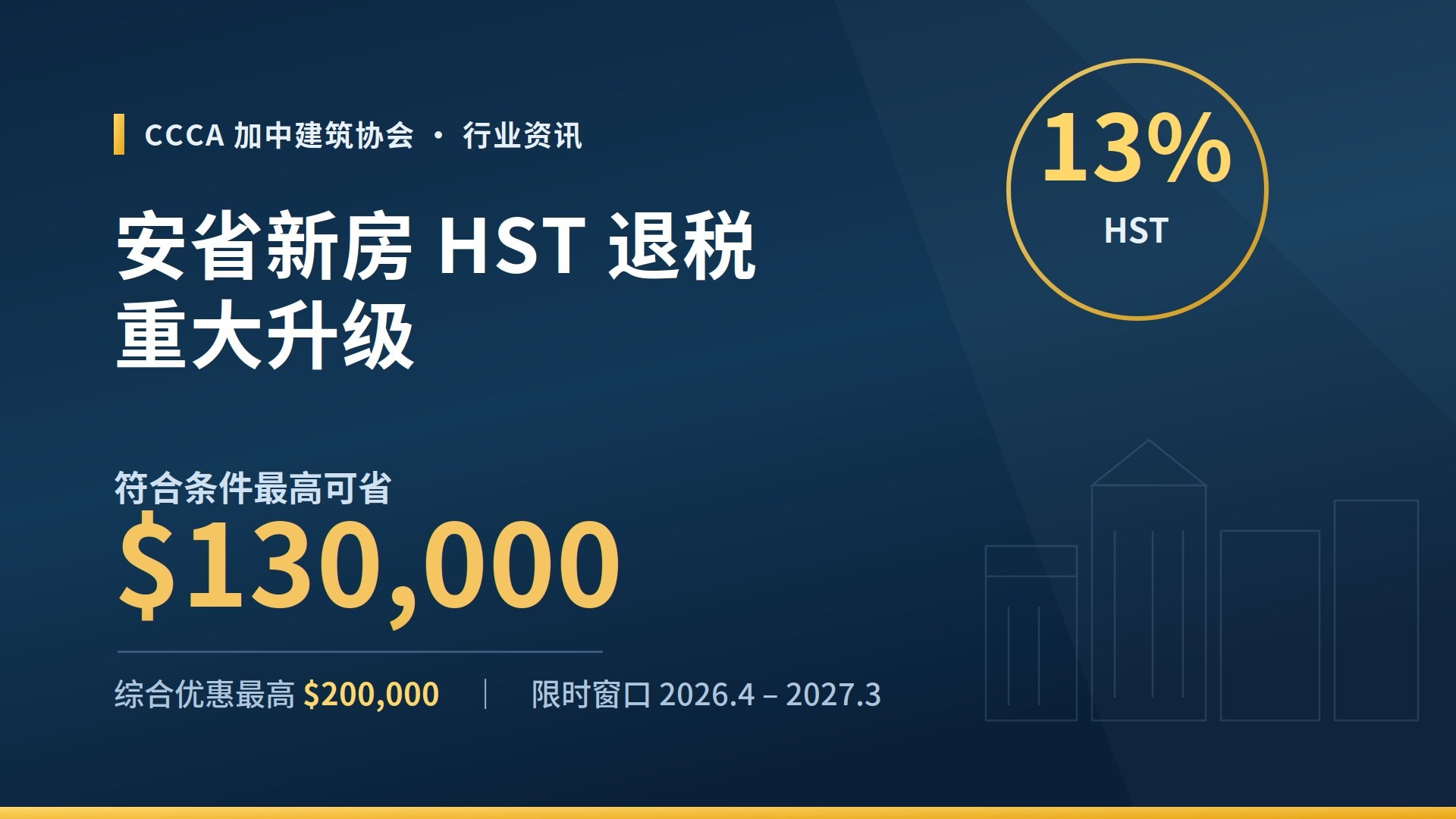
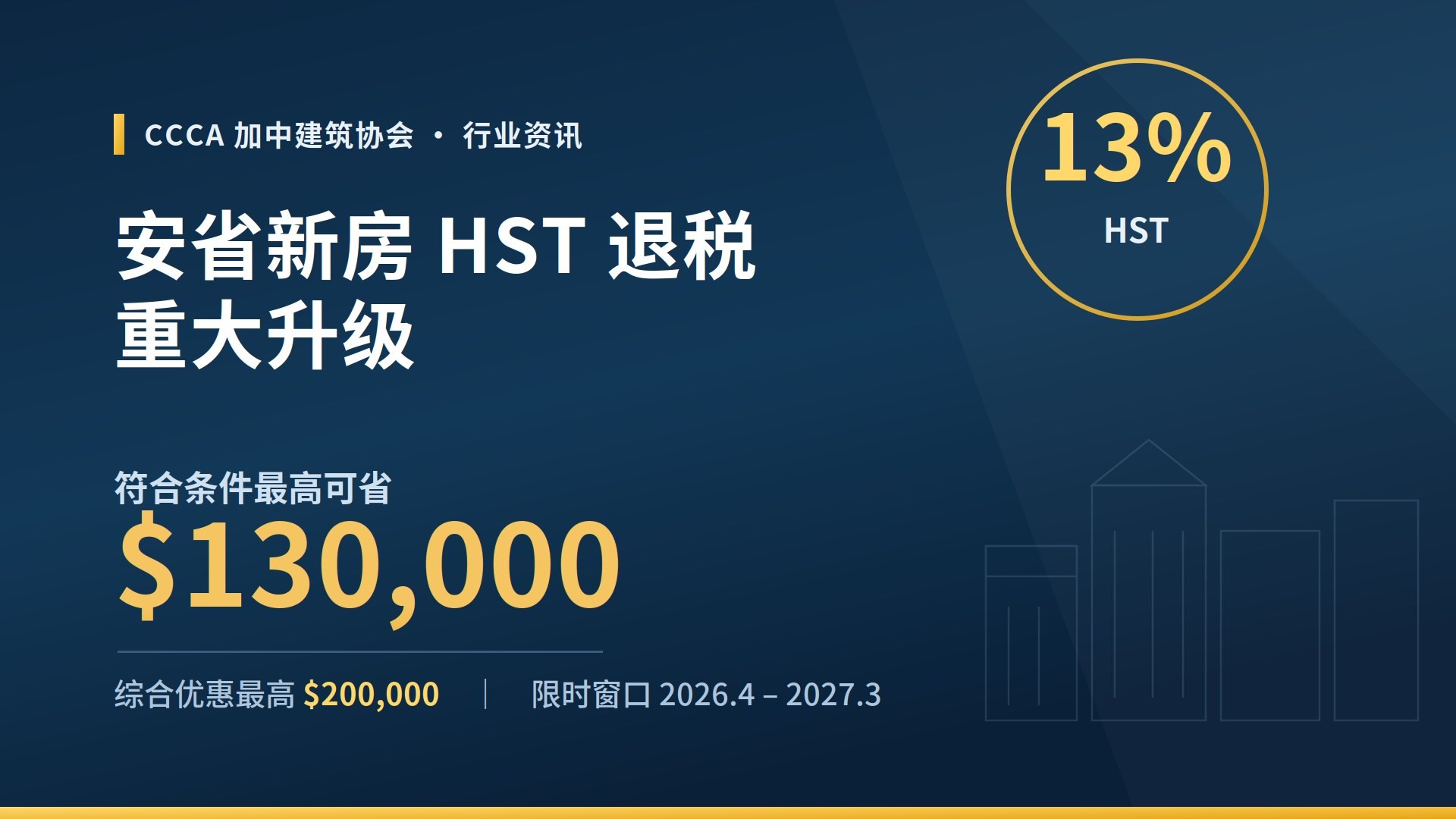
安省新房 HST 退税重大升级,符合条件最高可省 $130,000,综合优惠最高 $200,000,限时窗口 2026 年 4 月至 2027 年 3 月|CCCA 加中建筑协会

In 2026, Ontario's housing market is seeing one of the largest home-buying tax incentives in recent years.

As a key part of the provincial government's “Building More Homes Faster” plan, Ontario and the federal government have jointly introduced a new set of new-home rebate measures. Eligible buyers of new homes could receive up to $130,000 in HST relief; combined with the parallel reduction of Development Charges, total savings on a new home could approach $200,000.

For families planning to buy a new home, real estate professionals, and developers alike, this is a policy well worth watching closely.

What is HST, and why does this policy matter?

When buying a home in Ontario, there is a distinction that is easy to overlook: buying a resale home generally does not attract HST, whereas buying a new home is subject to 13% HST (Harmonized Sales Tax).

That 13% is made up of two parts: the 5% federal GST and the 8% Ontario provincial portion. Although this tax is usually already built into the sale price the builder advertises, it is ultimately borne by the buyer.

Even before this new policy, Ontario already had a New Housing Rebate in place — whether you bought a new home to live in or to rent out long term, you could apply to recover part of the HST if you qualified. In most cases, however, that rebate was capped at roughly $24,000.

The newly introduced Ontario Enhanced New Housing Rebate (Ontario ENHR) raises that ceiling substantially: new homes valued at $1 million or less can receive the full 13% HST relief, and eligible buyers could receive up to $130,000 — well above the previous maximum of about $24,000.

In short, the central aim of this policy is to lower the cost of buying by refunding the HST originally embedded in a new home's price, stimulate demand in the new-home market, and encourage builders to accelerate construction.

How much can you save?

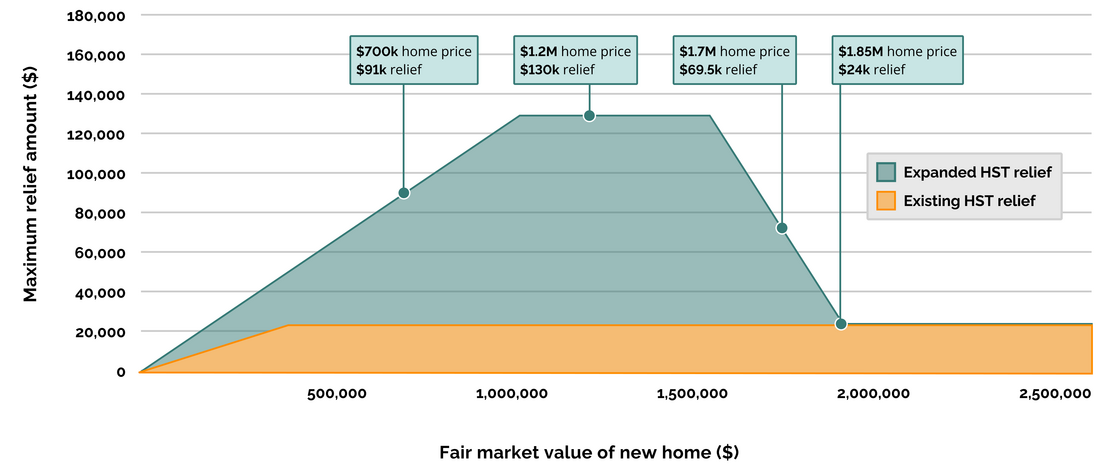
The rebate is calculated based on the home's value. According to figures published by the Ontario government, a $500,000 new home could receive the full 13% relief of $65,000; a $700,000 home, about $91,000; a $1 million home reaches the maximum of $130,000; a $1.2 million home is still capped at $130,000; at $1.7 million the relief drops to roughly $69,400; and homes valued at $1.85 million and above receive a maximum of about $24,000.

Overall, new homes valued at roughly $1 million to $1.5 million stand to benefit the most from this round of relief.

Chart showing the maximum Ontario enhanced HST new housing rebate by a new home's fair market value: relief peaks at $130,000 for homes valued about $1 million to $1.5 million and falls to $24,000 for homes at $1.85 million and above. Source: Government of Ontario

How is the $130,000 made up?

The rebate actually comes in two layers.

The first layer is the 8% Ontario provincial portion, provided through the Ontario Enhanced New Housing Rebate (Ontario ENHR), with a maximum rebate of $80,000.

The second layer is the 5% federal portion. First-time home buyers can recover it through the federal First-Time Home Buyer GST Rebate; for other eligible buyers, Ontario provides an additional amount equivalent to that 5% (the Ontario Top-Up) to make up the difference.

Together, the two layers form the maximum $130,000 in HST relief.

Who is eligible to apply?

This round of relief applies to new or substantially renovated homes, not to ordinary resale transactions. Eligible home types include detached houses, semi-detached houses, townhouses (townhouse / rowhouse), condominium units, and owner-built homes.

The main groups who benefit include the following:

1. Families buying a new home to live in. Buying a new home from a builder and using it as the primary place of residence for yourself or a relation — not for rental, short-term rental, or pure investment.

2. Families build a home to live in. Building a home yourself, or hiring a builder to construct one, on land you own or lease, and using it as the primary place of residence for yourself or a relation.

3. Owners of new long-term rental homes. Owners who buy or build a new home for long-term rental may also qualify, but under a separate program — the New Residential Rental Property Rebate (NRRPR). Note that this program is for long-term rentals where the tenant uses the home as their primary residence; it does not cover short-term rentals such as Airbnb, and the forms and timelines differ from those for owner-occupied homes.

4. First-time home buyers. In addition to the Ontario ENHR, first-time buyers may also be eligible for related federal and Ontario first-time-buyer rebates, with the final rebate calculated in whichever way is most favorable to the buyer.

5. Purpose-built rental projects. Qualifying purpose-built rental housing projects are covered by a separate HST relief measure, mainly relevant to developers and institutional investors.

Key dates to remember

This is a time-limited incentive, so the dates of signing and construction matter — and they differ from one situation to another.

Buying a new home to live in: the Agreement of Purchase and Sale (APS) with the builder must be entered into between April 1, 2026 and March 31, 2027; construction must begin on or before December 31, 2028, and the home must be substantially completed on or before December 31, 2031.

Owner-built homes: Construction must begin between April 1, 2026 and March 31, 2027, and the home must be substantially completed on or before December 31, 2029.

Long-term rental homes (NRRPR): applies to qualifying new long-term rental properties and is subject to the relevant signing, construction-start, and completion requirements; it does not apply to short-term or vacation rentals.

First-time home buyer rebate: applies to buyers who enter agreements of purchase and sale between March 20, 2025 and December 31, 2030; for new homes valued up to $1 million, the full 8% provincial portion can be relieved.

Purpose-built rental projects: apply to projects that begin construction between September 14, 2023 and December 31, 2030; qualifying projects can receive up to the full 13% HST relief.

When applications open: according to the CRA, the updated forms — GST190, RC7190-ON and others — are expected to be gradually released by mid-July 2026; buyers who sign and qualify before then will still be able to apply later and receive their rebate.

How to claim the rebate

There will be two main ways to claim.

Option one: credited directly at closing. Starting around mid-July 2026, builders are expected to be able to credit the eligible rebate amount directly to the buyer at closing. For the buyer, this effectively reduces the amount payable at closing.

Option two: apply to the CRA yourself. Eligible buyers can also submit the relevant forms (GST190 and the accompanying RC7190-ON) to the CRA after closing, with the government assessing and issuing the rebate. The Ontario Top-Up portion is paid separately by the Ontario government once the rebate has been assessed.

One important note: the total of all rebates for the 8% Ontario provincial portion cannot exceed the lesser of $80,000 and the 8% provincial tax actually payable on the home, nor can it exceed the tax actually paid or payable — in other words, you cannot get back more than the tax you actually paid.

Not to be overlooked: lower development charges

Beyond the HST rebate, another important measure in this housing package is the reform of Development Charges.

Development charges are fees that municipalities levy on new construction projects to fund public infrastructure such as roads, water supply, and sewers. In recent years these costs have steadily risen and have become one of the significant factors pushing up new-home prices — in some municipalities, the development charges on a single new home exceed $100,000. In Toronto, for example, the development charges borne by the buyer of a semi-detached home approach $140,000.

To ease the cost of building housing, Ontario and the federal government plan to invest $8.8 billion over the next ten years in housing-enabling infrastructure, using it to encourage municipalities to lower development charges — municipalities must reduce these charges by up to 50% to qualify for the funding. The province is also requiring clearer disclosure of these fees in new-home agreements so buyers that can clearly see the costs they are actually carrying.

It is precisely the combination of the HST rebate and lower development charges that underpins the province's stated goal of “combined savings of up to $200,000.”

CCCA's perspective

From an industry standpoint, this round of new-home rebates not only lowers the cost of entering the market for buyers, but also injects fresh confidence into a new-home market that has faced challenges. For buyers, it is a rare large-scale tax break; for developers, it can help stimulate demand and improve the sales environment for projects; and for the construction industry, it has the potential to further drive housing supply, echoing the government's long-term goal of building homes faster.

It is worth noting that this round of relief covers not only first-time buyers but also ordinary owner-occupier buyers, long-term rental property investors, and purpose-built rental development projects — a far broader reach than previous new-home rebate programs.